The Cost of This Job
We won't quote you a number here, because we don't have one that's honest for every door in Norwalk. A broken spring on a door that's had its hardware replaced once is a different job than the same spring failure on a door that's never been touched since 1957. What we can tell you: we price after we see the door, the track, and what's attached to it, not off a phone call. If a shop gives you a flat number sight unseen for an emergency call, ask what they're planning to upsell once the truck is in your driveway. Norwalk's median build year sits at 1957, six years older than the 1963 median across the wider area we cover, and older hardware almost always changes the scope once we're looking at it in person. We'd rather tell you that up front than make up a figure to fill this paragraph.
Parts We Carry
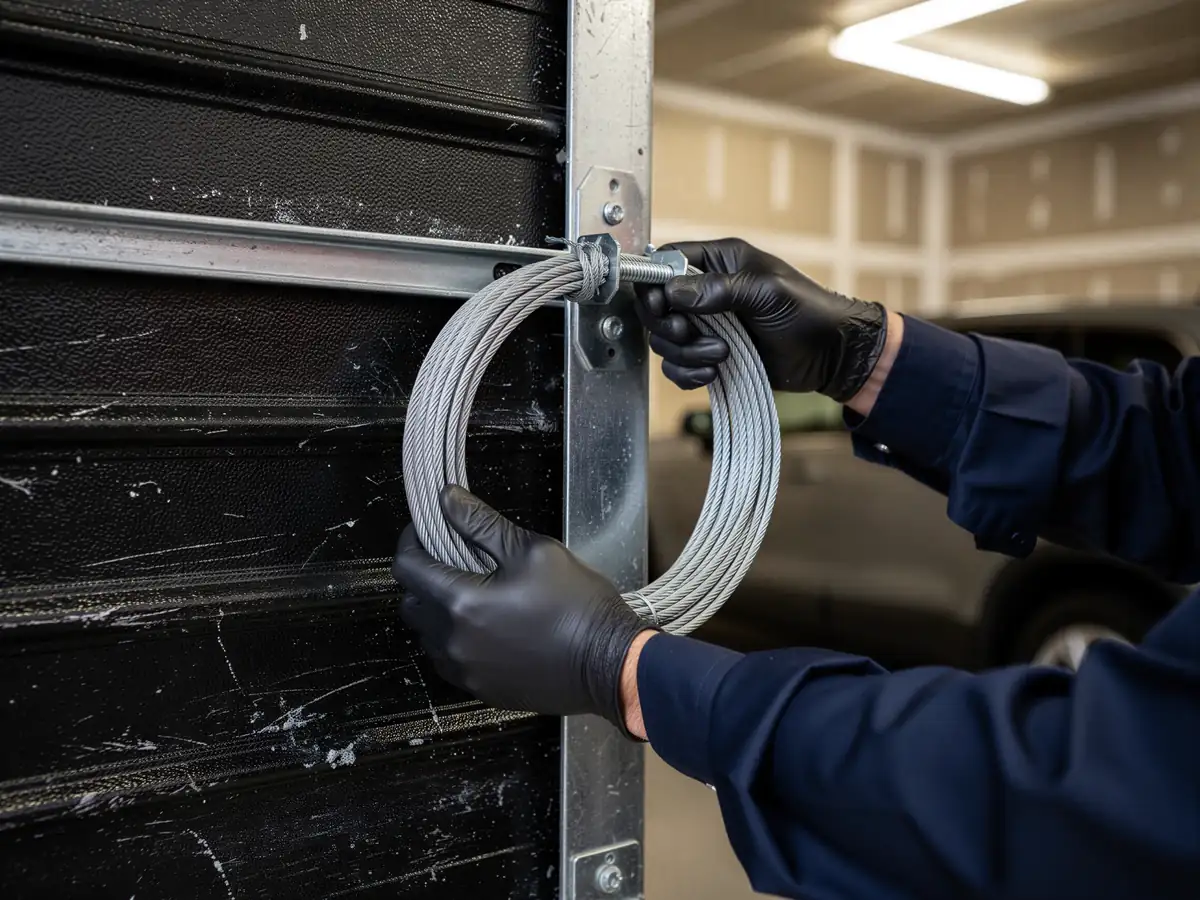
On a truck headed to Norwalk, we carry torsion springs in the sizes that match doors built through the 1950s and 60s, standard-lift cables, rollers, and the hinges and center brackets that wear out on doors that have run thirty-plus years on original parts. What we don't always carry is the exact bracket or track hardware for a door that's been modified with a non-standard opener mount somewhere along the way - that's the honest limitation. If your door has had aftermarket work done to it that we haven't seen yet, we may need to source a part rather than pull it off the truck. Most Norwalk calls don't hit that wall, because most of the housing stock here follows the same build pattern as the rest of the area: 1943 through 2012, median 1957 to 1963 depending on which block you're on. Same-era doors mean we've usually seen the fault before we open the panel.
How We Fix It
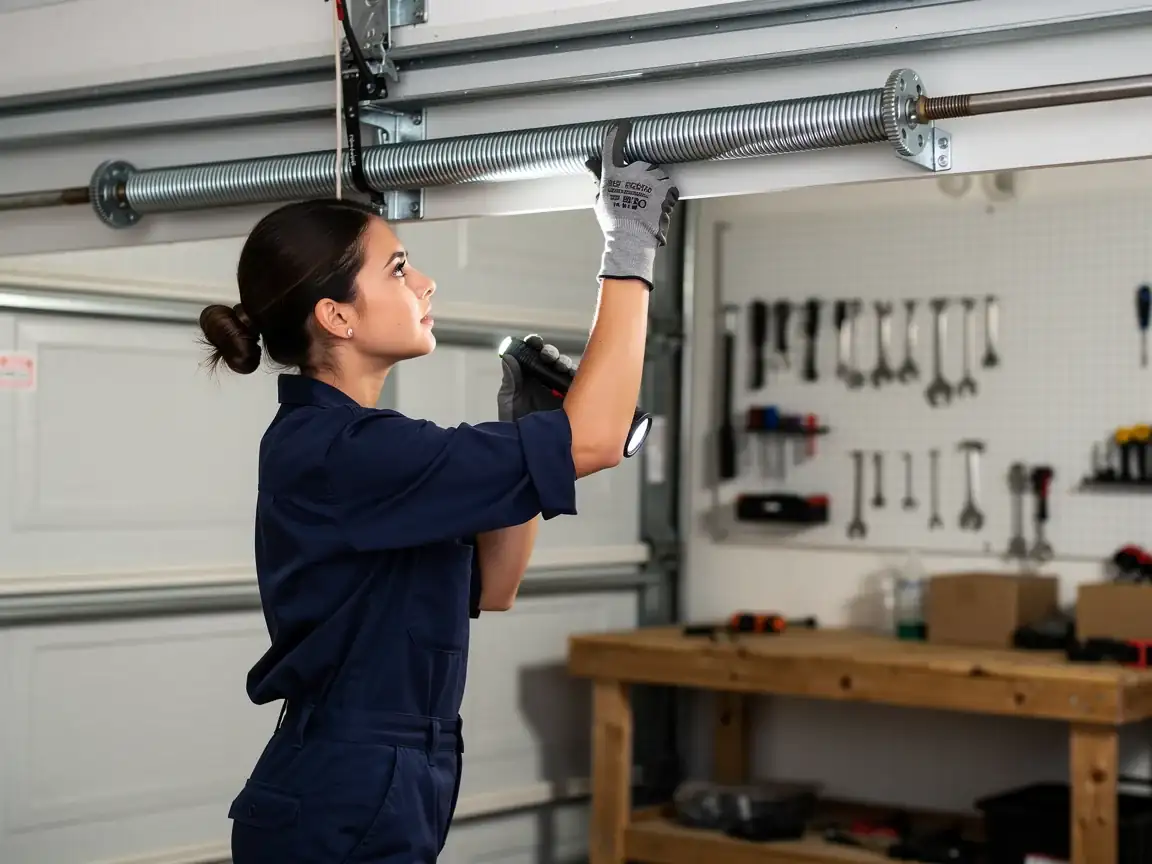
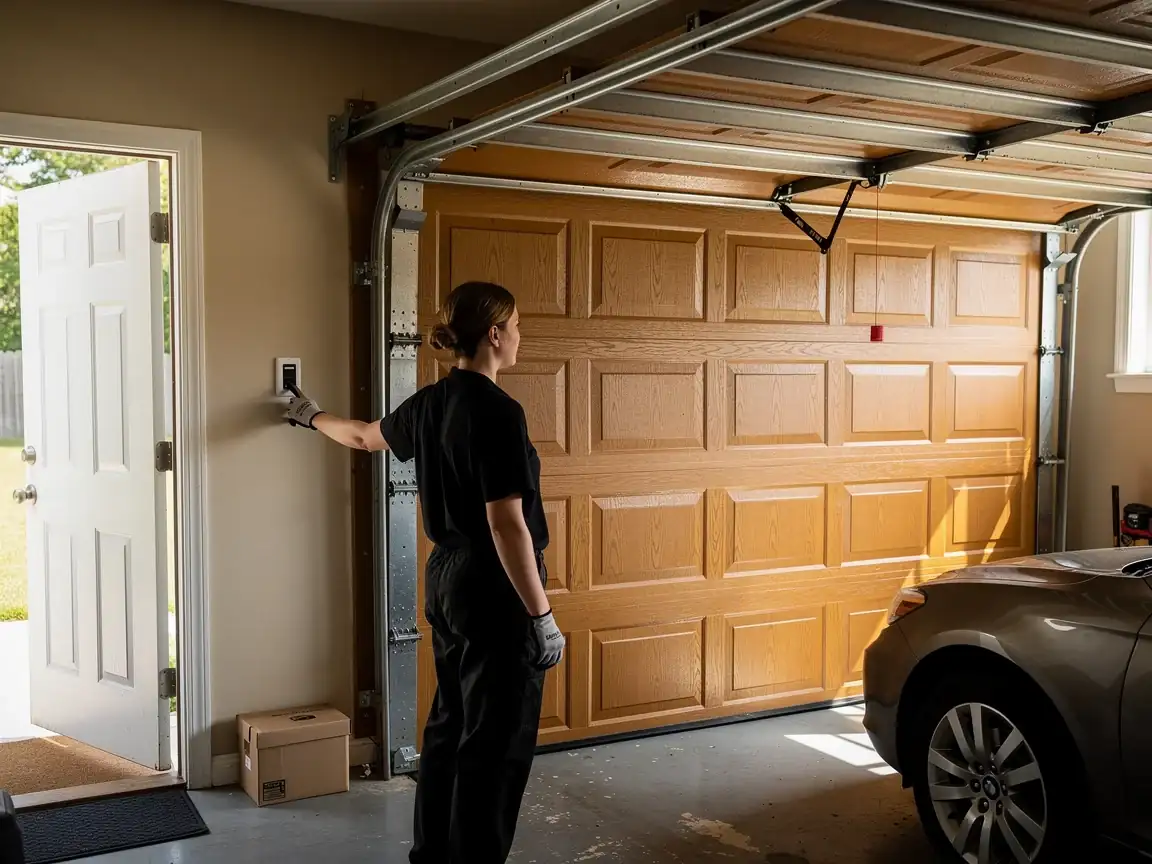
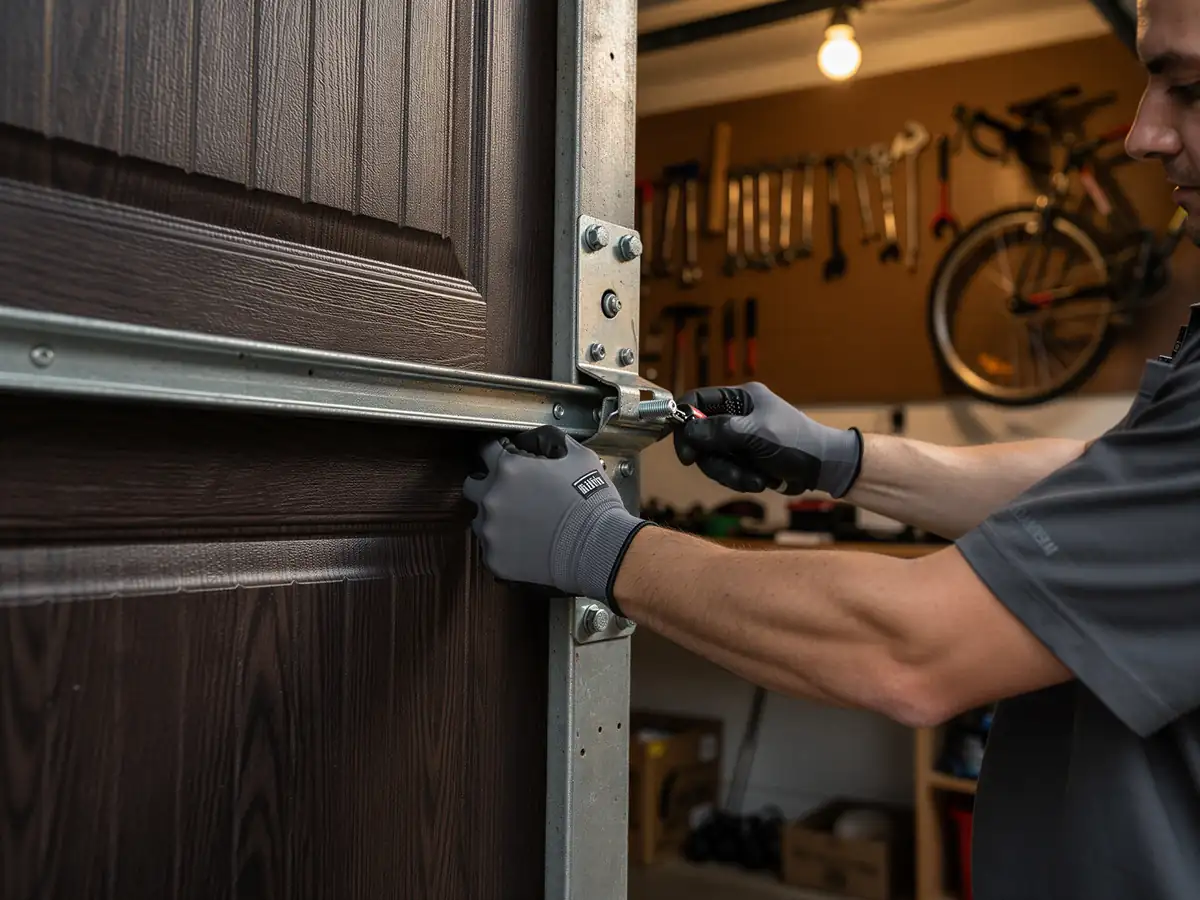
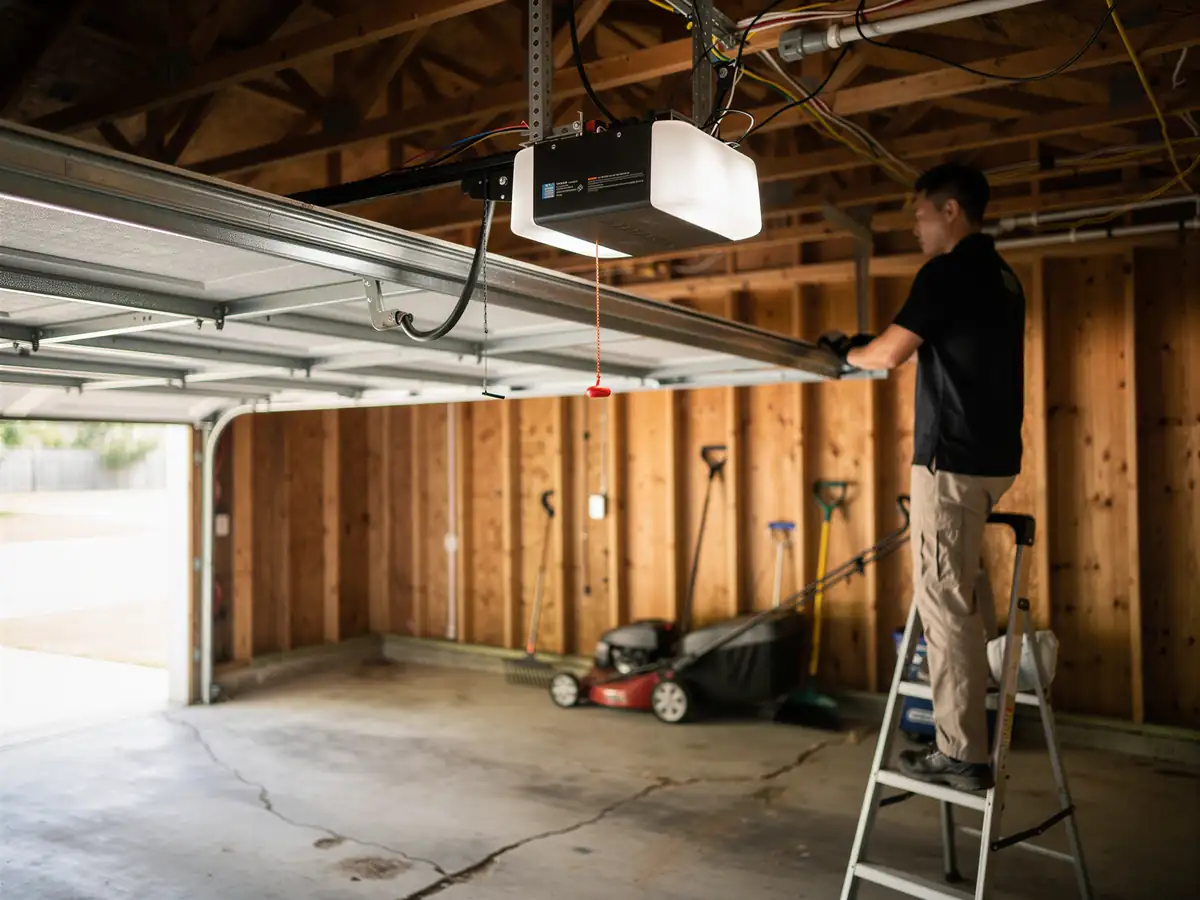
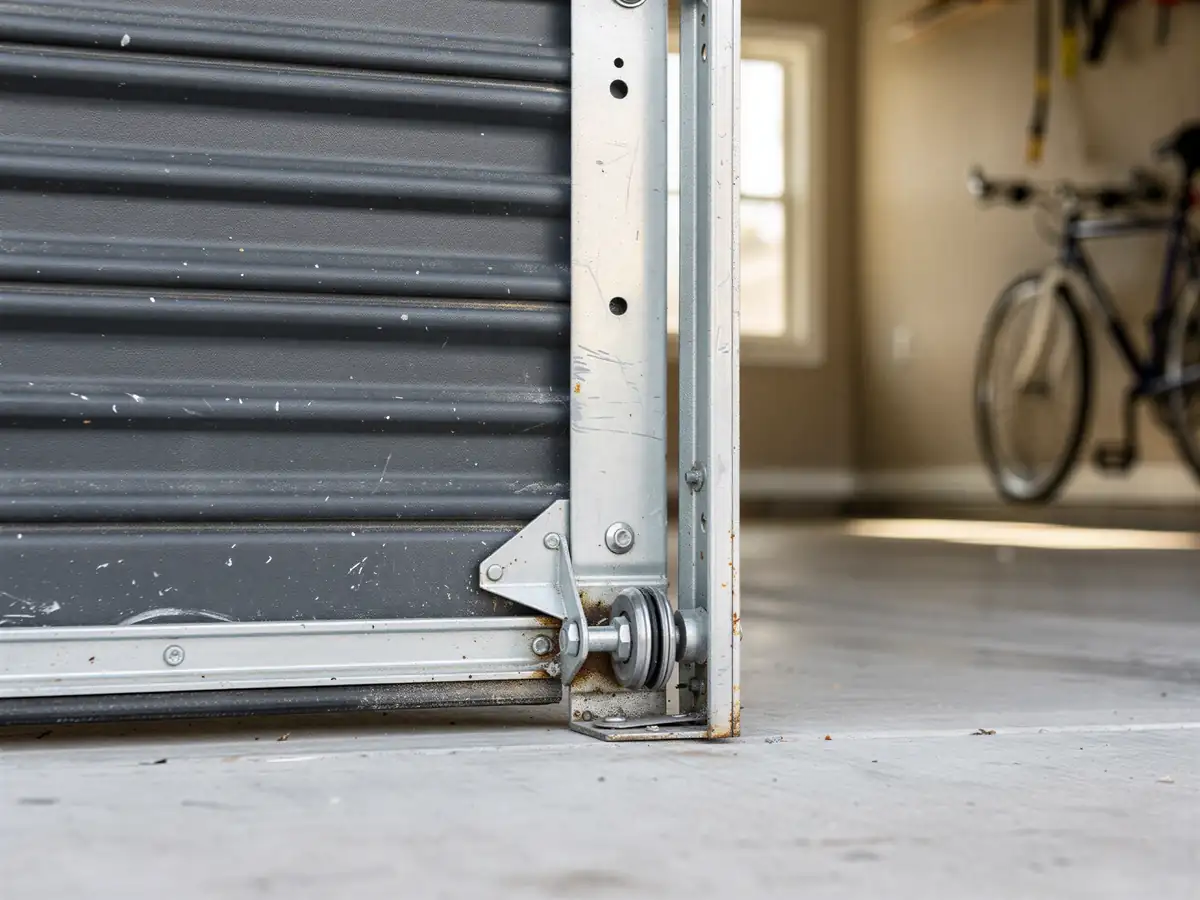
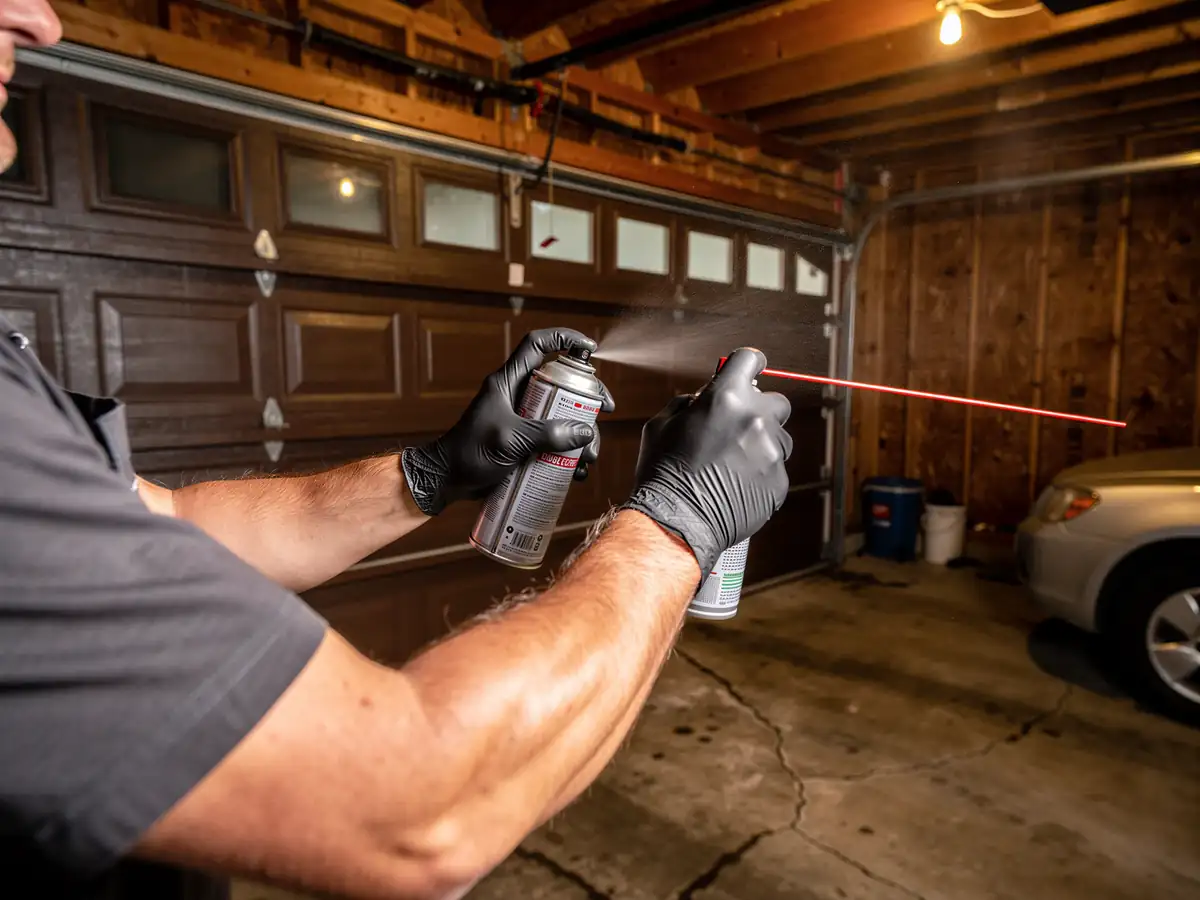
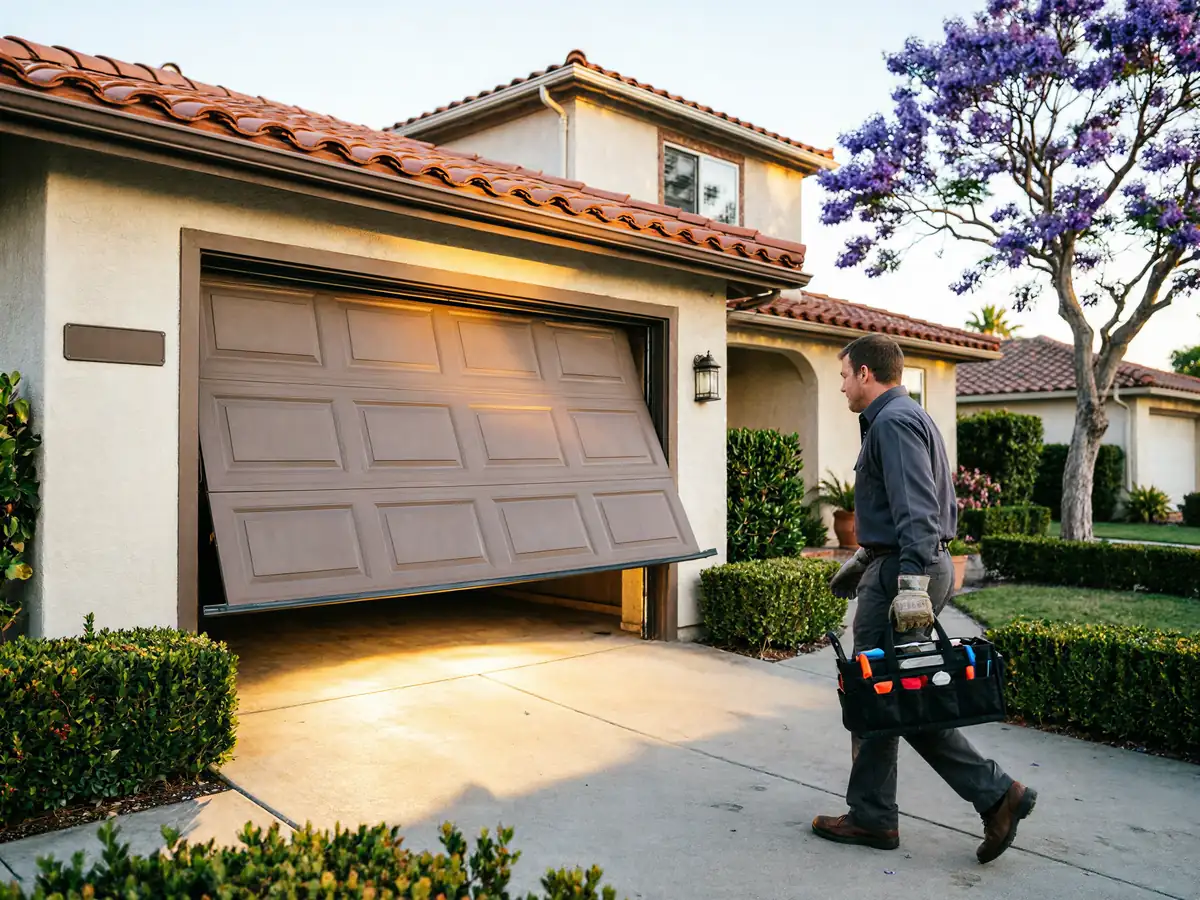
We come from Downey, three miles out, which means the first thing we do on arrival is look at the door as a whole system, not just the broken part. On a house built close to 1957, that usually means checking whether the track, the spring anchor, and the opener mount are original to each other or whether someone's replaced one piece without the others. We diagnose before we touch anything, because a cable that snapped might be a symptom of a bent track, not the actual problem. Once we know what's wrong, we replace the failed part with hardware rated for the door's actual size and weight, not a generic swap. We test the balance and the auto-reverse safety function before we leave, because a door that opens isn't the same as a door that's safe. If the fix on the table costs more than the door's worth given its age and condition, we'll tell you that too, rather than sink parts into a door that should be replaced outright.
What Causes It Around Here
The mild temperate climate across this part of the region means we're not fighting the freeze-thaw cycle that kills hardware in colder states - but heat cycling and decades of daily use still take their toll, and in Norwalk that use has mostly been on hardware installed around 1957. Original torsion springs rated for a 30-year service life are well past it on a lot of these doors. We see cables fraying at the drum, rollers worn to the point of binding in the track, and center brackets loosened from years of vibration nobody ever noticed until the day it failed. Norwalk sits about 3 miles from Downey and within a few miles of Bell Gardens, Paramount, and Bellflower, all built on roughly the same mid-century timeline, so the failures we see on one street tend to repeat a few blocks over. With roughly 26,801 households in Norwalk, a fair number of them are still running the door that came with the house.