Serving Downey, CA & nearby
(562) 581-7912
Downey, CA

Why Downey's Older Garage Doors Let the Draught In

Most Downey garage doors date to the 1960s, when seal standards were looser. Here's what mild-climate draughts and worn weather seals actually cost you.

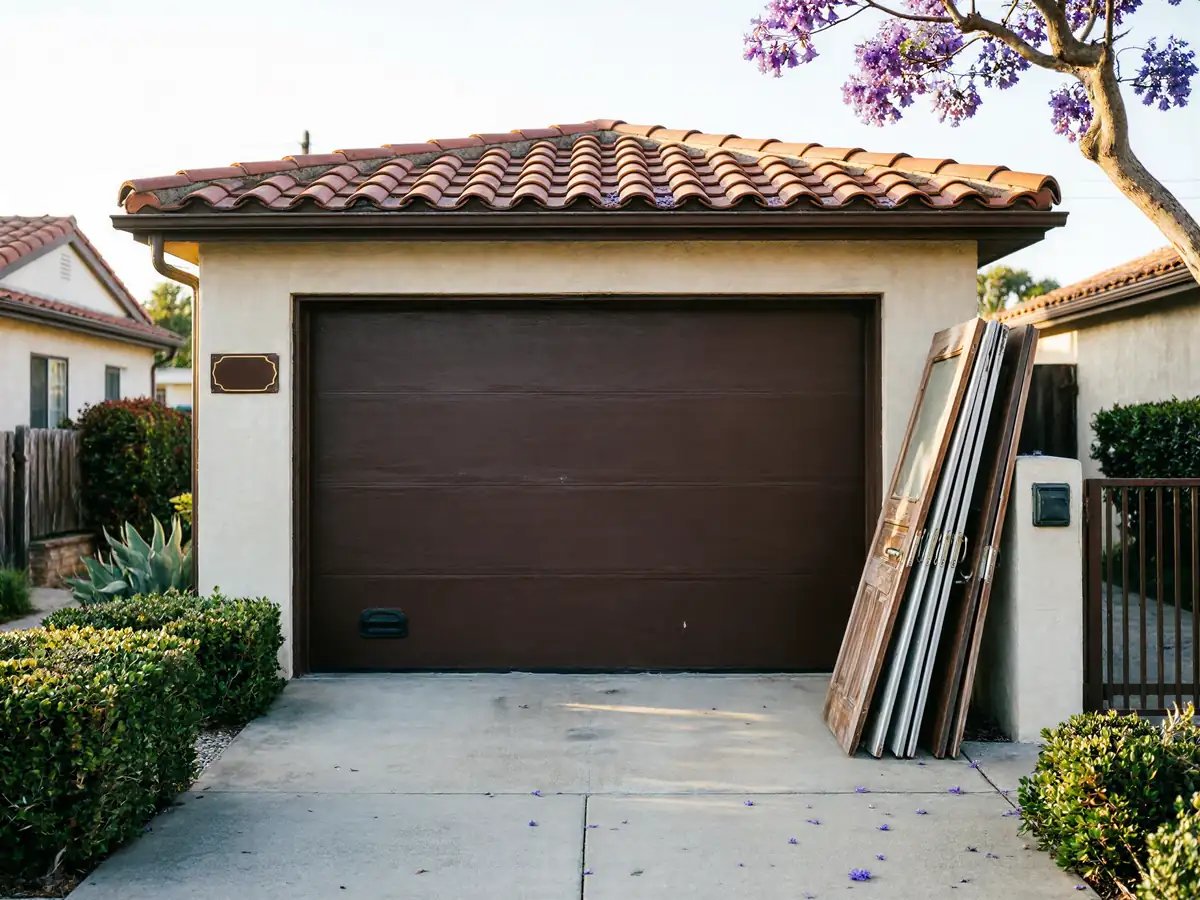
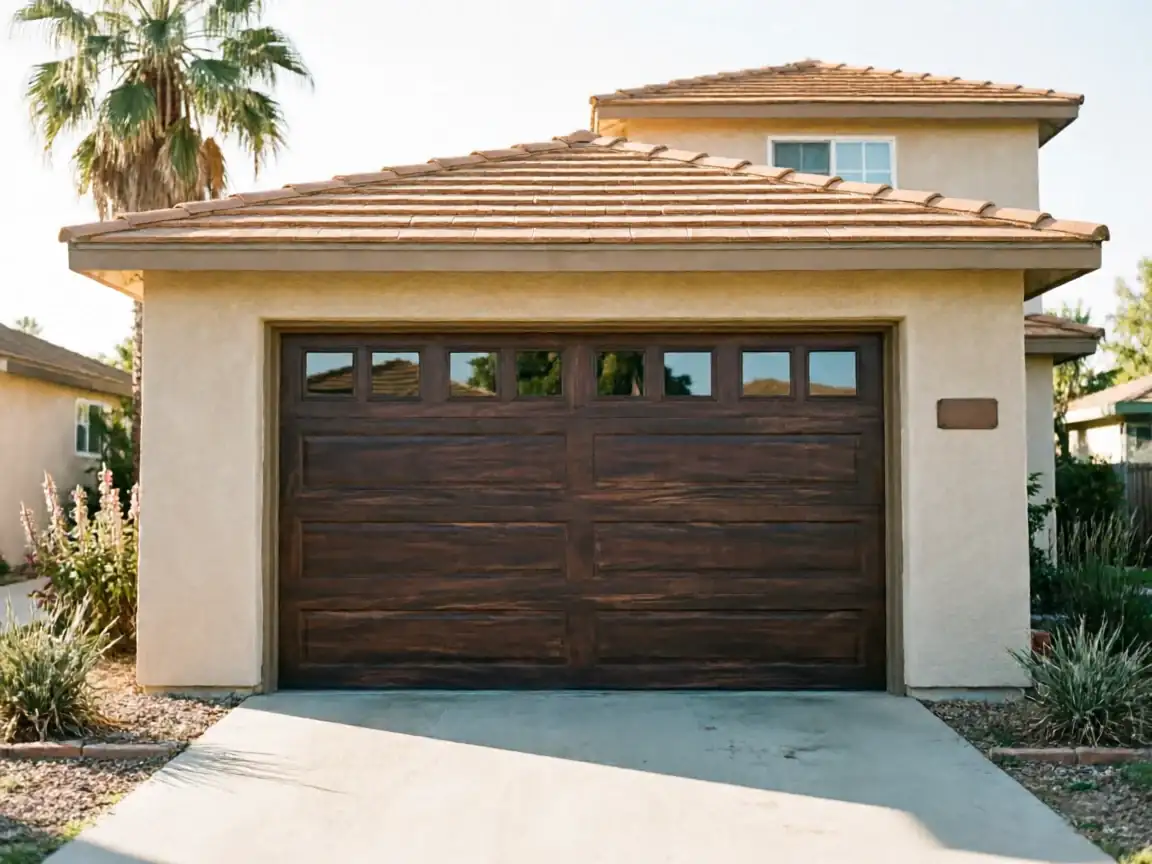
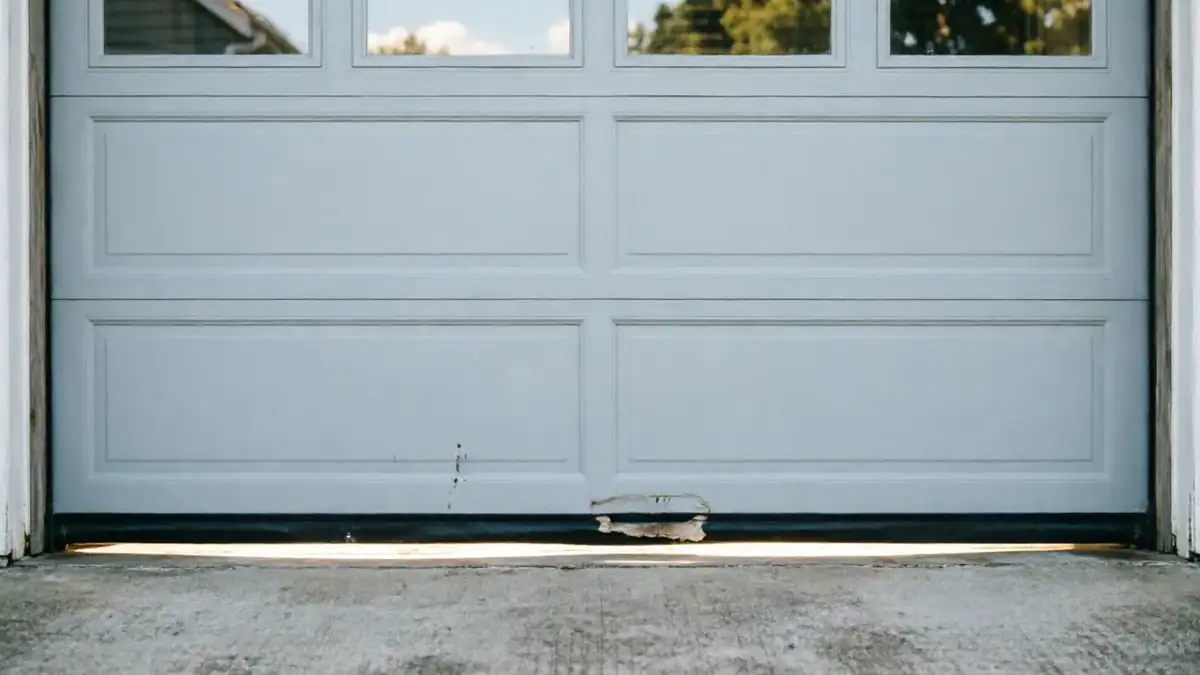
A light gray garage door with windows has a damaged bottom panel.

What Most People Get Wrong

Most homeowners here think a drafty garage door is a weather problem. It isn't, not really. Downey's climate band is mild temperate - no hard freezes, no monsoon season, nothing that stress-tests a seal the way a harsher climate would. So people assume the door is fine because the weather is fine. What actually happens is slower: the bottom seal on a door installed when the house was built, somewhere between 1943 and 2012 with most of the stock going up in the 1960s and 70s, has simply outlived its rubber. Vinyl and rubber astragal seals don't fail from cold snaps in this area. They fail from decades of sun-flex and compression against a slab that's shifted a half-inch since Eisenhower was in office. The seal looks intact from six feet away. Up close, it's cracked along the compression line and has stopped doing its one job, which is closing the gap between the door and the slab. People replace openers, springs, even whole panels before they ever look down at the four dollars of rubber doing none of the sealing.

The Problem

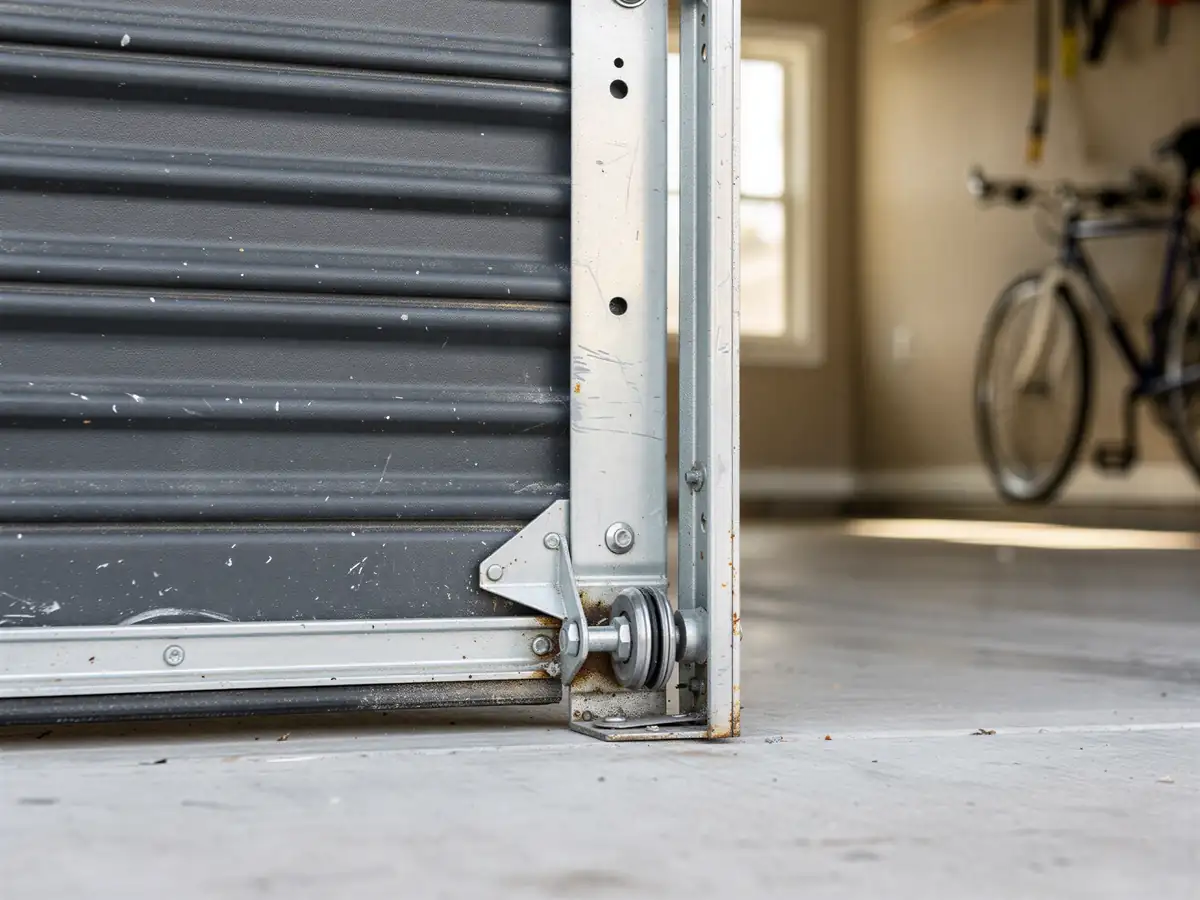
A worn bottom seal or brittle side stop doesn't flood a Downey garage - the mild climate means you're not fighting standing water or ice most years. What it does is let in a steady trickle of outside air, dust, and the occasional rodent looking for a dry spot. Over a house built in the early 1960s, that gap has usually been there long enough that owners stop noticing the draft at all; they just notice the garage is never quite the temperature it should be, or that stored boxes near the door edge pick up grit. On the 1960s-70s tract construction common across this stretch of the county, slabs were poured without the expansion joints you'd see in later code, so the gap between door and floor widens unevenly along the threshold. One side seals, the other doesn't. That's a track and seal fit problem, not a door problem, and it's why a flat strip of weatherstripping bought off a shelf rarely solves it on its own.

How Local Conditions Play In

Because Downey sits in a mild temperate band, the seals here aren't fighting freeze-thaw cycling the way they would further inland or at elevation. That's the good news - rubber doesn't crack from cold the way it does in a harsher winter market. The bad news is UV and heat-cycling still do the damage, just slower and less obviously. A bottom seal on a west-facing door gets baked most afternoons and never gets cold enough to visibly contract, so it just flattens and glazes over years instead of splitting in one bad winter. On a house from the 1960s median build year, that's fifty-plus years of slow sun damage on the original seal design if nobody's swapped it, and most people haven't, because nothing ever failed all at once. The upside: if you do reseal a door here, you're not re-doing it every two winters. A decent vinyl bulb seal on a mild-climate house like this can go a long stretch before it needs attention again.

What to Check

Start at the bottom seal - press a thin flashlight beam along the base of the closed door from inside the garage at night. Any line of light means a gap. Next, check the stop molding on both sides of the jamb; on 1960s and 70s framing it's common to find the wood has shrunk slightly off true, leaving a wedge-shaped gap that's wider at the top than the bottom. Run a hand along the top seal where the door meets the header, since that one gets forgotten most often. One honest limit here: if the slab itself has settled or cracked unevenly, which shows up on some of this older housing stock, no seal adjustment fixes that - you're looking at a floor repair first, or accepting a partial gap. Weatherstripping can't compensate for a slab that's no longer flat. Everything else - seal, astragal, stop molding - is a straightforward fix once you know which one is actually letting the air in.
How it works

From “it’s stuck” to “it’s fixed”

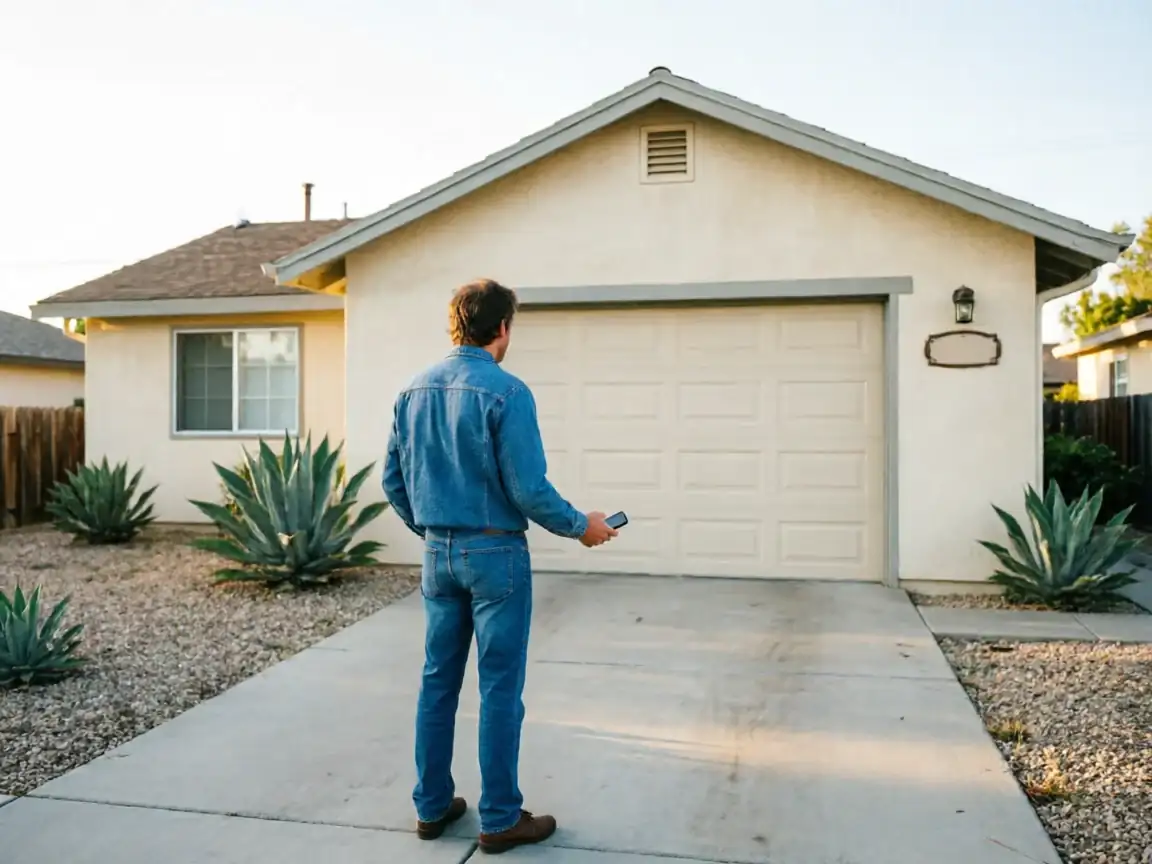
A man in a denim outfit holds a garage door opener in front of a house.

Tell us what’s wrong

Describe the symptom - won’t open, loud bang, opener runs but the door won’t move.

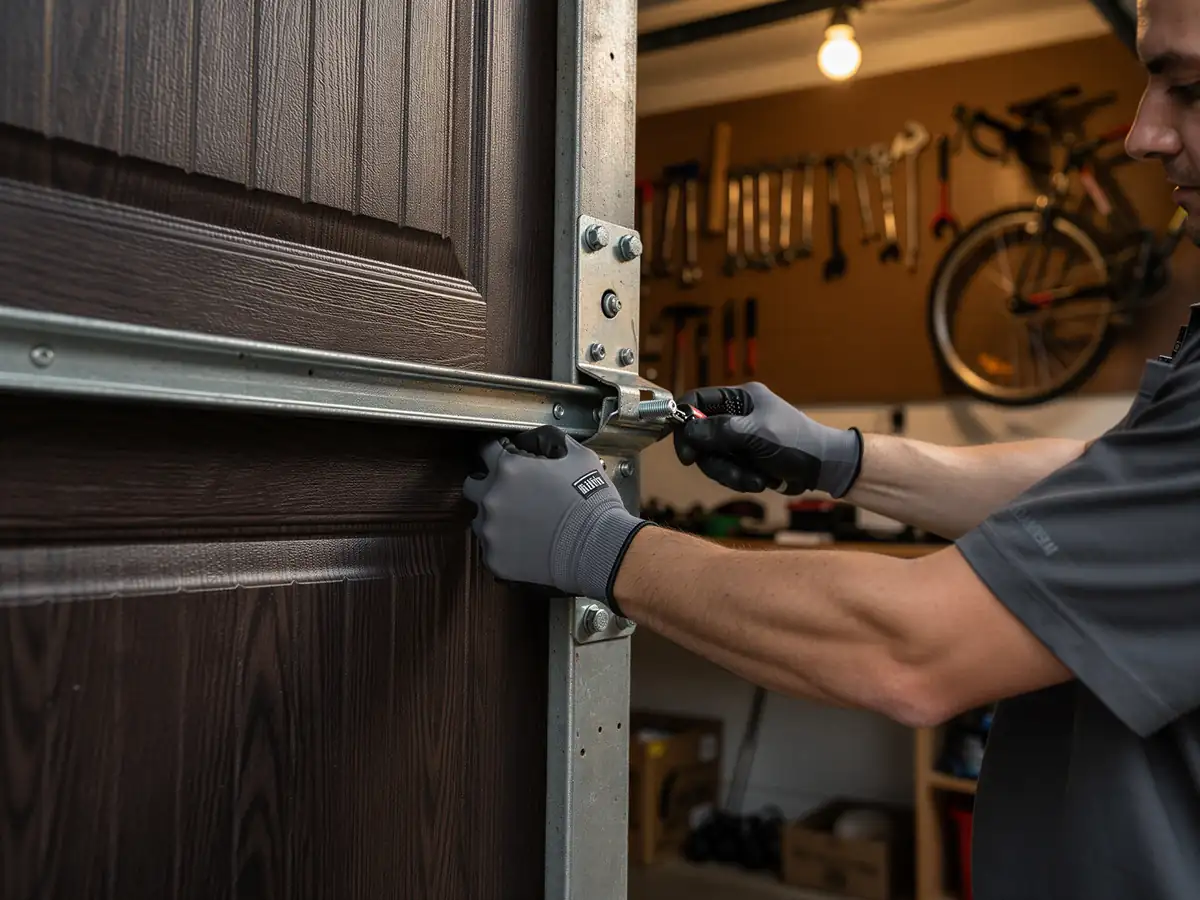
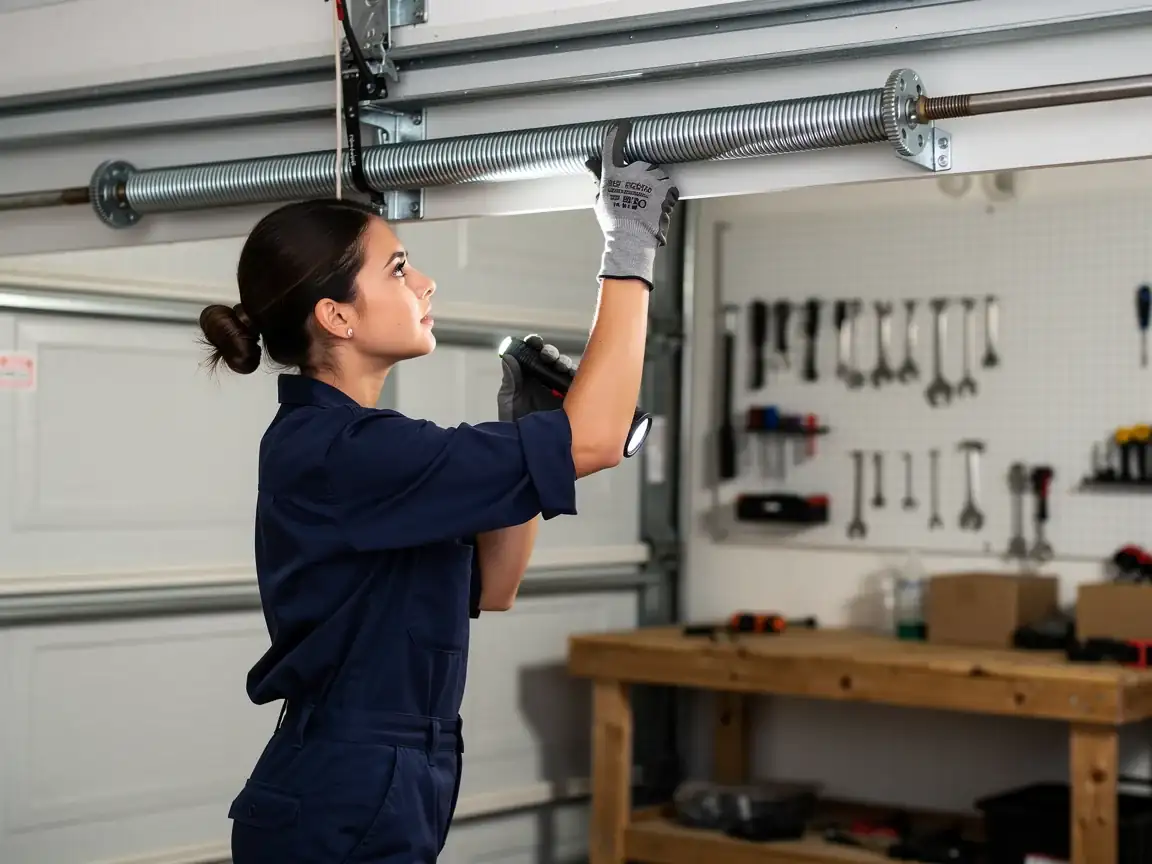
A technician in a blue jumpsuit inspects a garage door torsion spring with a flashlight.

On-site diagnosis

A technician tests the door under power and by hand and finds what actually failed.

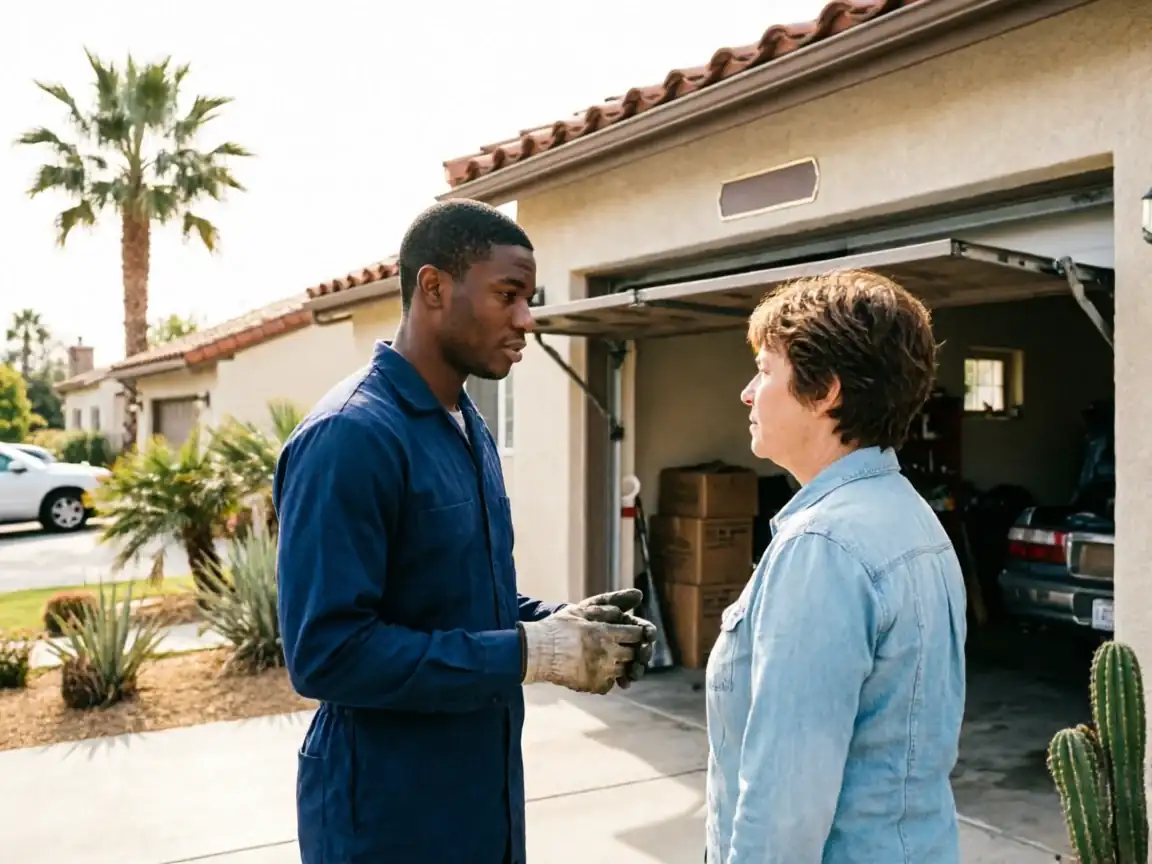
A technician in a blue uniform talks to a woman in front of an open garage.

Clear, up-front plan

You get the fix that’s needed and what drives the cost - before any work starts.

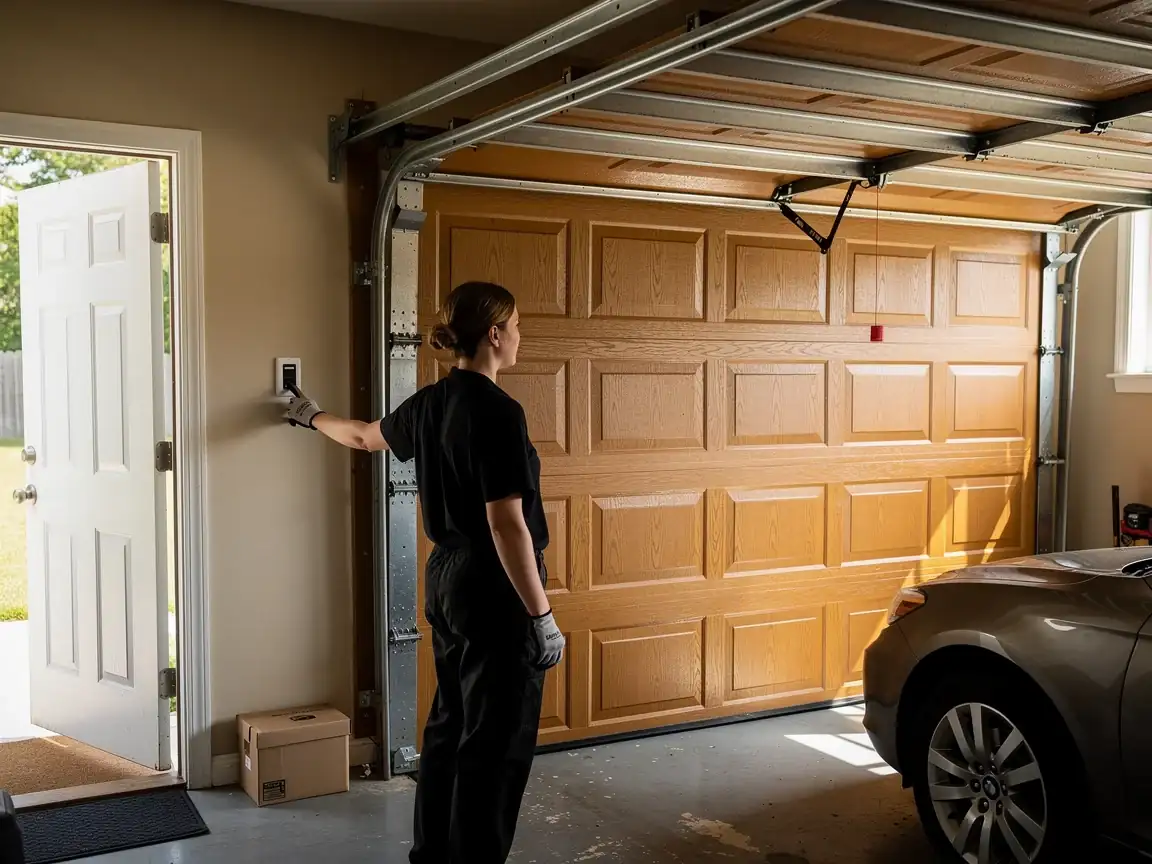
A technician presses a button on the wall next to a closed wooden garage door.

Repaired & tested

The repair is done, the door is set true and tested, and the work area left clean.

Not sure which repair your door needs in Downey, CA? Describe what it’s doing - every job starts with a diagnosis.

How we work

What to expect

A straight, honest approach on every Downey job.

Diagnosis first

Every visit starts by finding what actually failed - not a pre-written parts list.

The right part for the door

Springs and openers matched to the door’s weight and age, so the fix holds up.

Straight answers

When a repair makes more sense than a replacement - or the reverse - you hear it plainly.

Clean, careful work

Tension released safely, hardware set true, the door tested under power before we leave.

What we do

Garage Door Services

Repair and installation work for Downey homes and businesses.

Questions

Frequently asked

Straight answers about garage door repair in Downey. Still unsure? Ask us directly.

Why does my garage door let in a draft even though Downey doesn't get cold winters?

In this mild temperate band, seals don't crack from freeze-thaw cycling. They fail slower, from decades of sun exposure and daily heat flex, especially on west-facing doors. By the time you notice the draft, the rubber has usually been flattening for years without an obvious trigger moment.

My house was built in the 1960s - is the original seal still on the door?

It's possible, especially if the door itself hasn't been replaced. A lot of the housing stock in this part of the county dates to the 1960s and 70s, and original bottom seals on doors that age are typically cracked or glazed smooth, even without harsh winters to speed up the wear.

Will new weatherstripping fix a gap at the bottom of my garage door?

Often, yes - but not if the slab itself has settled unevenly, which turns up on some older concrete in this area. If the gap is wider on one side than the other even with new seal installed, that's a floor-level issue, not a seal issue, and needs a different fix.

How often do garage door seals need replacing in a mild climate like Downey's?

Less often than in a market with hard freezes, since you're not getting the rapid cracking that cold cycling causes. But sun and heat still break rubber down over years, so a seal that looks fine at a glance can still be past doing its job.

Ready to get your garage door sorted?

Tell us what it’s doing and where you are in Downey - we’ll take it from there.

Request a QuoteCall