What Most People Get Wrong
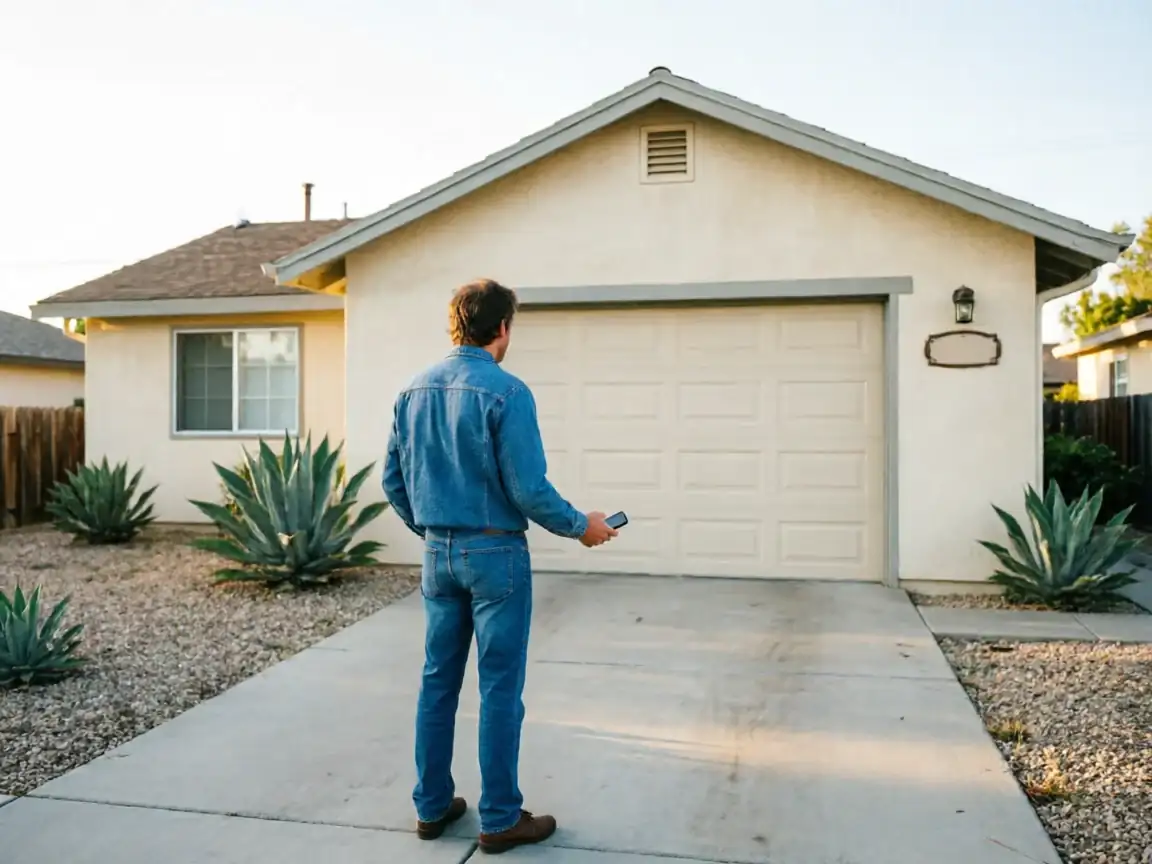
Most Downey homeowners treat garage door noise as background static - something the house just does. That's a reasonable guess in a newer subdivision with doors installed in the last decade. It's a bad guess here. Housing in this service area was built mostly between 1943 and 2012, with a median build year of 1963, and most of the stock across the surrounding 90 named areas dates to the 1960s and '70s. That means a lot of doors are running on hardware that's original or close to it - galvanized torsion springs, steel rollers, lift cables that have never been swapped.
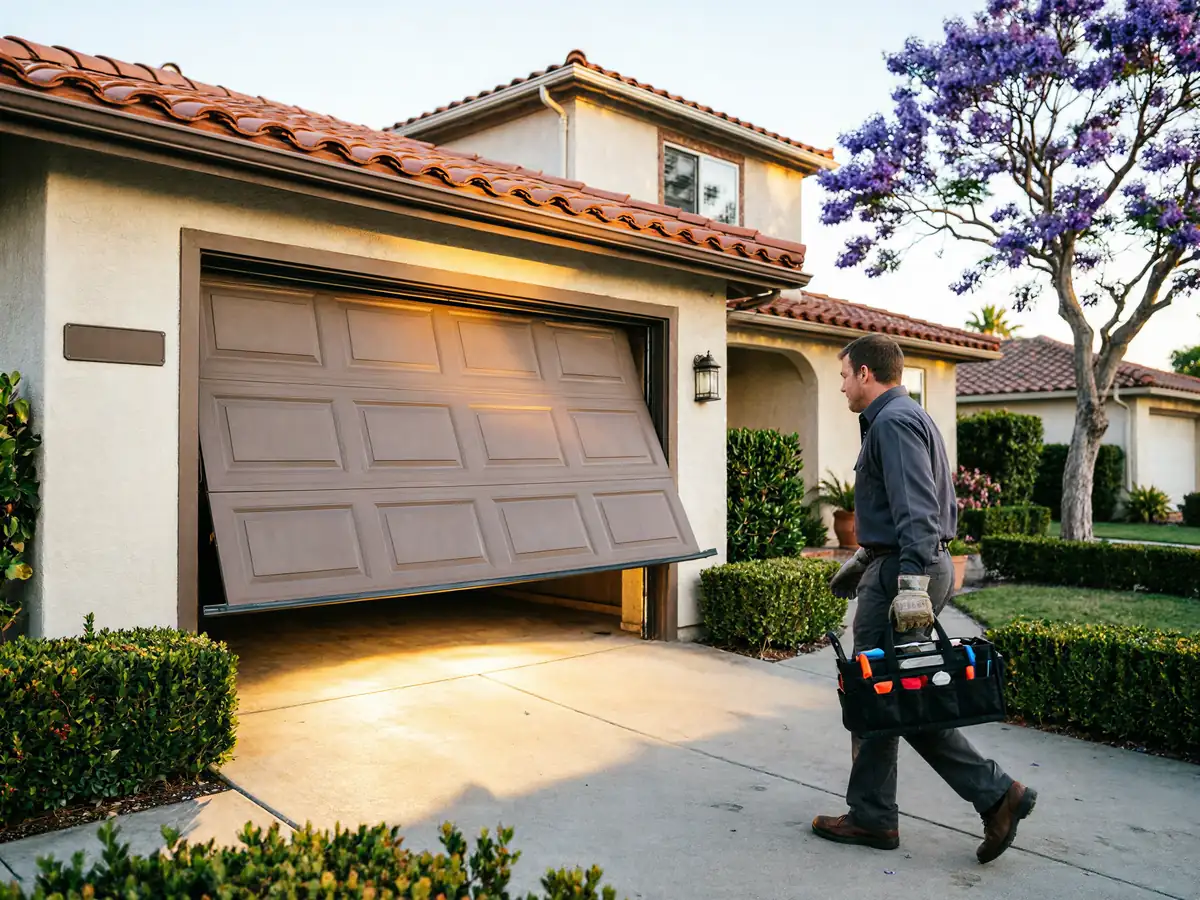
On a door that old, a new sound isn't random. It's a part telling you it's near the end of its rated cycle count. The mistake isn't hearing the noise - it's assuming it's cosmetic because the door still opens. A spring that's about to let go usually makes noise for weeks before it does. A roller riding a worn track groove will squeal long before it jumps the rail. People wait for the door to actually fail, and by then you're not scheduling a tune-up, you're calling for an emergency repair with a door stuck halfway down.
The Problem
Different noises point to different parts, and on a house from the 1960s or '70s, the part is usually original. A sharp metallic bang, often loud enough to hear from inside the house, is almost always a torsion spring breaking under tension - not dangerous if the door was closed, but it means the door won't open under its own power until the spring is replaced. A rhythmic grinding or popping as the door travels is typically a roller that's worn past its bearing, especially common once a steel roller on original hardware passes 10-15 years of regular use without lubrication service.
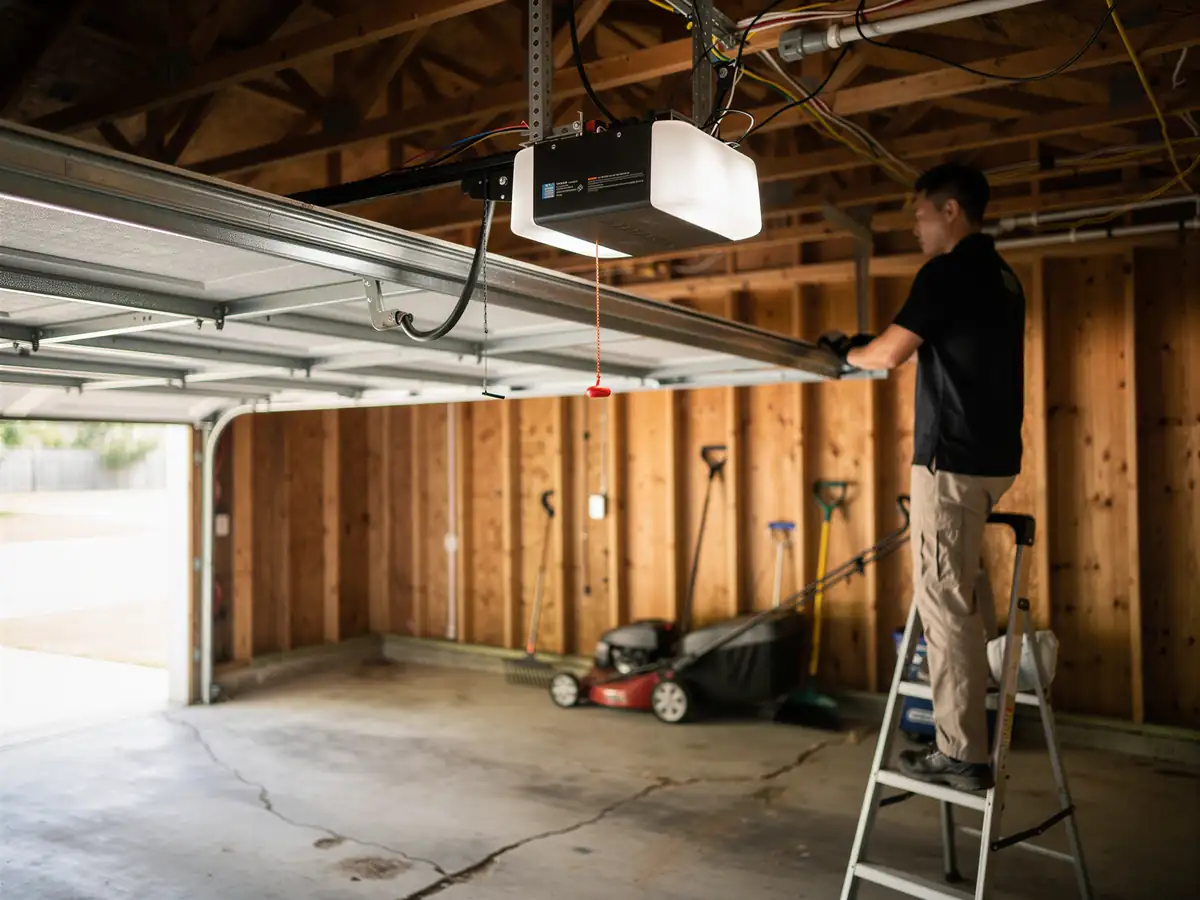
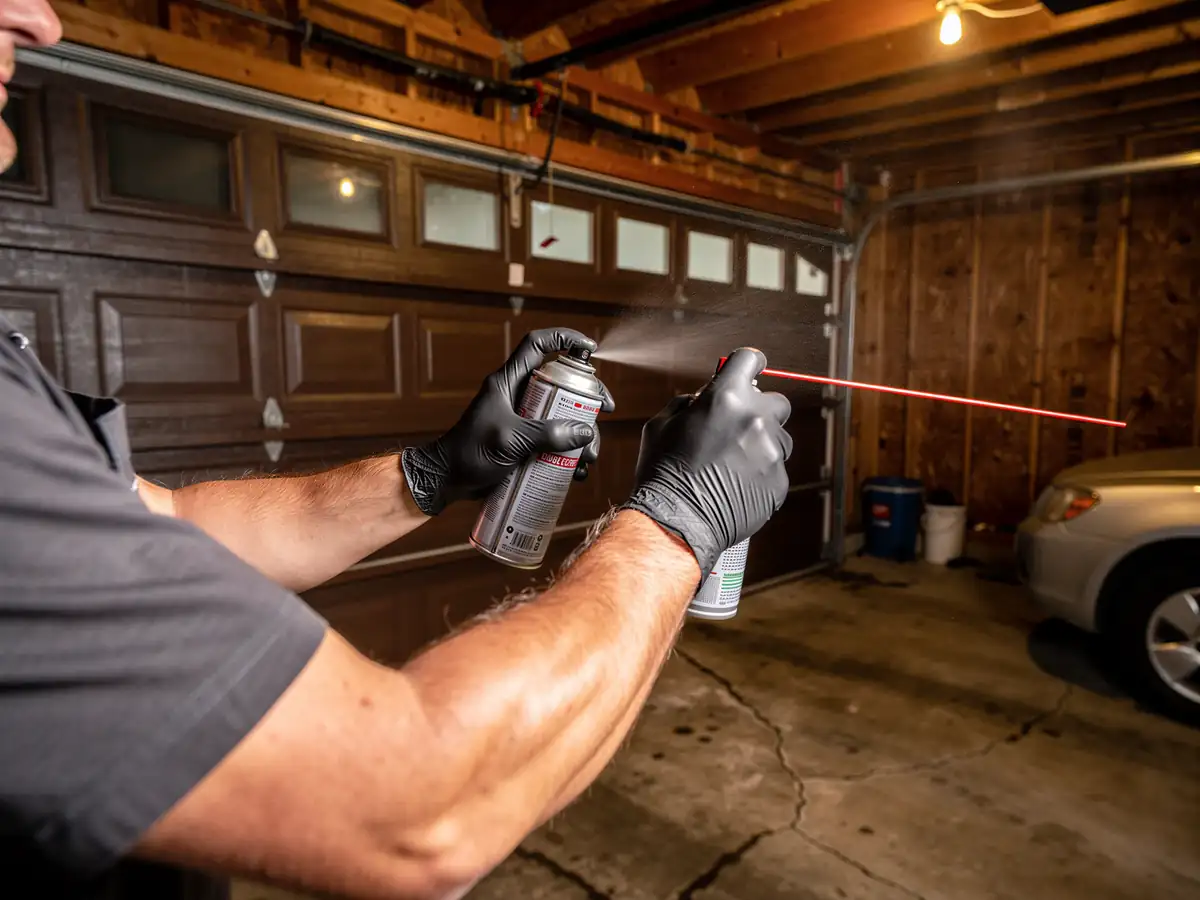
A loud rattle concentrated at the top of the door, right where the opener arm connects, often means the opener's gear has started to strip - plastic gears in openers from this era wear out quietly until they don't. Cable squeal, a thin high-pitched sound as the door nears the floor, usually means a cable is fraying against the drum. None of these are guesses you should make from inside the house with the door closed. They're diagnoses that require someone to actually look at the spring, the track, and the drum while the door cycles.
How Local Conditions Play In
Downey sits in a mild temperate climate band
Which works in your favor compared to places with real freeze-thaw cycles or extreme heat swings - you're not fighting ice-cracked seals or sun-warped panels the way houses in harsher climates do. That's the good news, and it's real.
But mild weather doesn't stop mechanical wear
And on housing stock with a median age in the 1960s, wear is the whole story. A torsion spring loses tension through cycle count, not through weather extremes, so a door that's opened and closed twice a day for fifty-some years is near the end of its service life regardless of how gentle the climate has been. The absence of harsh weather just means that when you do hear something new, it's almost never a weather-related swelling or freezing issue - it's the hardware itself, aging on schedule. That narrows the diagnosis. In this area, a new noise is a parts problem first, not a conditions problem.
What to Check
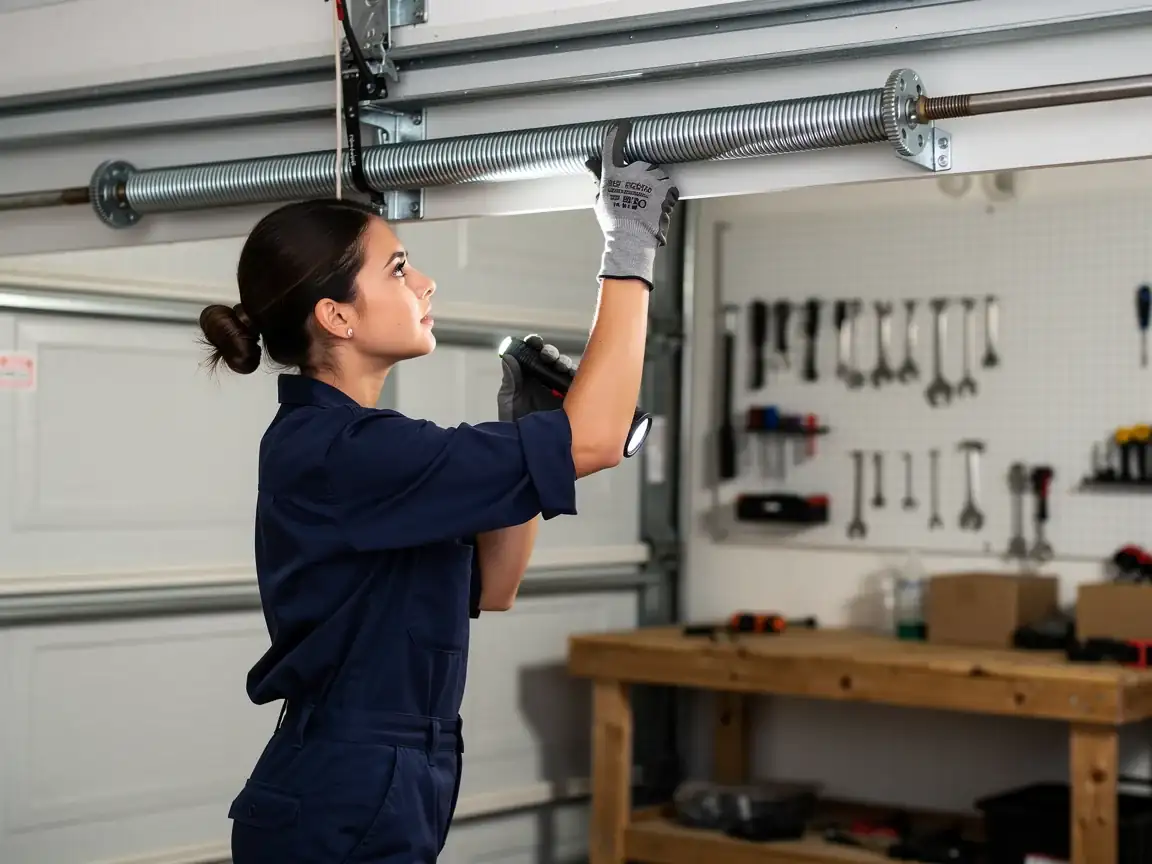
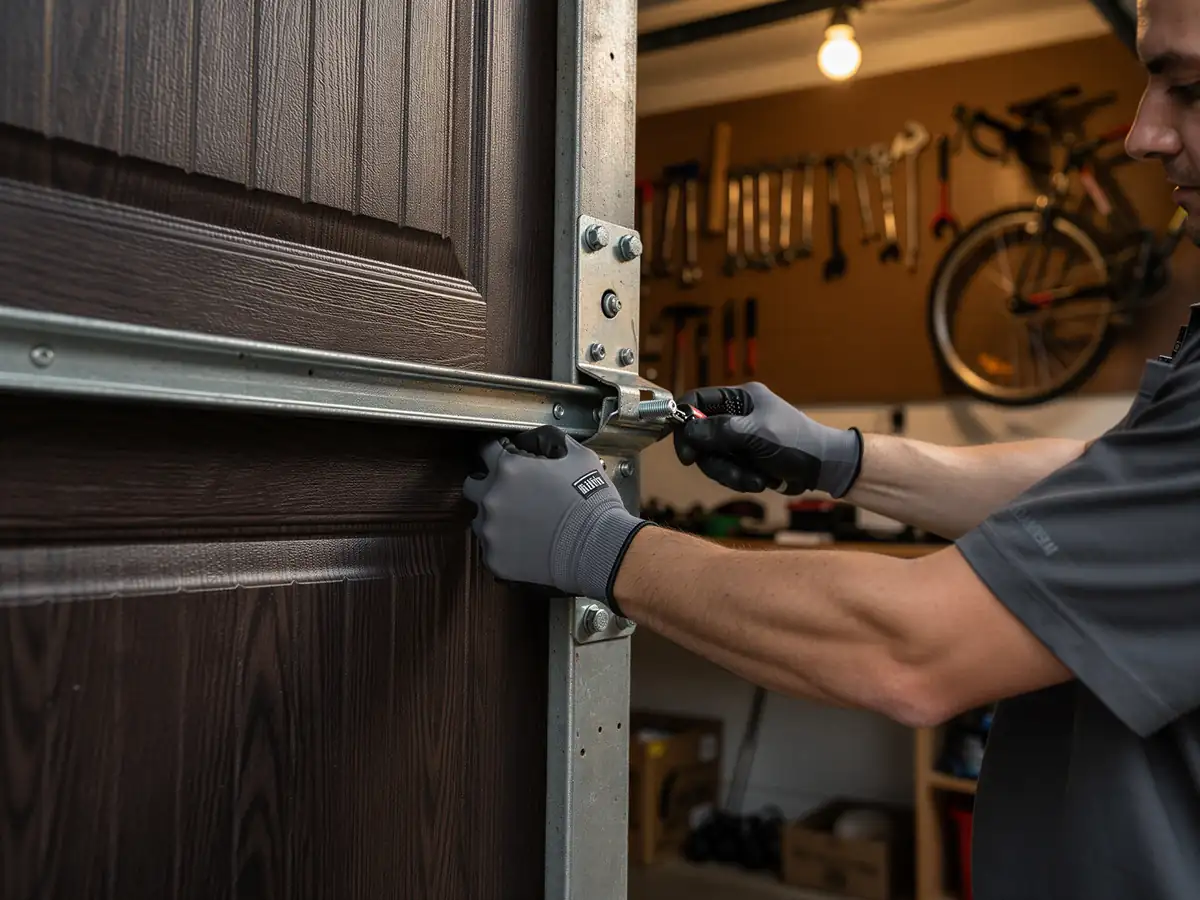
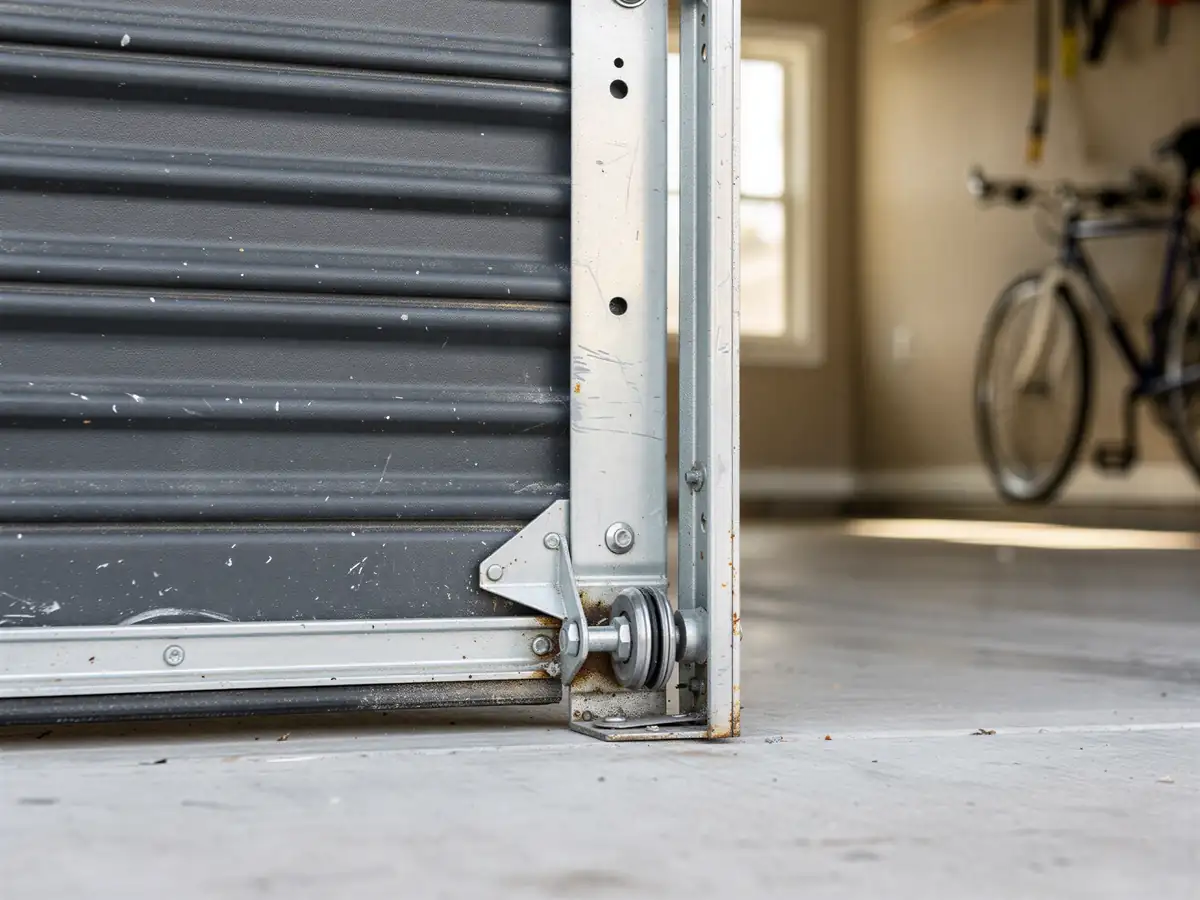
Start with what you can see without taking anything apart. Look at the springs above the door - on original hardware they're often a single torsion spring or a pair, and visible gaps in the coil or rust streaking down from the spring are both signs of age. Check the rollers at the point where they meet the track; chipped or flattened steel rollers and a track with visible wear grooves usually travel together.
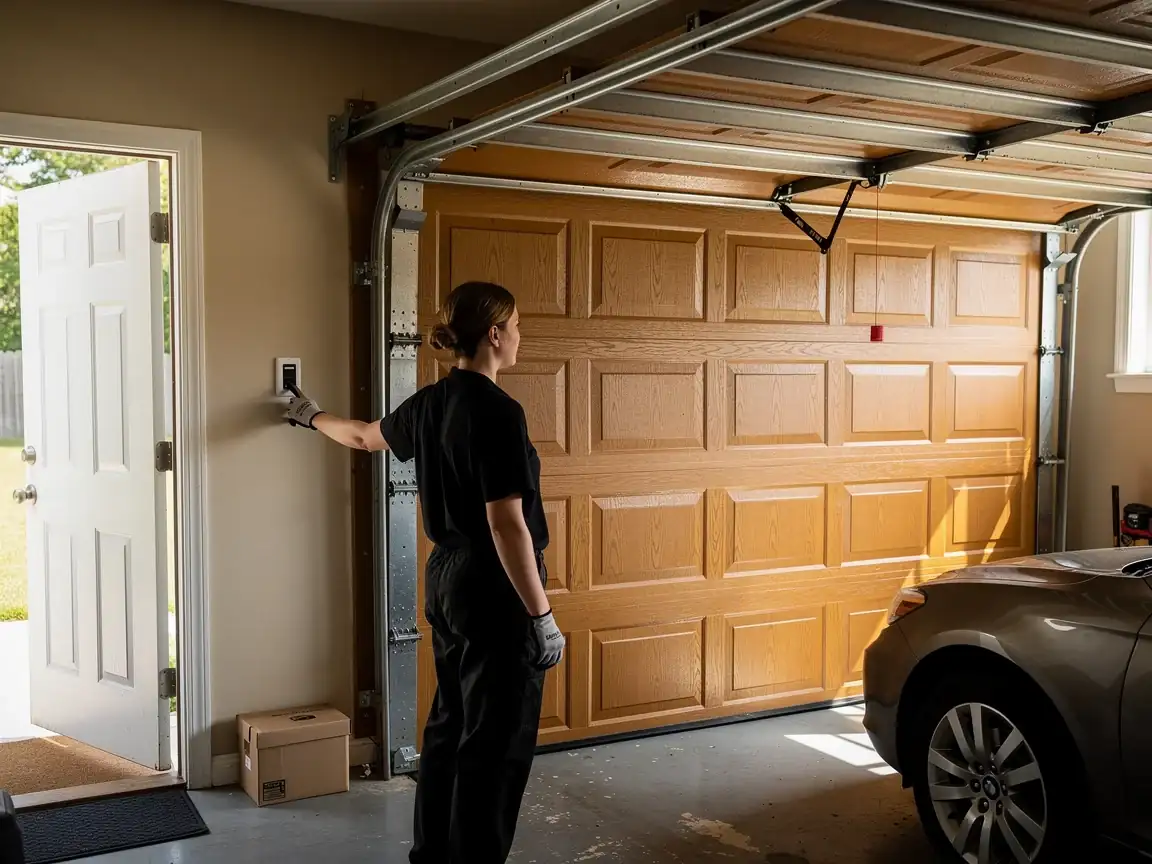
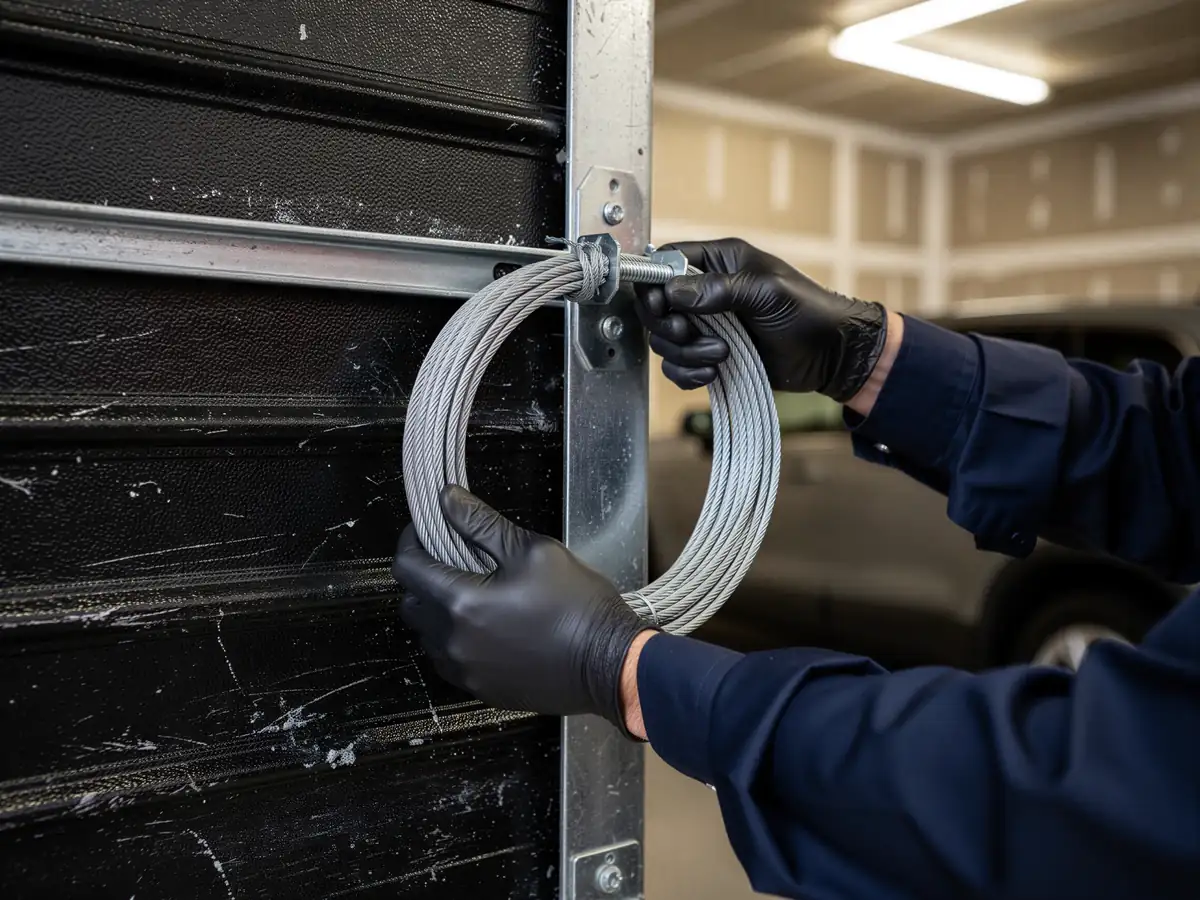
Listen for where the sound happens in the door's travel. Noise near the top, close to the opener, points to the opener gear or the top roller. Noise all the way down points more often to the bottom roller or the cable near the drum. Check the lift cables for fraying, especially near the bottom bracket, since a frayed cable under tension is a real safety issue and not one to wait on.
One honest limit here: we can't tell you from a description alone whether a torn spring on an older door of a specific size is a same-day replacement or a special-order part - spring sizing on original hardware from this era varies enough that it has to be measured on site before we can quote the fix.