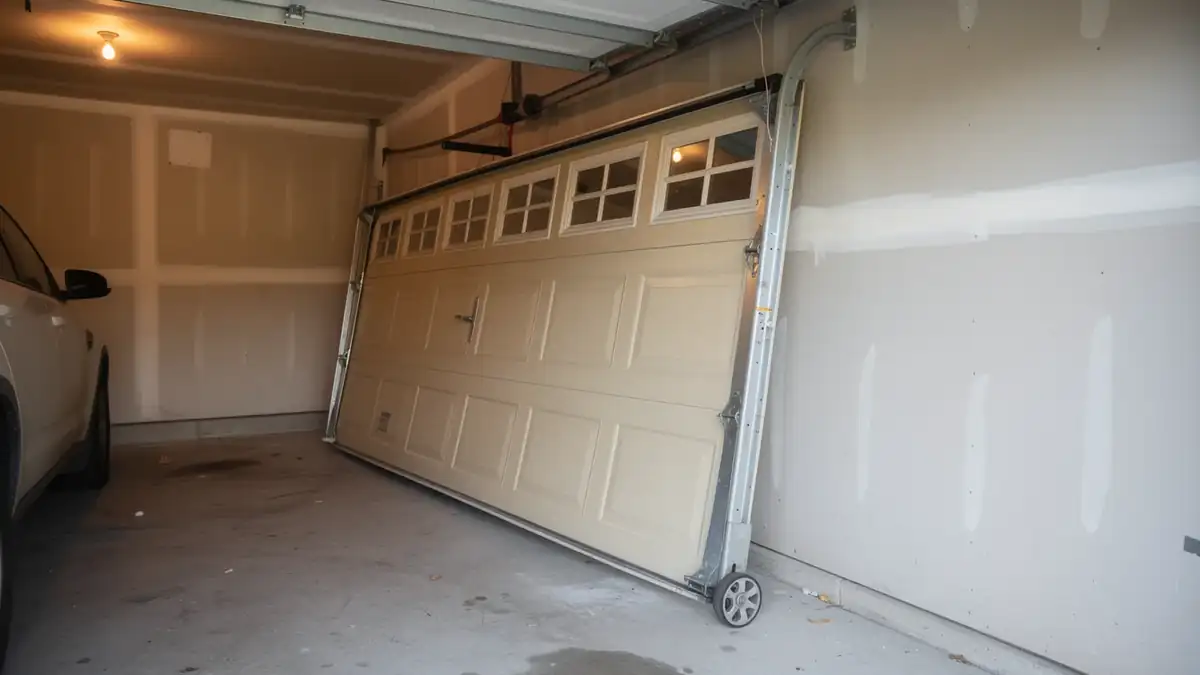
What Most People Get Wrong
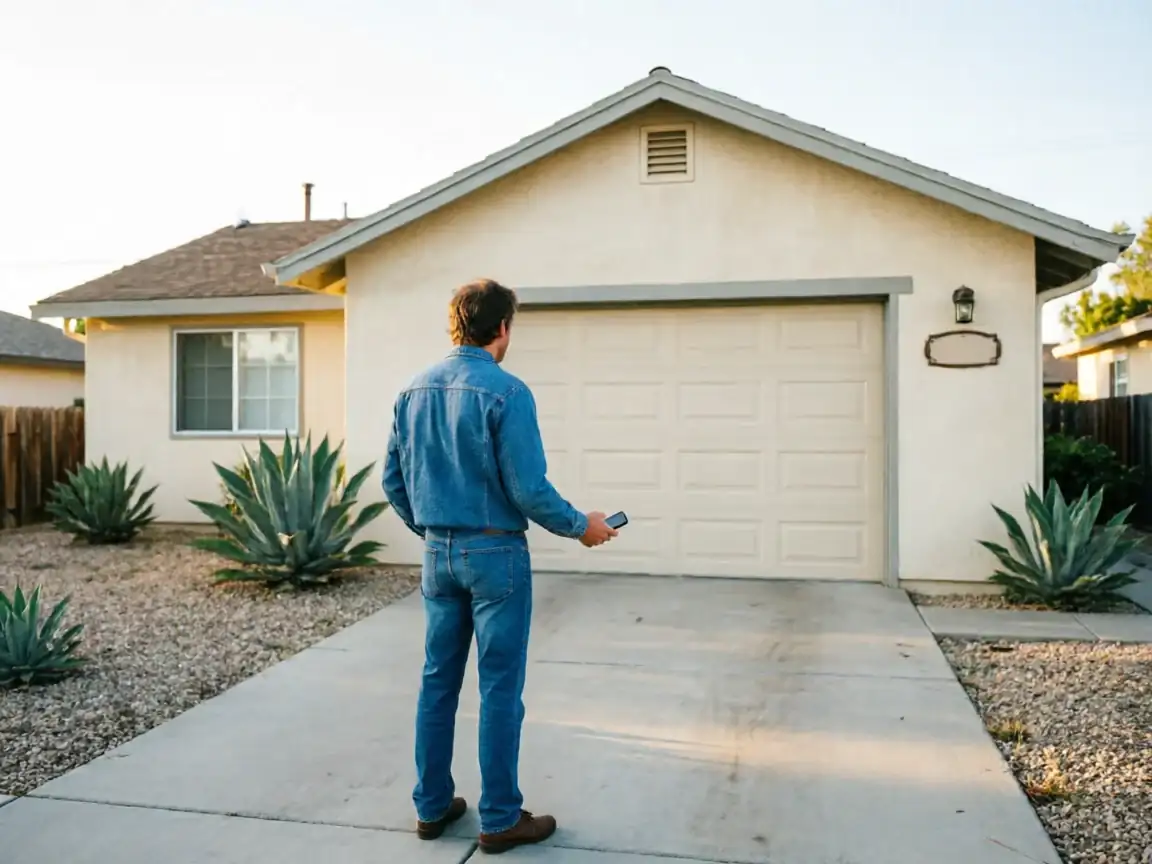
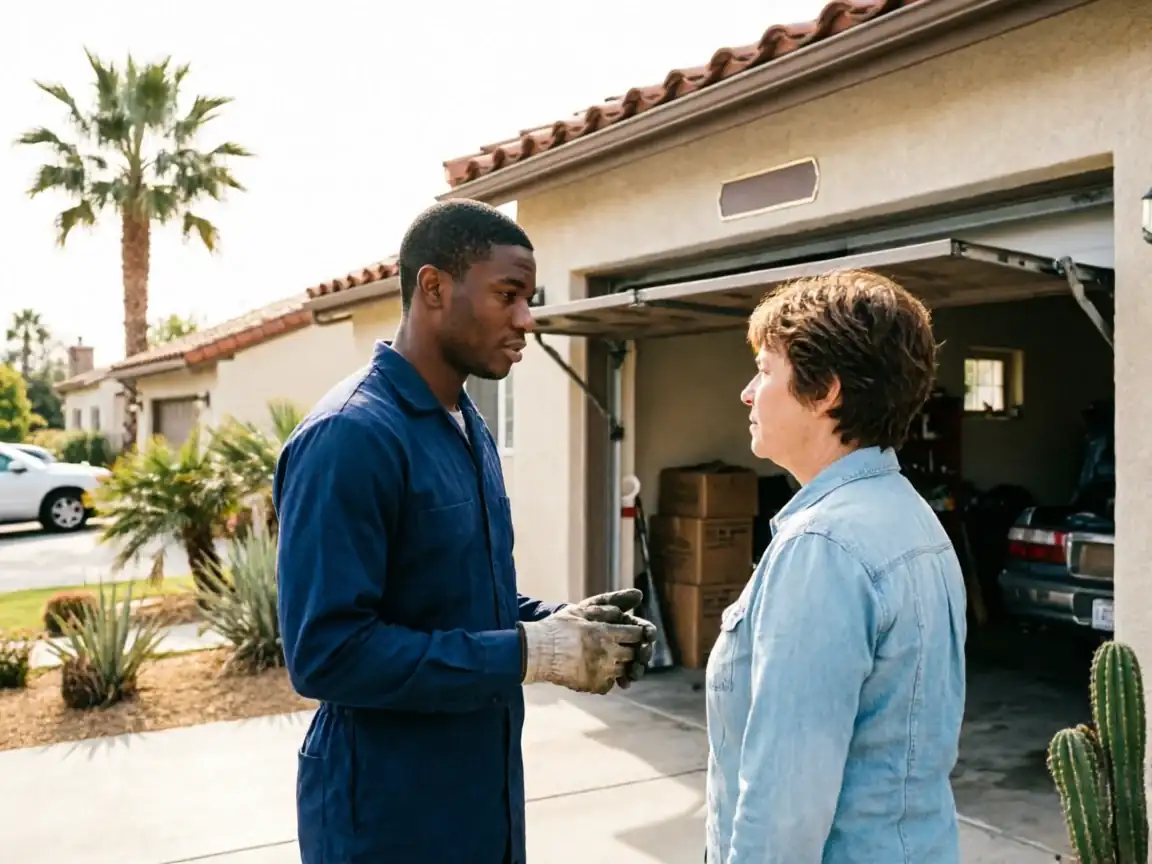
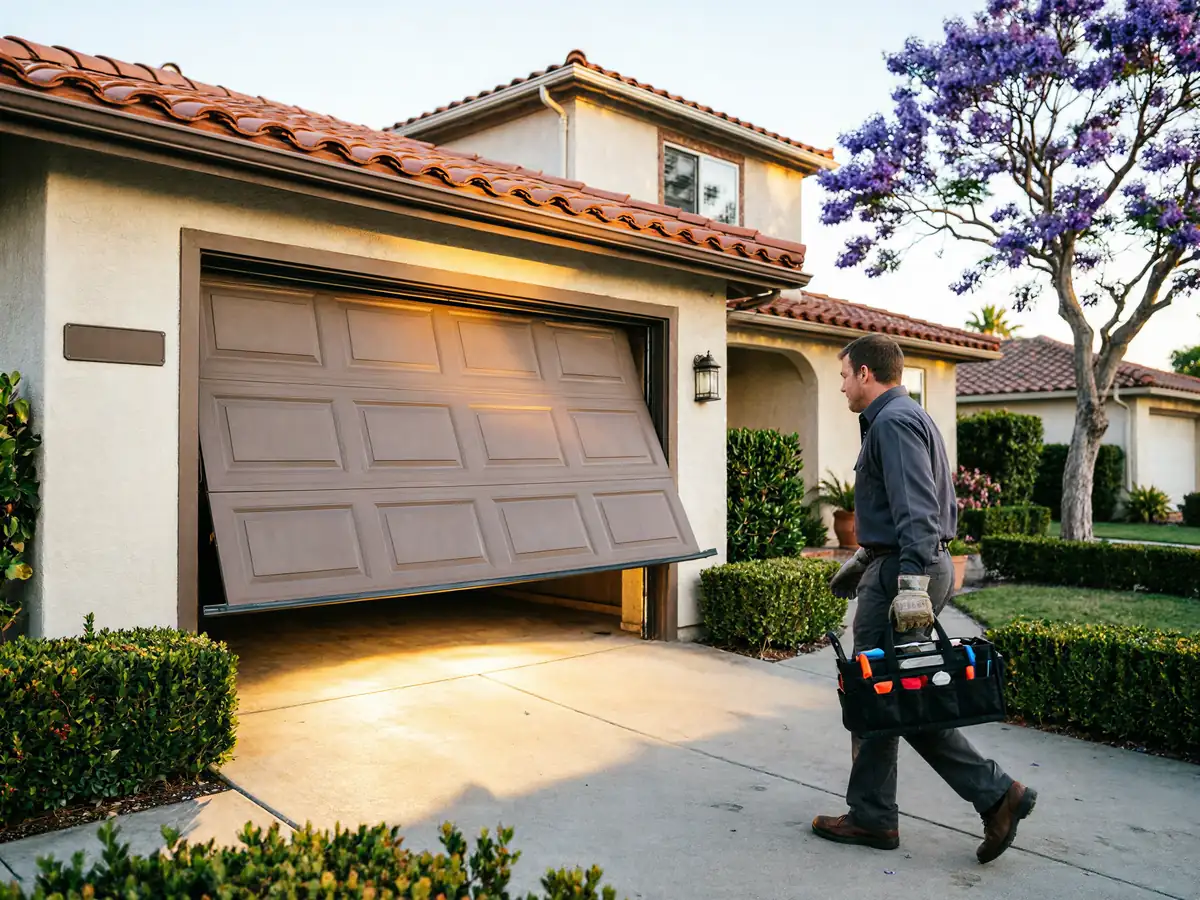
Most homeowners hear a door scraping or see it hanging crooked and assume the spring is shot or the whole unit needs replacing. Sometimes that's true, but more often the door itself is fine and the track just isn't holding it straight anymore. The other assumption we hear a lot is that this is a weather problem - ice in the track, frost pushing things out of line. That's a fair guess in a lot of parts of the country, but it doesn't fit here. Downey sits in a mild temperate climate band, so the freeze-thaw cycling that cracks concrete and heaves hardware loose somewhere colder just isn't the mechanism at work on a local garage. What actually knocks a door off track in this area is almost always mechanical: a loose bracket, a bent rail, rollers worn past spec, or framing that's settled a little after decades of the same door cycling through it twice a day. Treating it as a weather issue means you fix the wrong thing, tighten a bolt that wasn't loose, and the door drifts off again in a month.
The Problem
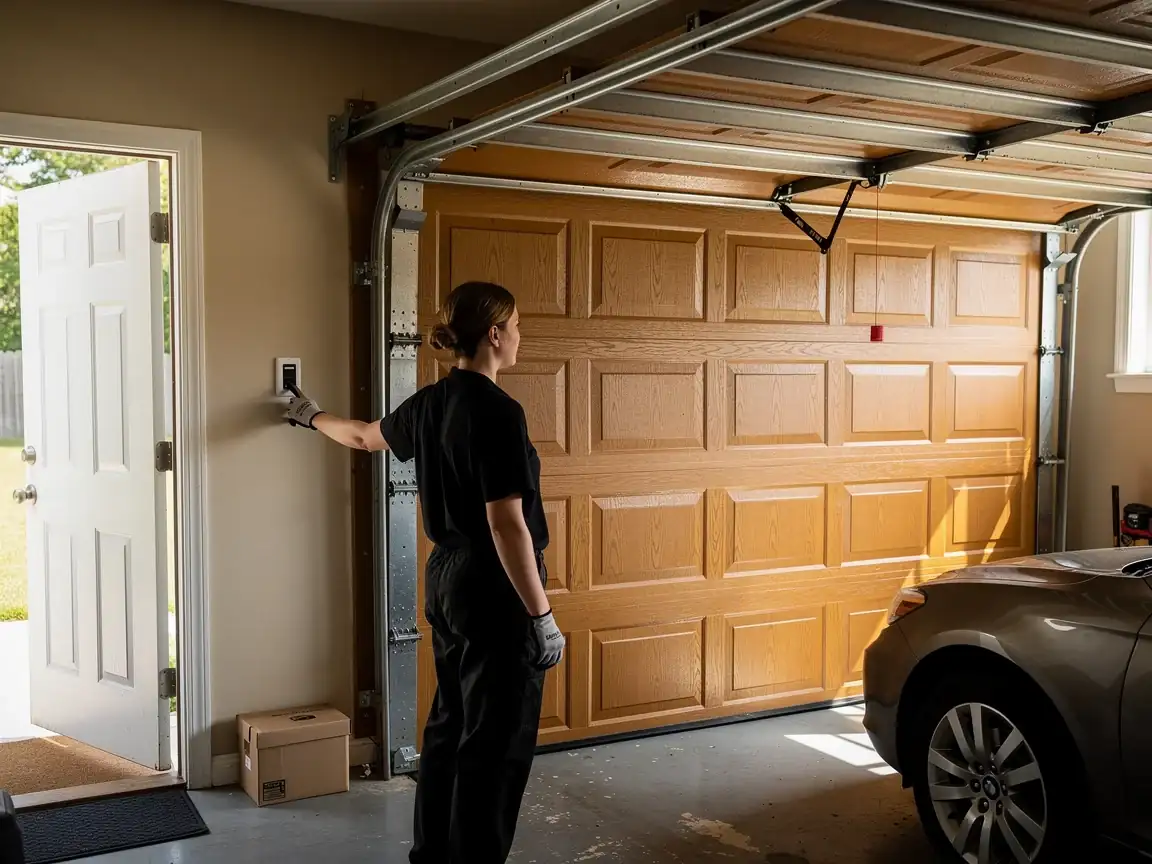
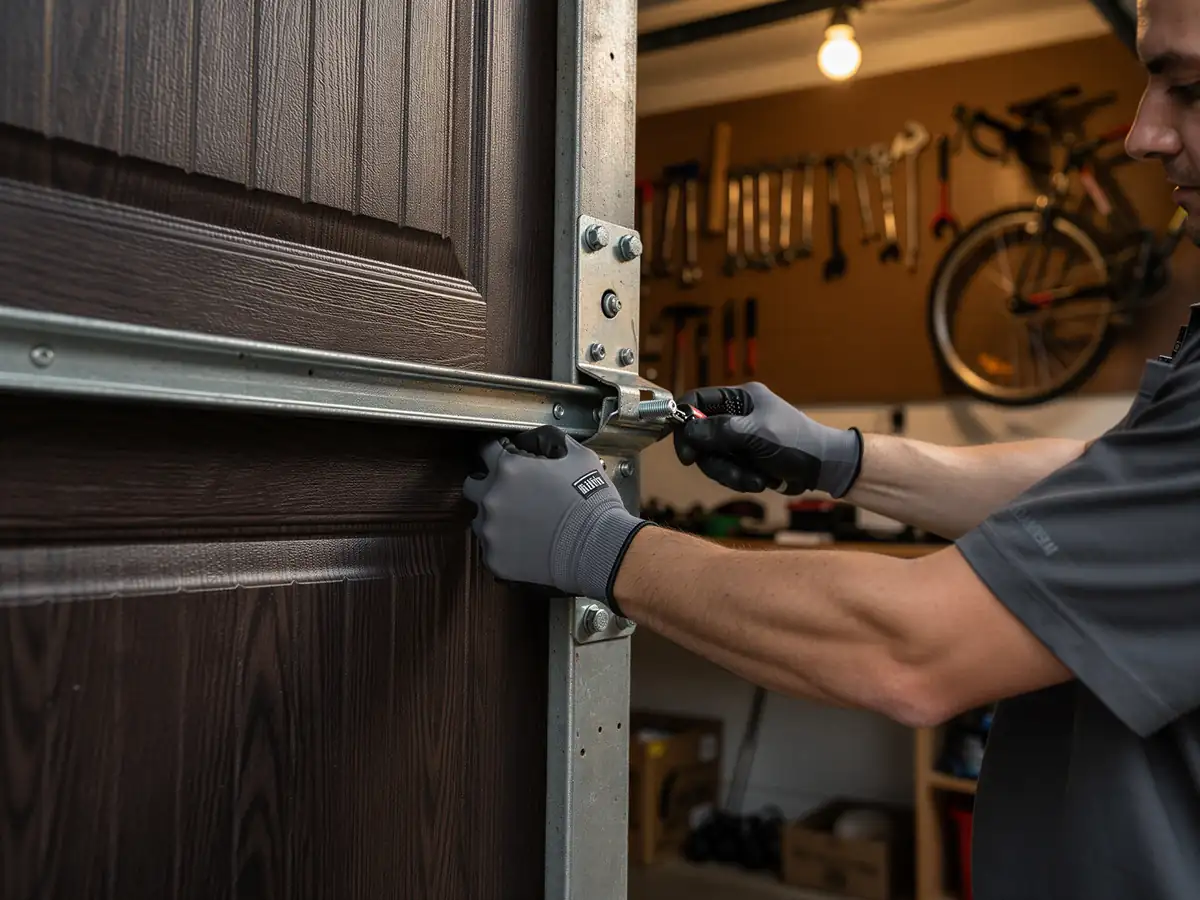
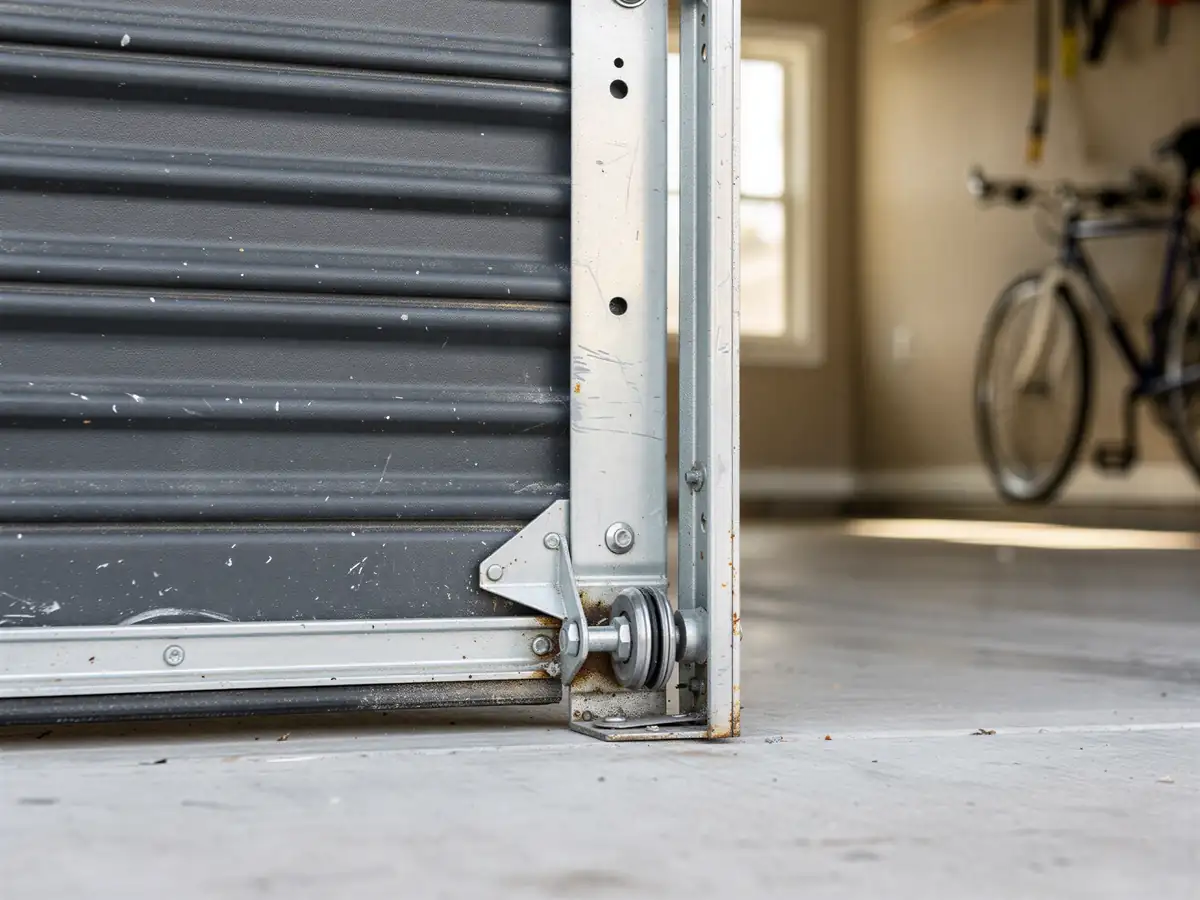
A garage door rides on rollers that sit inside a track, held to the framing by brackets and lag bolts. When everything is square, the rollers glide. When a bracket works loose, or the track picks up even a slight bend from a bumper tap or a stray basketball, the rollers start climbing the edge of the rail instead of sitting flat in it. At low speed that shows up as noise. Left alone, it shows up as a door that jumps the track entirely, usually at the bottom corner where the stress is highest. Housing in this part of Downey was mostly built between 1943 and 2012, with the typical house dating to around 1963, so a large share of the garages in town are still running on brackets and rail hung during that original build - hardware that's now pushing sixty years old and was never meant to carry a heavier insulated door that may have replaced the original single-layer panel somewhere along the way. Age alone doesn't bend a track, but sixty years of normal use on original fasteners is exactly how a bracket works loose a quarter-turn at a time until one day it lets go.
What to Check
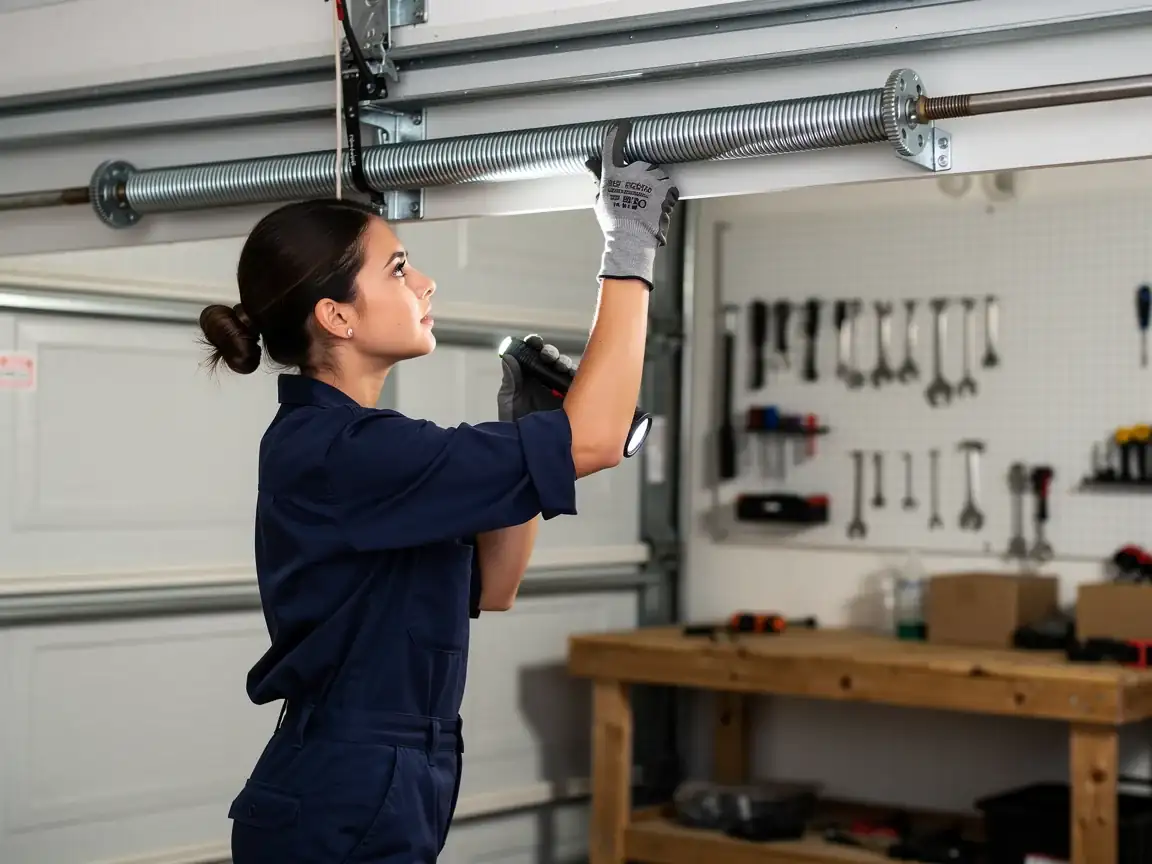
Start with the gap between the rollers and the track - there should be a small, even gap along the whole length, not a spot where it pinches or widens. Run a level against the vertical rail; if it bows in or out anywhere, that's your likely culprit. Check the lag bolts holding the brackets to the framing - on a house from the 1960s stock common to this area, finding one or two backed out partway is common and often the whole fix. Look at the rollers themselves for flat spots or cracked edges, since a worn roller rides rougher in the track and accelerates the same bracket wear that caused the problem in the first place. One honest limit here: if a track is visibly bent rather than just loose, straightening it rarely holds for long - a bent rail almost always needs to be replaced outright rather than bent back into shape, and we'll tell you that up front rather than charge for a repair that won't last.