Serving Downey, CA & nearby
(562) 581-7912
Downey, CA

Safety Sensors and Why They Drift in Downey Homes

Why safety sensor alignment fails on Downey's 1960s-70s garage doors, how the mild climate still shifts slab and track, and what to check before calling.

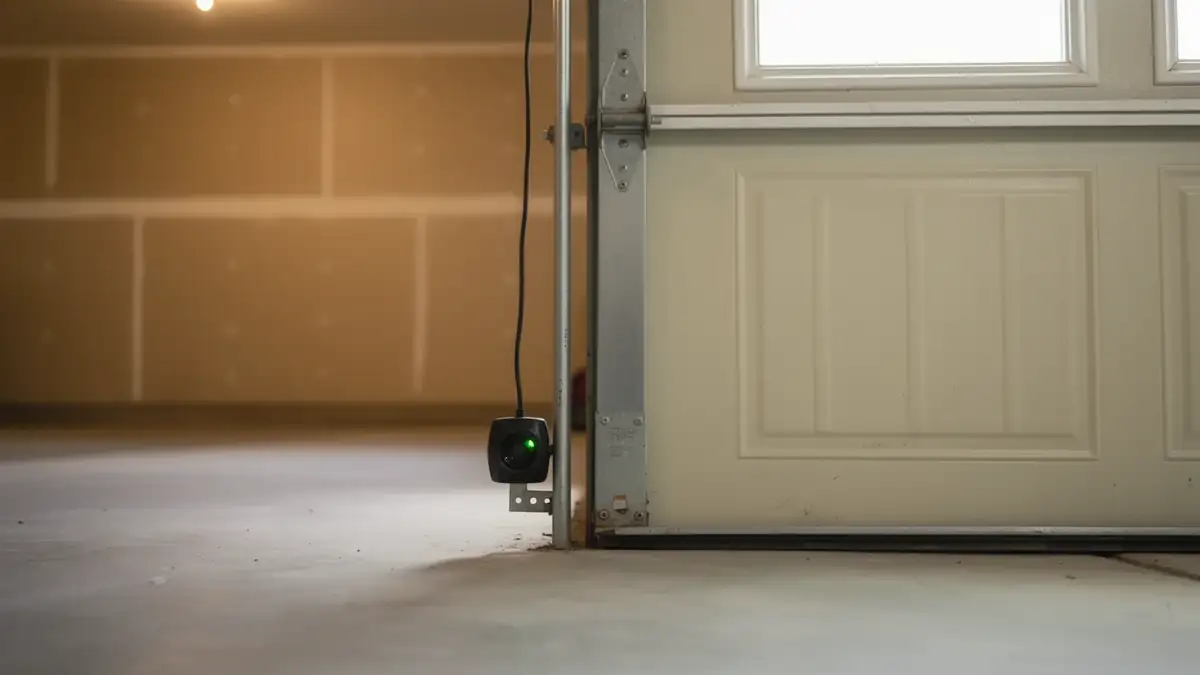
A garage door safety sensor with a green light is mounted near the floor.

What Most People Get Wrong

Most homeowners here assume a sensor that worked last month should still work this month, and when the opener starts reversing or refuses to close, they jump straight to replacing the opener board. On a lot of Downey houses - this city's housing mostly dates to the 1960s and 70s, with stock running from 1943 up through 2012 and a median build year of 1963 - the opener is often newer than the door and track, but the sensor brackets are usually bolted to the same original track hardware that's been there since the house was framed. Nobody touches those brackets during an opener swap unless the installer specifically checks them, so the misalignment problem outlives two or three openers. The sensors aren't failing electronically nearly as often as people think; they're just no longer looking at each other the way they were set up to. A sensor eye that's off by even a few degrees reads as 'blocked' and the opener refuses to run the motor, which looks exactly like a dead opener from the driveway.

The Problem

Garage slabs and the stud framing that tracks get fastened to move very slightly over decades, and on a house built in the 1960s that movement has had sixty-plus years to accumulate. It doesn't take an earthquake-grade shift, just the slow settling that any 60-year-old slab goes through. One bracket drifts a sixteenth of an inch lower than the other, and the infrared beam that used to run dead level now clips the edge of the receiving eye instead of the center. The opener sees that as an obstruction and won't let the door close, or it reverses the door partway down. Because this is gradual, most owners notice it as an intermittent problem for months before it becomes a daily one - the door closes fine on a cold morning when the track metal has contracted a hair, then refuses by afternoon.

How Local Conditions Play In

Downey sits in a mild temperate band, so this isn't a town where you get the brutal freeze-thaw cycling that snaps brackets or the sustained desert heat that warps plastic sensor housings outright. That actually works against quick diagnosis: there's no single harsh season that reminds you to check the sensors, so drift here is slow and steady rather than sudden. The day-to-night temperature swing is still enough to expand and contract the metal track rail a small amount, and on original or early-replacement track from a 1960s or 70s install, that rail has had decades of daily cycling with no climate extreme to flag it. You get nuisance reversals on the hottest and coldest hours of the day well before you get a hard failure, which is usually the first real sign something's loose, not broken.

What to Check

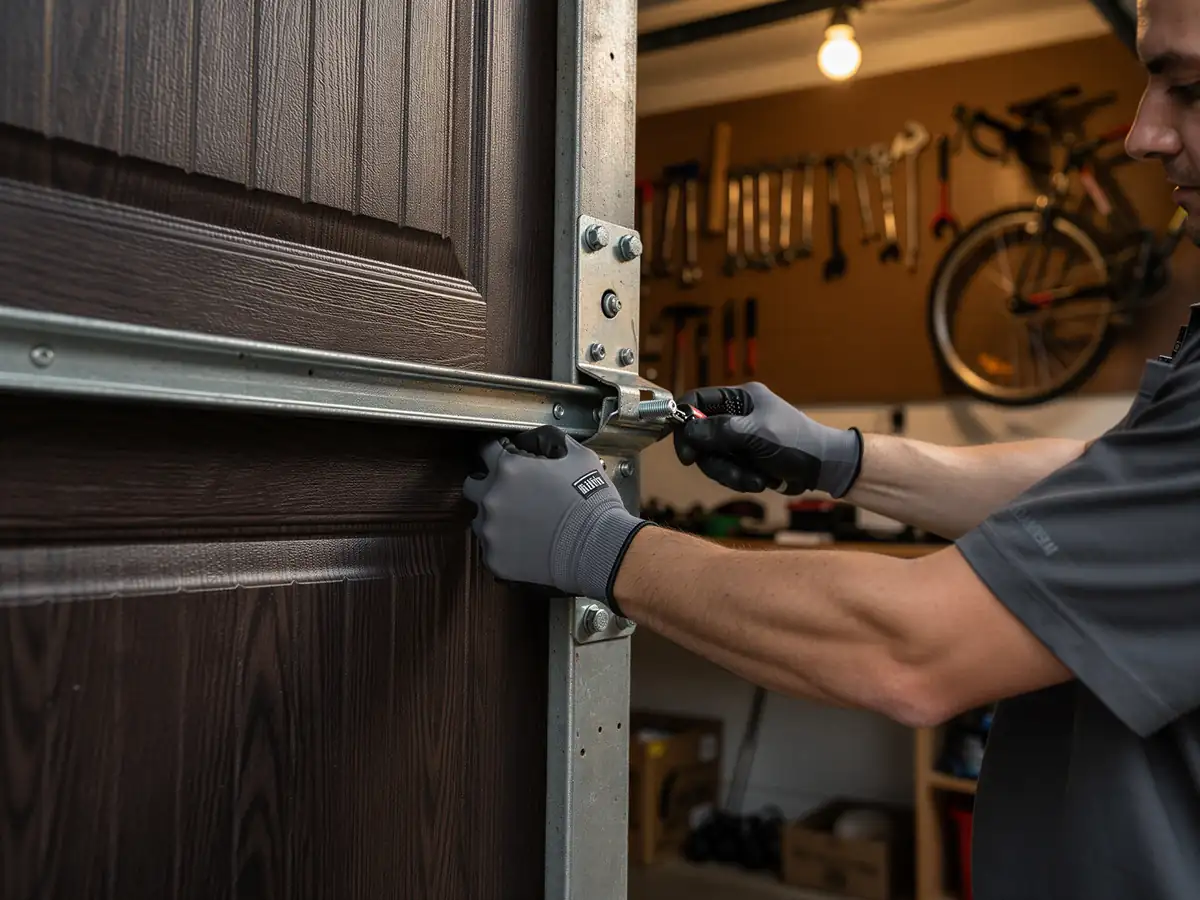
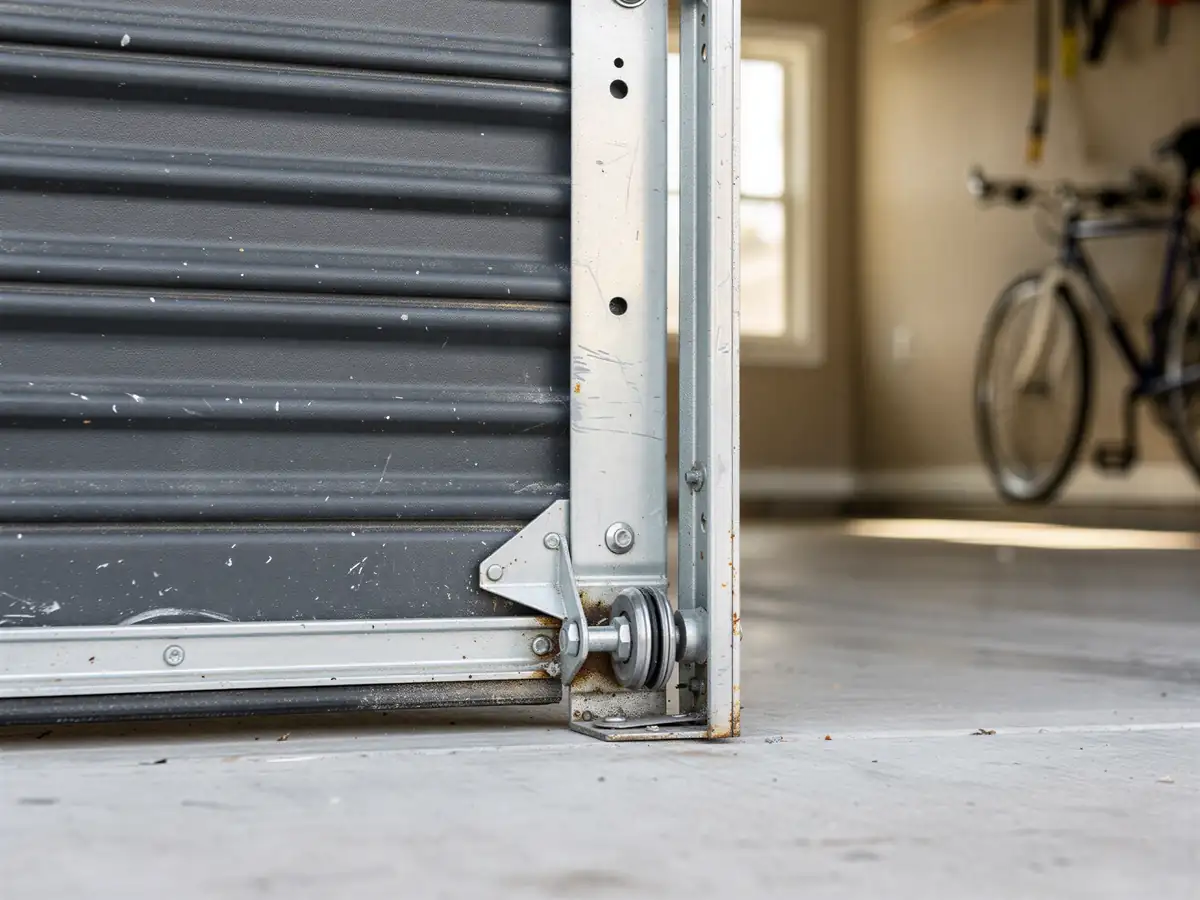
Start by looking at both sensor brackets where they bolt to the track - not the sensor housing itself, the bracket. On older track, that bolt and the slotted hole it sits in can be worn enough that the bracket rocks slightly when you nudge it by hand. If one eye has a steady light and the other blinks or stays dark, that's your misalignment, not a wiring fault. Wipe both lenses first; dust buildup reads the same as misalignment and gets blamed on the sensors constantly. If the brackets themselves are bent, rusted, or the mounting holes are stripped from age, realigning them is a stopgap - replacing the bracket is the actual fix, and that's a part we don't always have on the truck for older track styles, so a same-visit fix isn't guaranteed. We don't recommend rewiring a sensor pair as a first move; nine times out of ten the fix is mechanical, not electrical.
How it works

From “it’s stuck” to “it’s fixed”

A man in a denim outfit holds a garage door opener in front of a house.

Tell us what’s wrong

Describe the symptom - won’t open, loud bang, opener runs but the door won’t move.

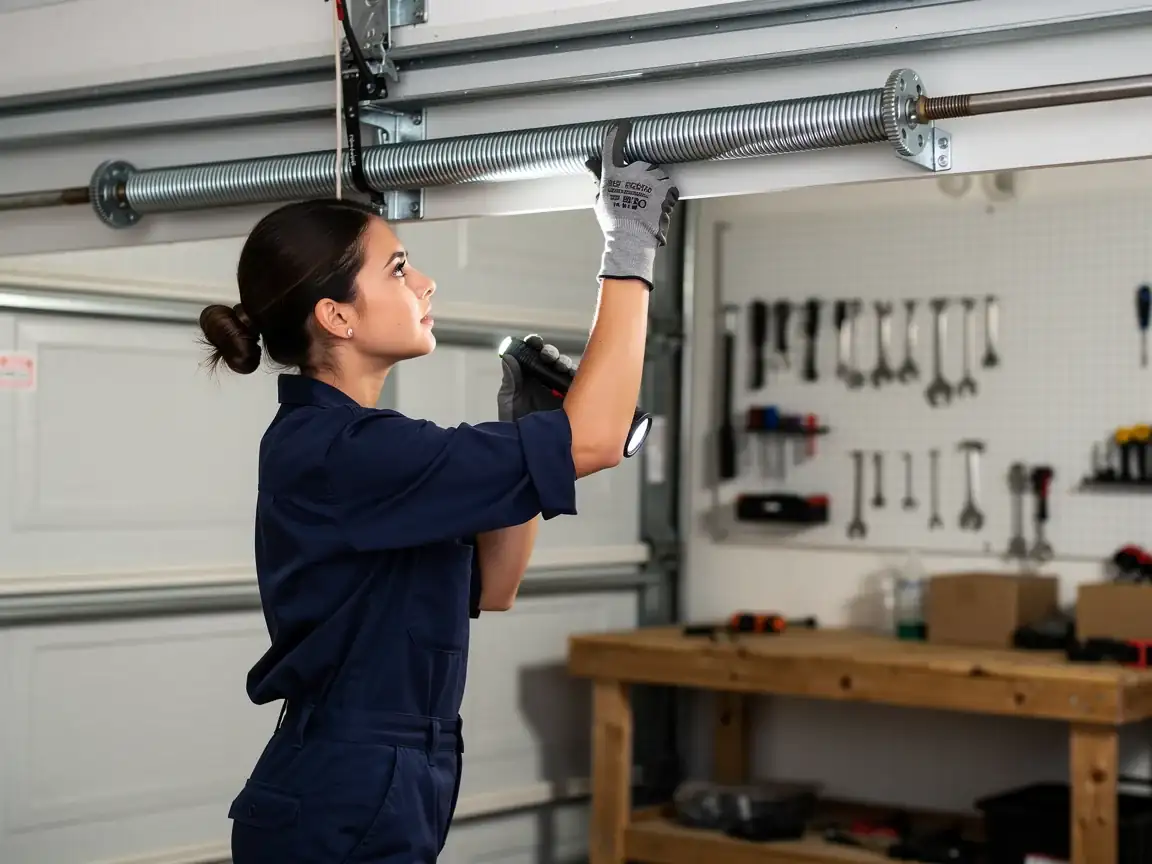
A technician in a blue jumpsuit inspects a garage door torsion spring with a flashlight.

On-site diagnosis

A technician tests the door under power and by hand and finds what actually failed.

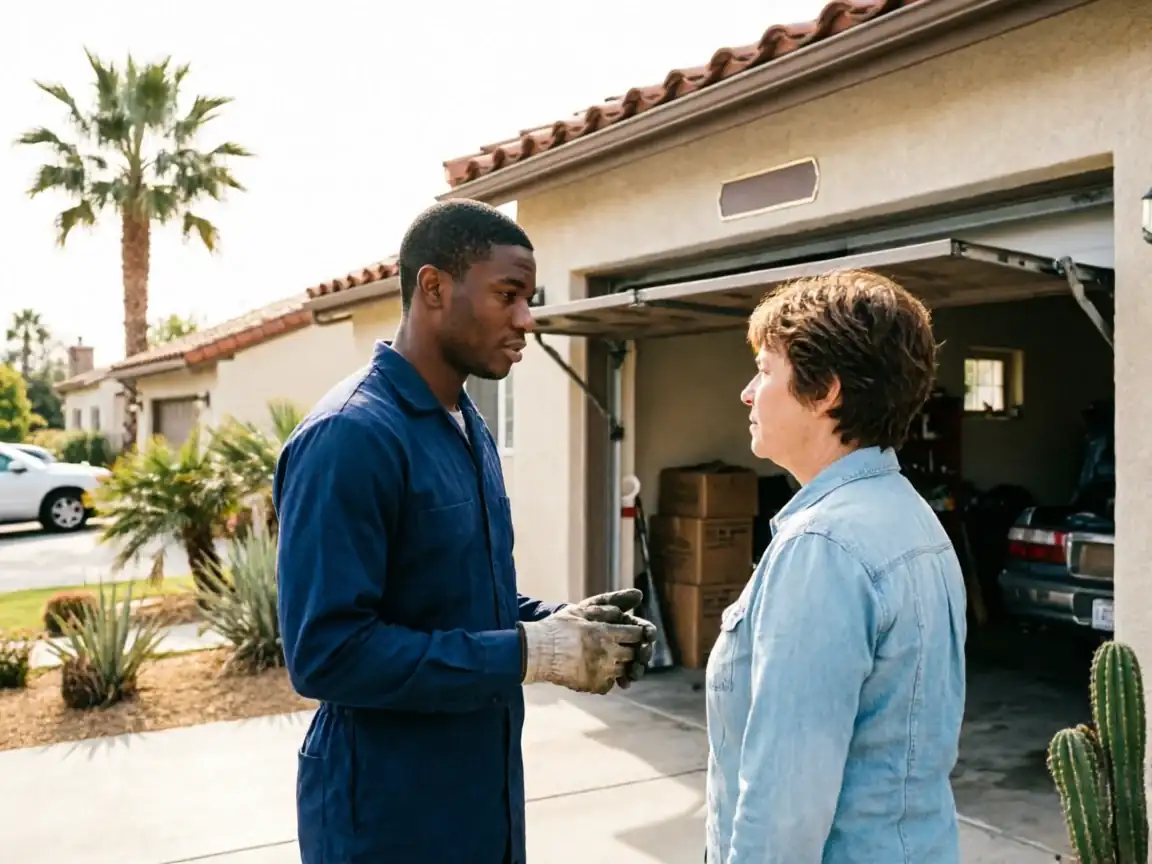
A technician in a blue uniform talks to a woman in front of an open garage.

Clear, up-front plan

You get the fix that’s needed and what drives the cost - before any work starts.

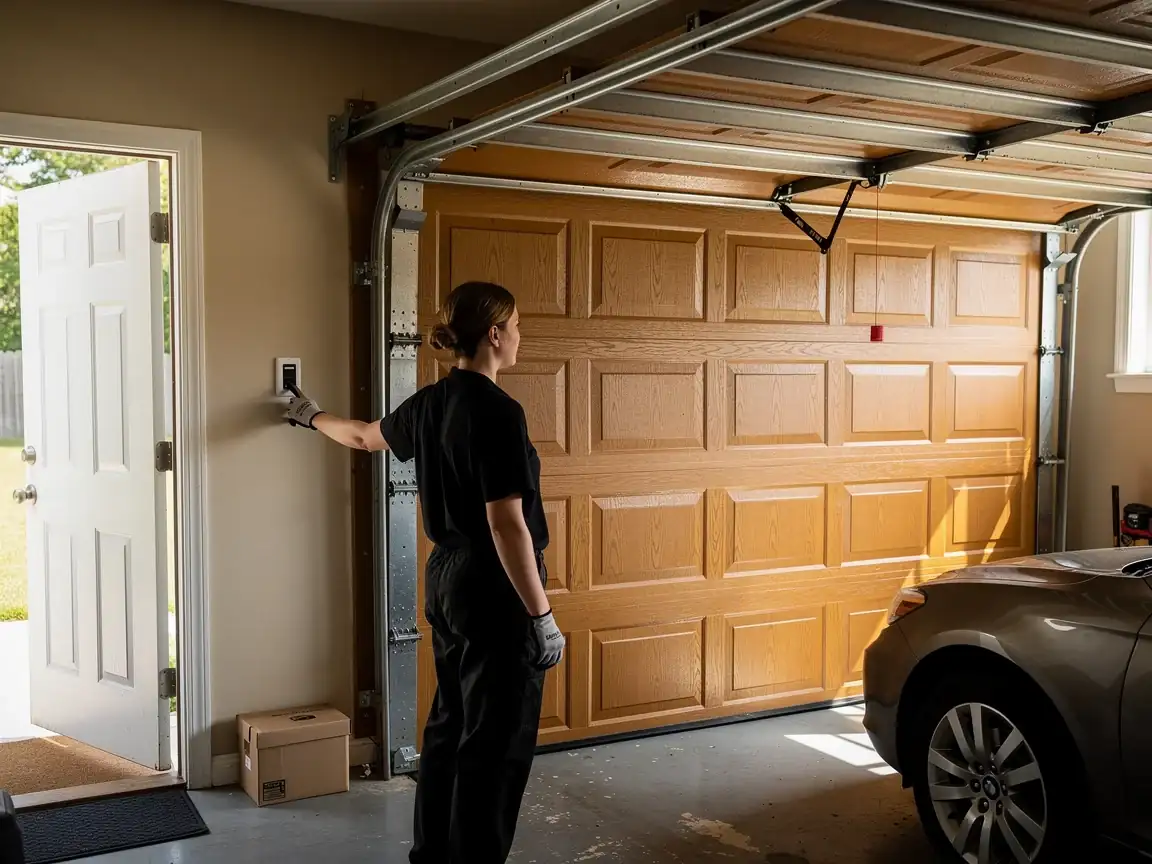
A technician presses a button on the wall next to a closed wooden garage door.

Repaired & tested

The repair is done, the door is set true and tested, and the work area left clean.

Not sure which repair your door needs in Downey, CA? Describe what it’s doing - every job starts with a diagnosis.

How we work

What to expect

A straight, honest approach on every Downey job.

Diagnosis first

Every visit starts by finding what actually failed - not a pre-written parts list.

The right part for the door

Springs and openers matched to the door’s weight and age, so the fix holds up.

Straight answers

When a repair makes more sense than a replacement - or the reverse - you hear it plainly.

Clean, careful work

Tension released safely, hardware set true, the door tested under power before we leave.

What we do

Garage Door Services

Repair and installation work for Downey homes and businesses.

Questions

Frequently asked

Straight answers about garage door repair in Downey. Still unsure? Ask us directly.

Why does my garage door only act up at certain times of day?

On older Downey track, metal expands and contracts slightly with the daily temperature swing even though this isn't a harsh climate. If your sensor brackets are already a little loose from decades of use, that small movement is enough to misalign the beam at the hottest or coldest part of the day and cause a reversal.

Is sensor drift something new openers fix?

No. A new opener doesn't change the condition of the track or the sensor brackets bolted to it. If your house dates to the 1960s or 70s like most of the area, the brackets are often original or early-replacement, and that's where the drift comes from, not the opener's electronics.

Can I fix sensor alignment myself?

Loosening the wing nut, leveling both eyes by sight, and retightening is something most owners can do. If the bracket itself is bent or the mounting hole is stripped, alignment won't hold and the bracket needs replacing, which isn't always a same-visit part depending on your track style.

Ready to get your garage door sorted?

Tell us what it’s doing and where you are in Downey - we’ll take it from there.

Request a QuoteCall