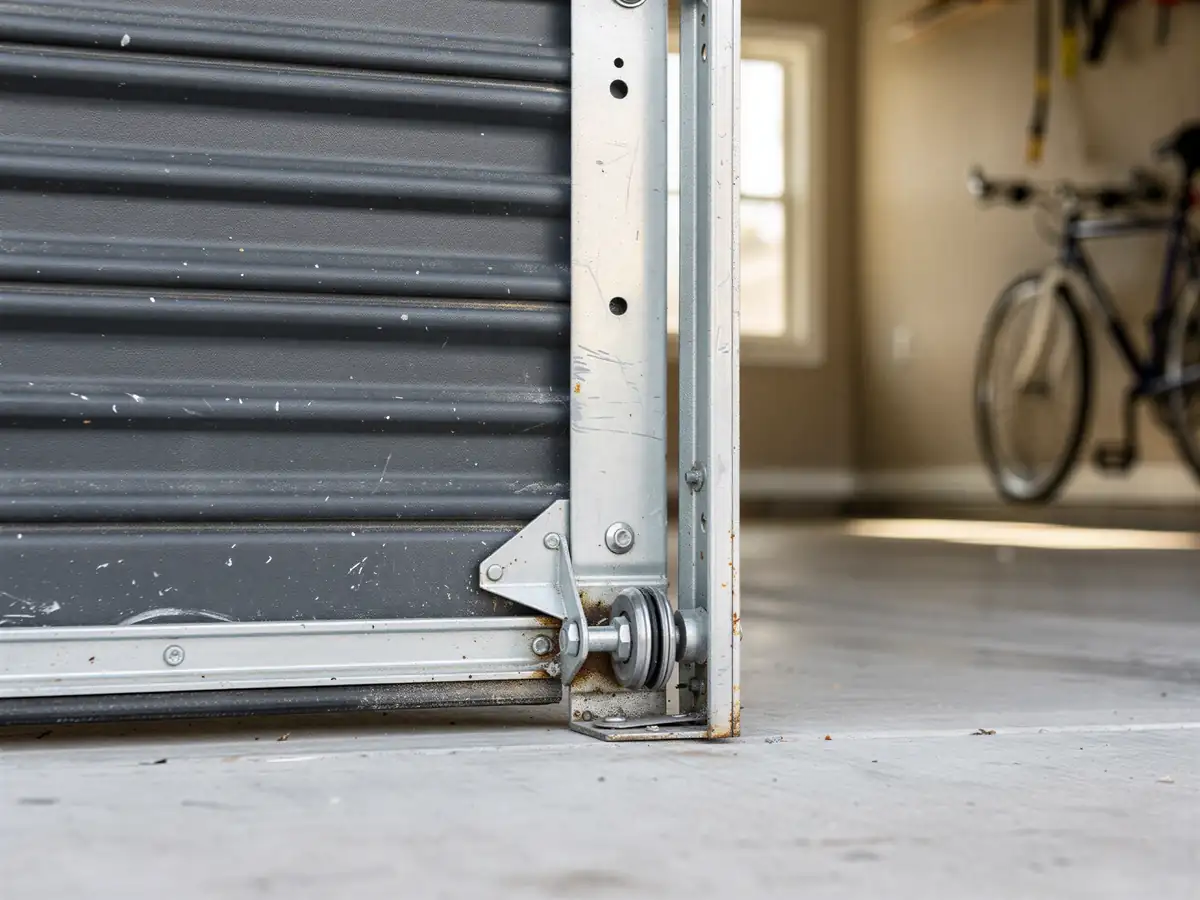
The Symptom
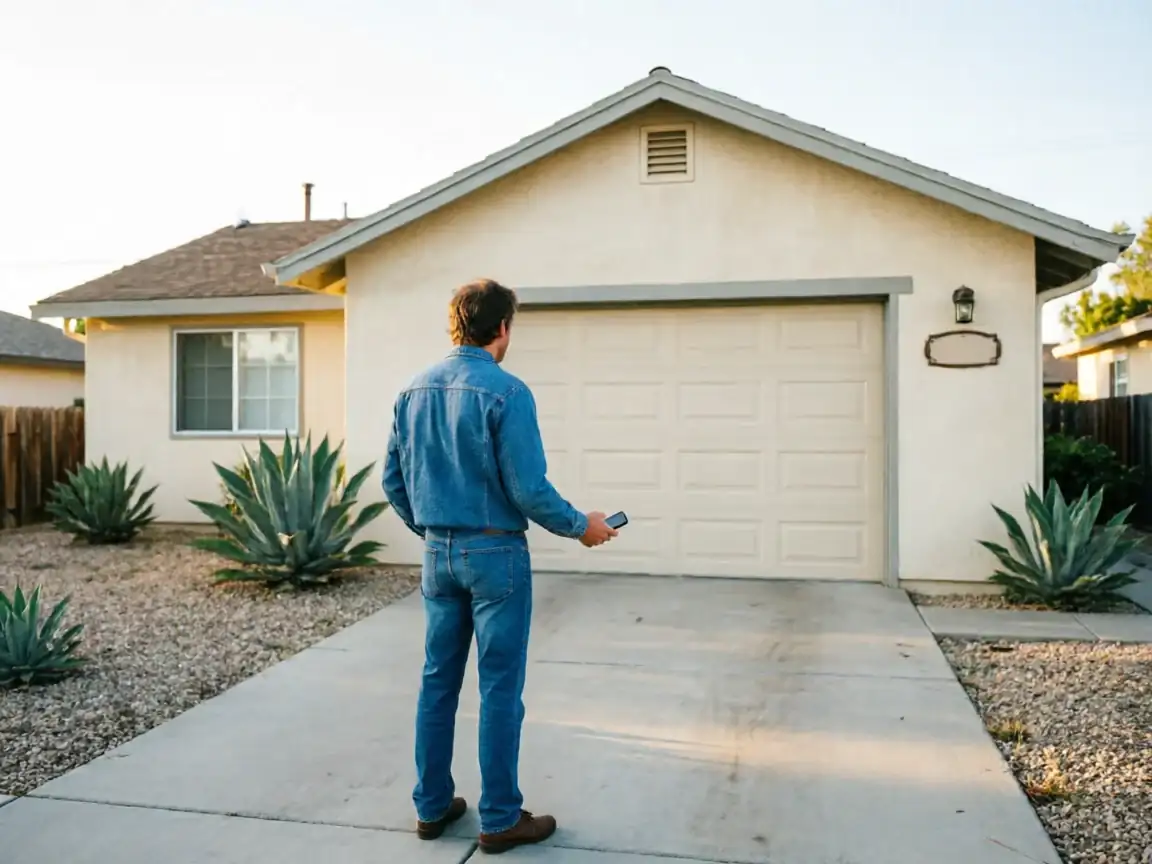
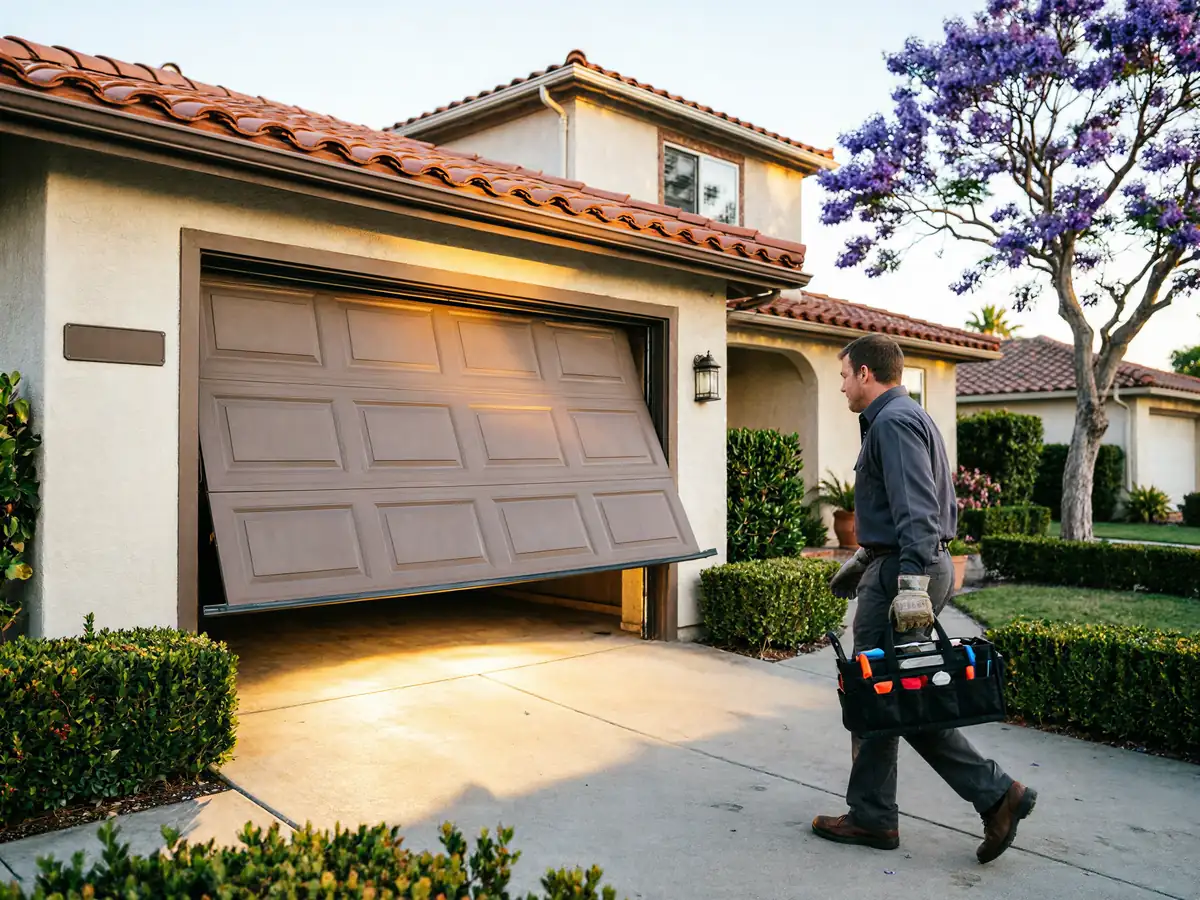
The door hangs crooked in the opening, or one side rides lower than the other. Sometimes a roller has popped clean out of the track and you can see daylight between the wheel and the rail. Other times the door still moves but makes a grinding or popping noise as it travels, like it's fighting the track instead of sliding through it.
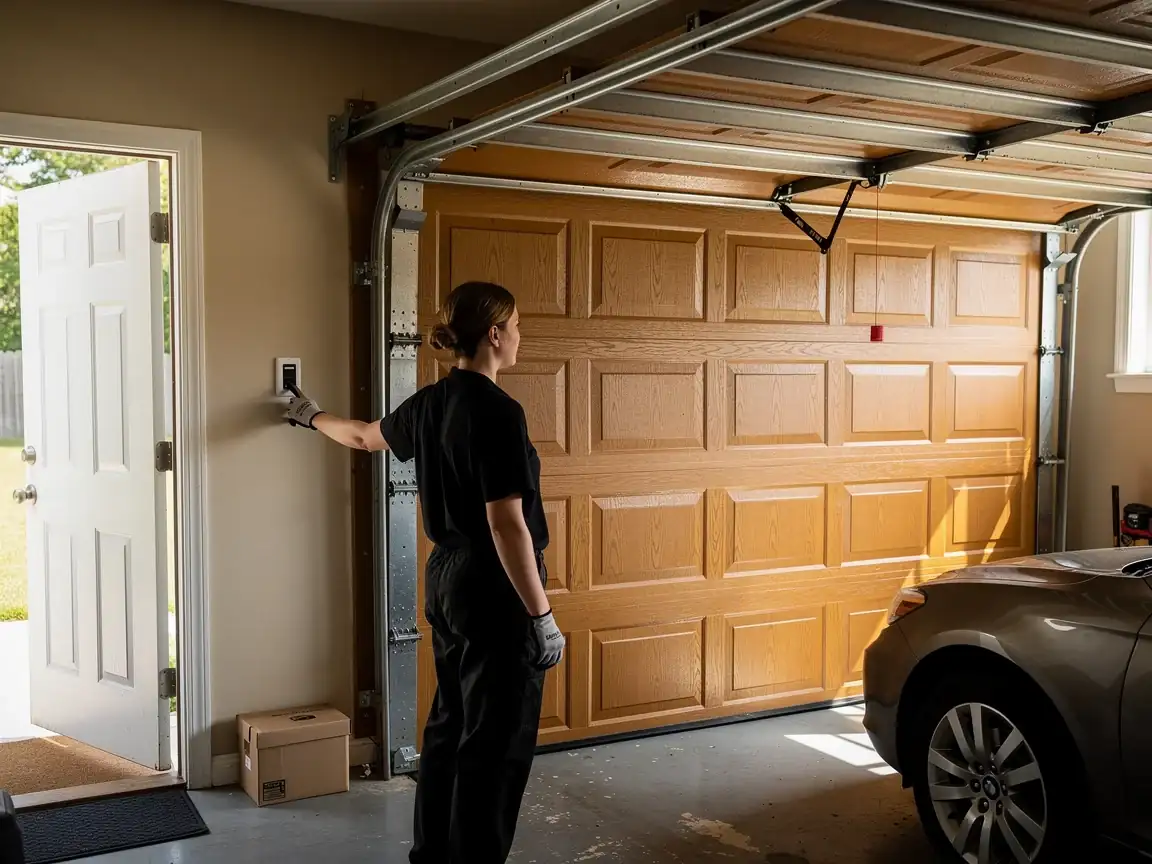
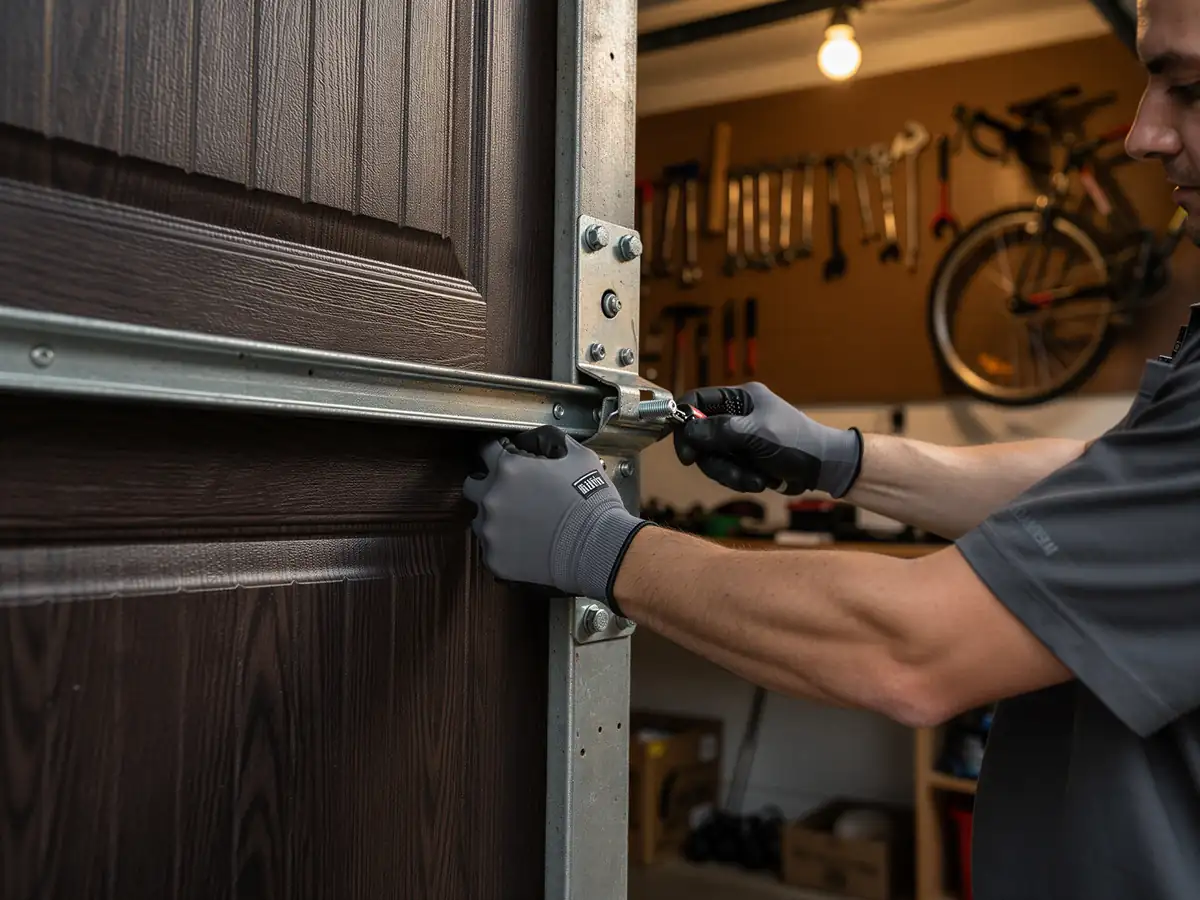
A door that's off track isn't always obvious at first. You might just notice the opener straining harder than usual, or a gap that wasn't there last month. If you try to force it with the opener, you can bend the track further or snap a cable, which turns a $200 fix into something bigger. The first move is always to stop using the opener and look at the rollers and the horizontal track where it meets the vertical rail - that's where most of these problems start.
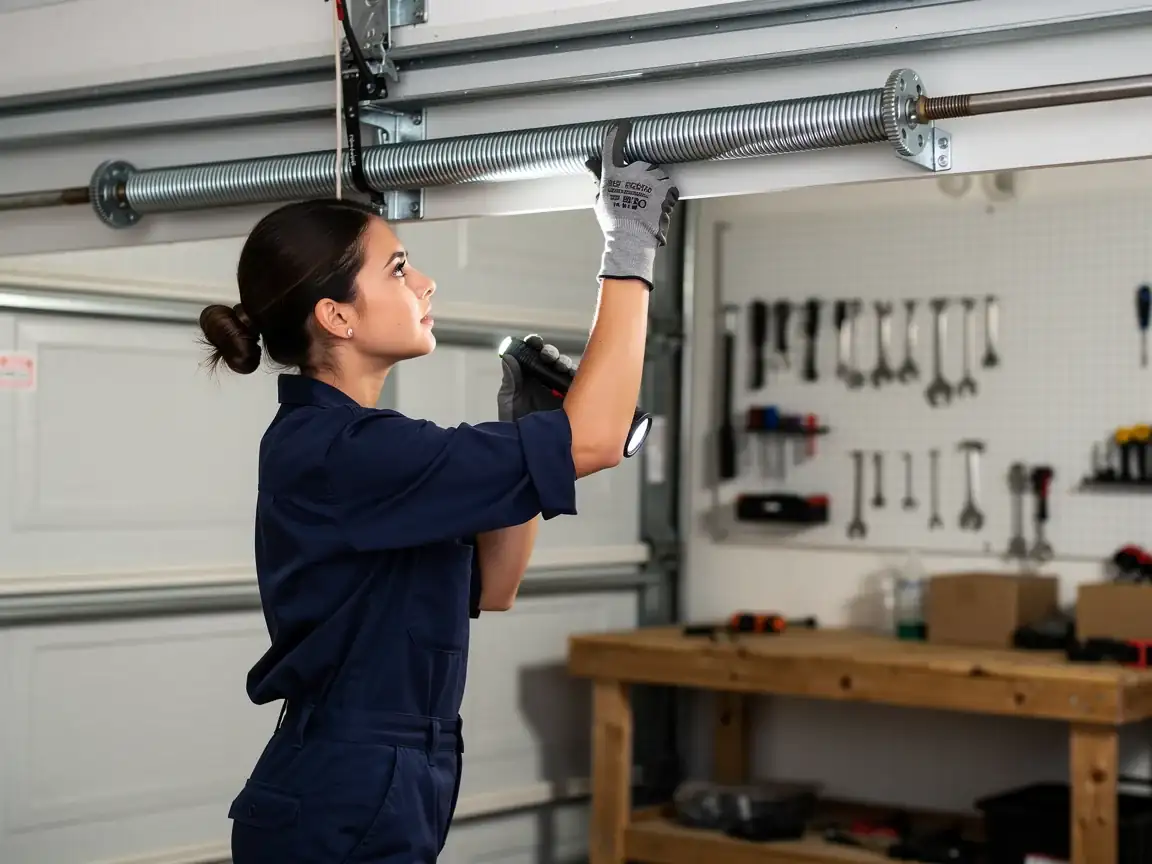
If the door is fully off the track on one side and hanging at an angle, don't touch the opener at all. A door in that position can fall, and the springs are still under tension even though the door looks stuck.
Where This Job Goes Sideways
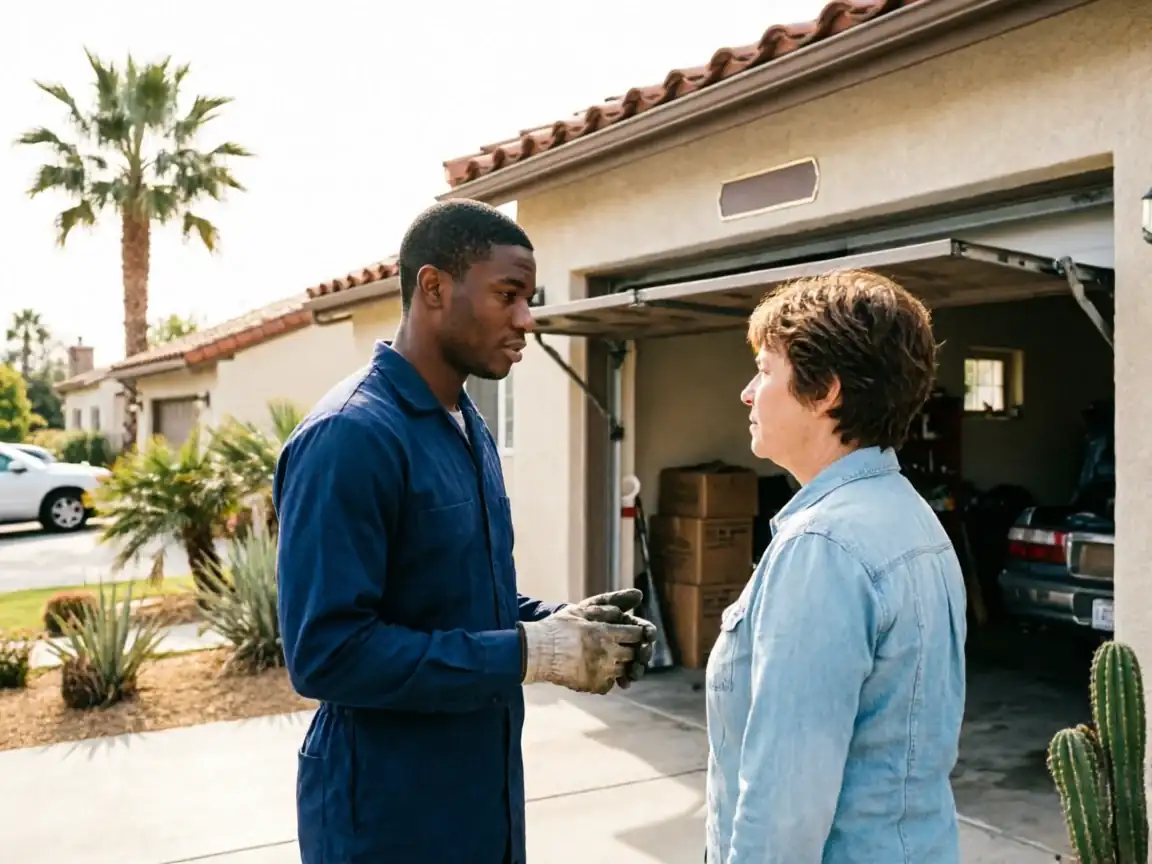
This is the call that looks simple on the phone and turns out to be three jobs. A homeowner describes a roller out of the track, but the real cause is a bent track from years of flex, or a bottom bracket that's rusted through and finally let go. Once we're under the door, sometimes the track itself is fine and the fix is a $40 roller - and sometimes the track is bowed enough that straightening it won't hold, and it needs to come off the wall.
The other way this goes sideways: someone tries to push the door back onto the track themselves. Garage doors are heavy, and a door hanging crooked is being held up by cables and springs that aren't distributing weight the way they're built to. We've seen attempts to re-seat a door do more damage to the track, the opener rail, and the person doing the pushing than the original problem ever would have.
We won't quote a track repair over the phone without seeing it. A bent section near the bottom roller is a different job than a bent section up by the curve where the track turns toward the ceiling, and the second one usually means new track, not a hammer and a level.
What Causes It Around Here
Downey's housing stock runs from the 1940s through the 2010s
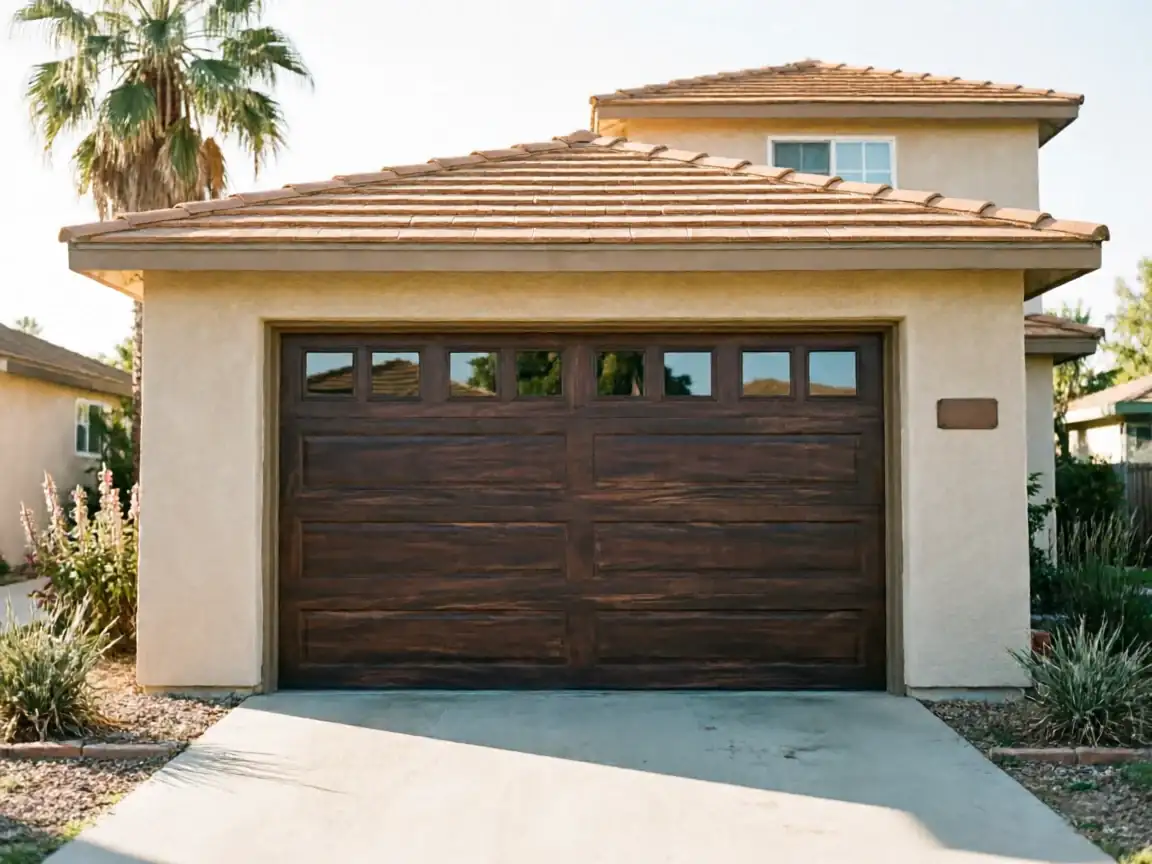
But the typical house here dates to 1963, and most garages in town are still running hardware that's closer to original than updated. Steel track from that era was mounted with brackets and lag screws that have had sixty years to work loose, rust at the weld points, or simply fatigue from tens of thousands of open-close cycles.
Downey's climate is mild
No hard freezes, no ice loading - so track failure here isn't a weather event. It's slow mechanical wear: wood jambs that have shrunk slightly over the decades, brackets that were never re-torqued, and rollers that wore out years before anyone replaced them. Add a mild coastal climate's daily temperature swing and you get decades of small thermal expansion and contraction on track that was never upgraded, which loosens fasteners faster than people expect.
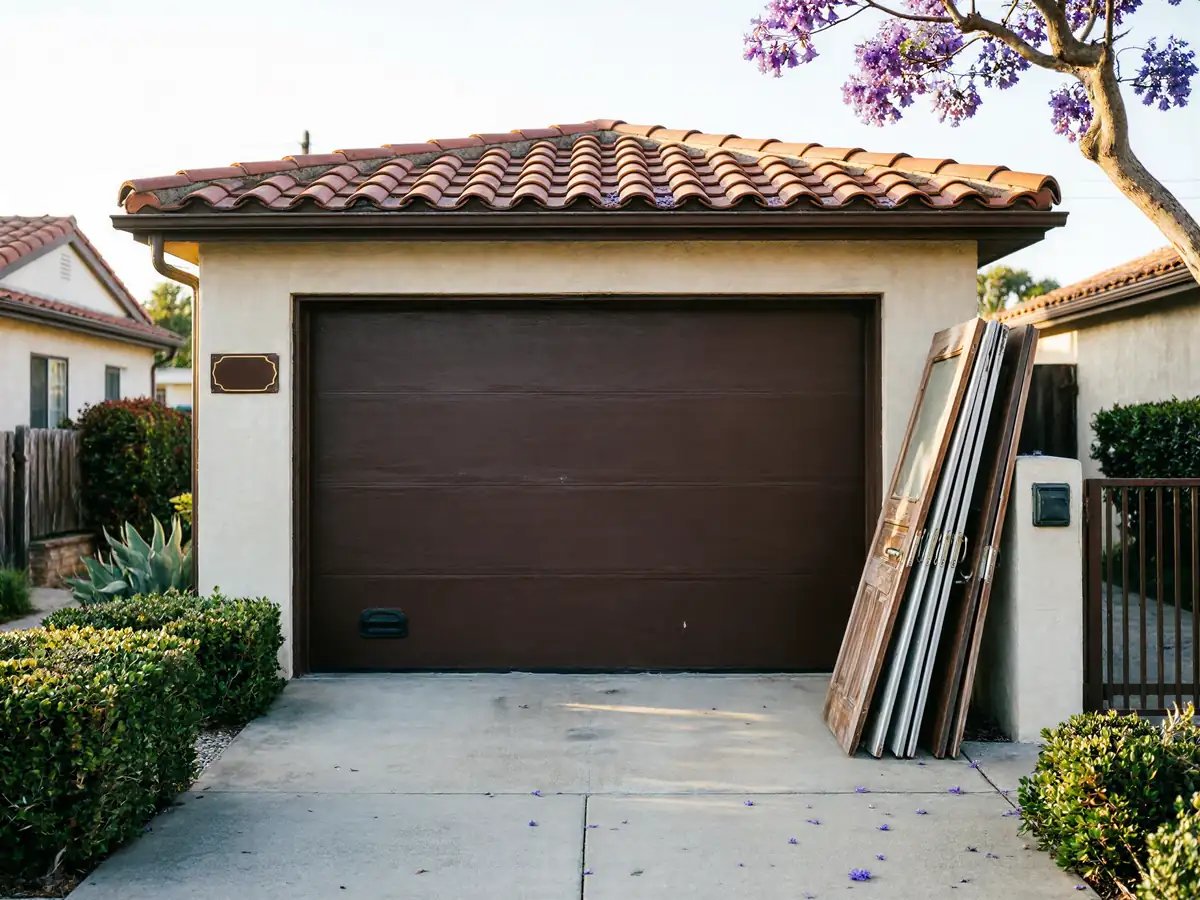
We also see it on doors that were upgraded with heavier insulated panels but kept the original 1960s-era track and rollers
The new door weighs more than the hardware was ever sized for, and something eventually gives at the weakest bracket.
How We Fix It
We start by checking whether the track is bent or just loose - those are different repairs with different costs. A loose bracket gets re-anchored into solid framing, sometimes with a new mounting point if the old wood has worn out from the lag screw. A bent track section gets replaced, not hammered straight; a straightened track might hold for a few weeks before it bends again at the same point.
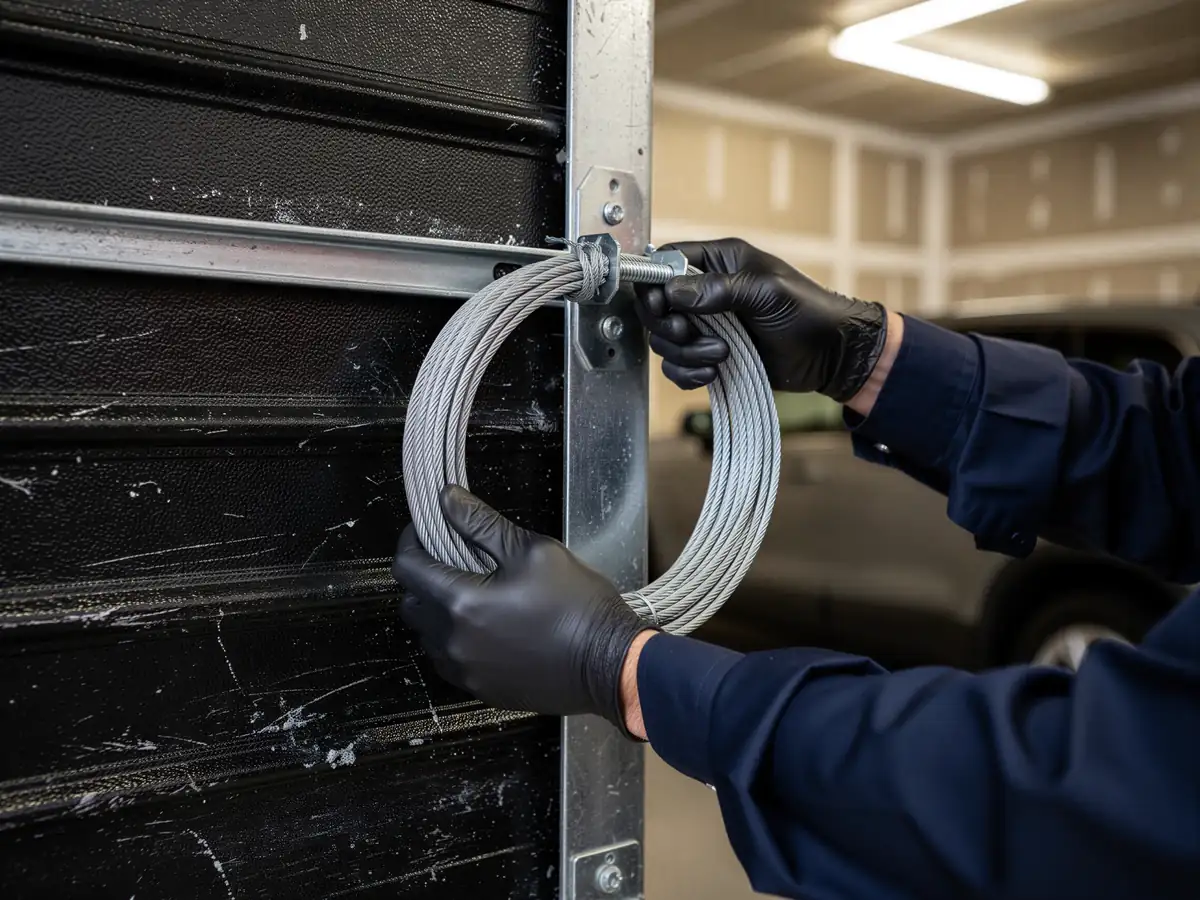
We also check the rollers and cables while we're in there, since a roller that's worn enough to jump the track is usually close to failing on the other side too. If the door came off track because a cable frayed or a spring let go, we address that at the same time - putting a door back on a track that's about to have another component fail isn't a fix, it's a delay.
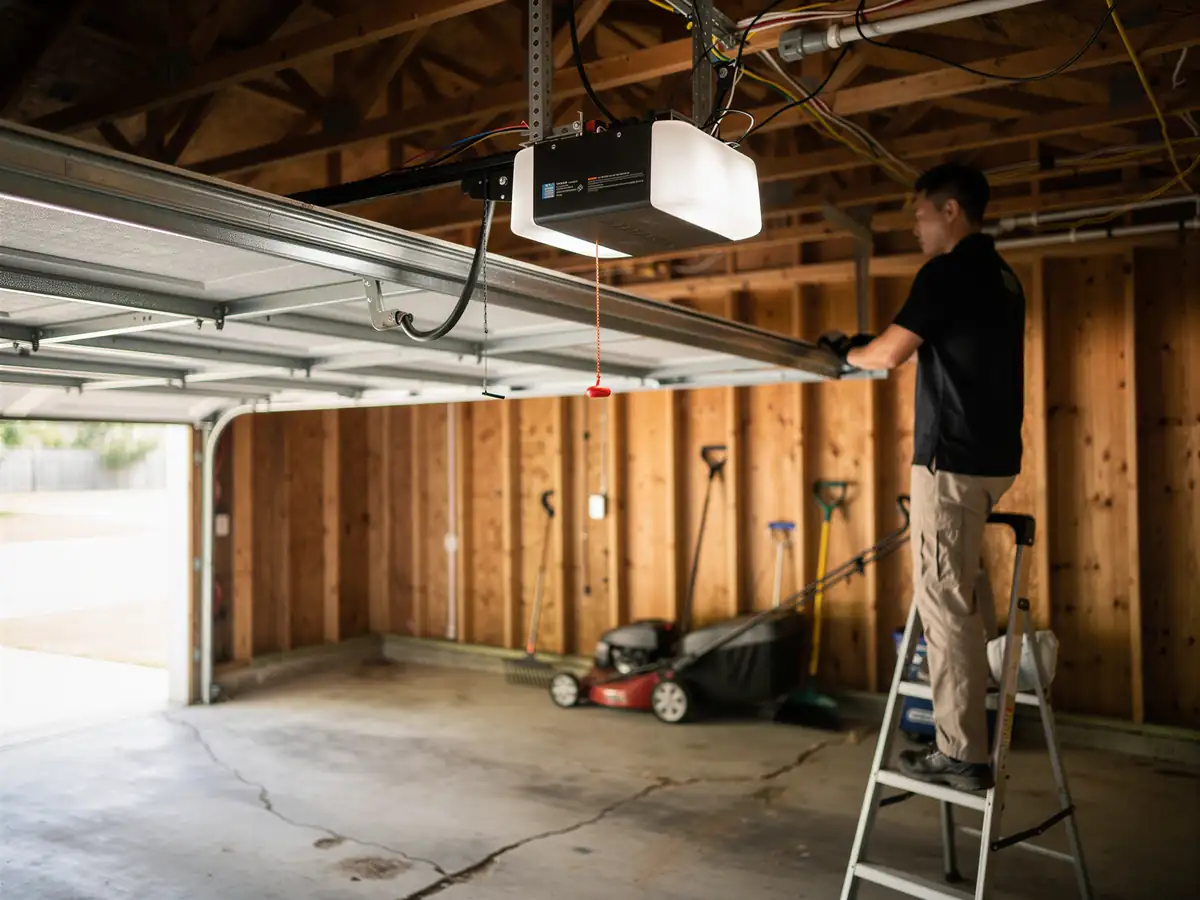
One limit worth knowing: if the track is bent in multiple places or the vertical rail near the opener is damaged, we're usually recommending full track replacement rather than patching it section by section. Patchwork on an already-stressed track tends to fail again within a year, and that's a second service call nobody needs.