The Symptom
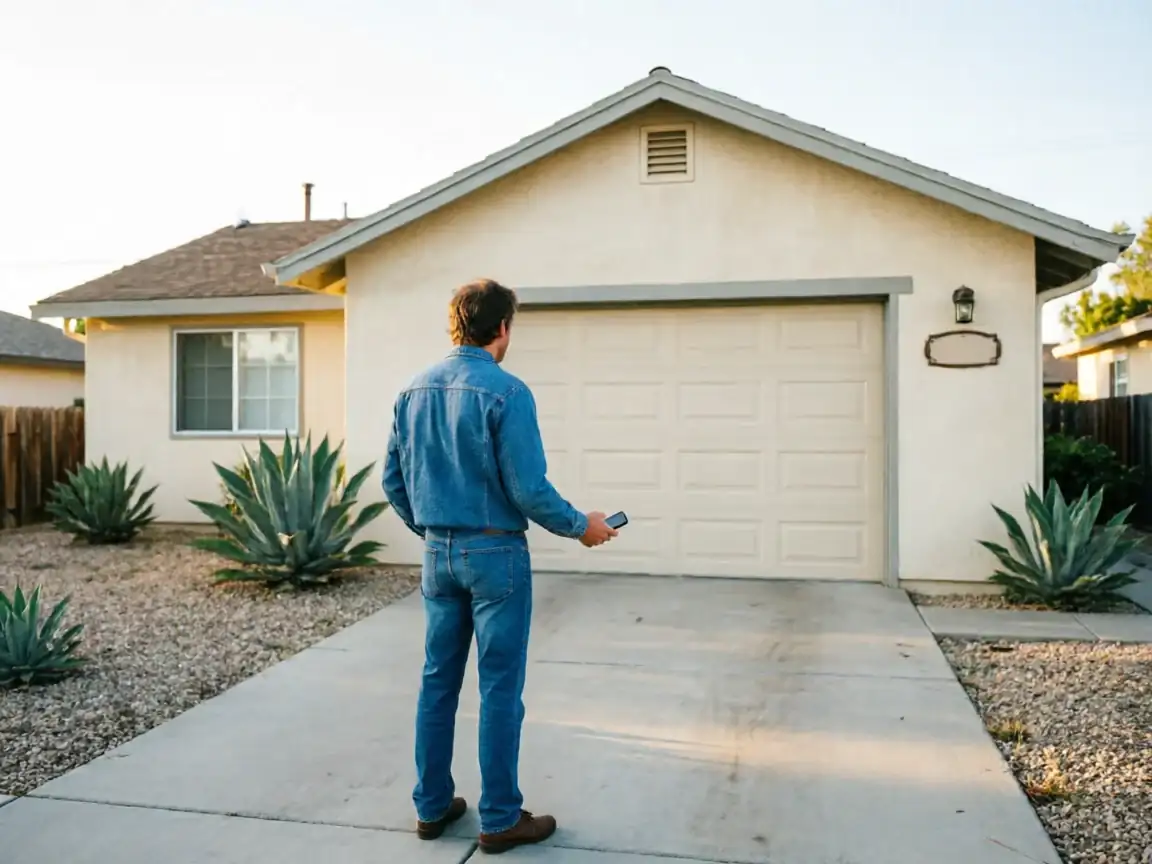
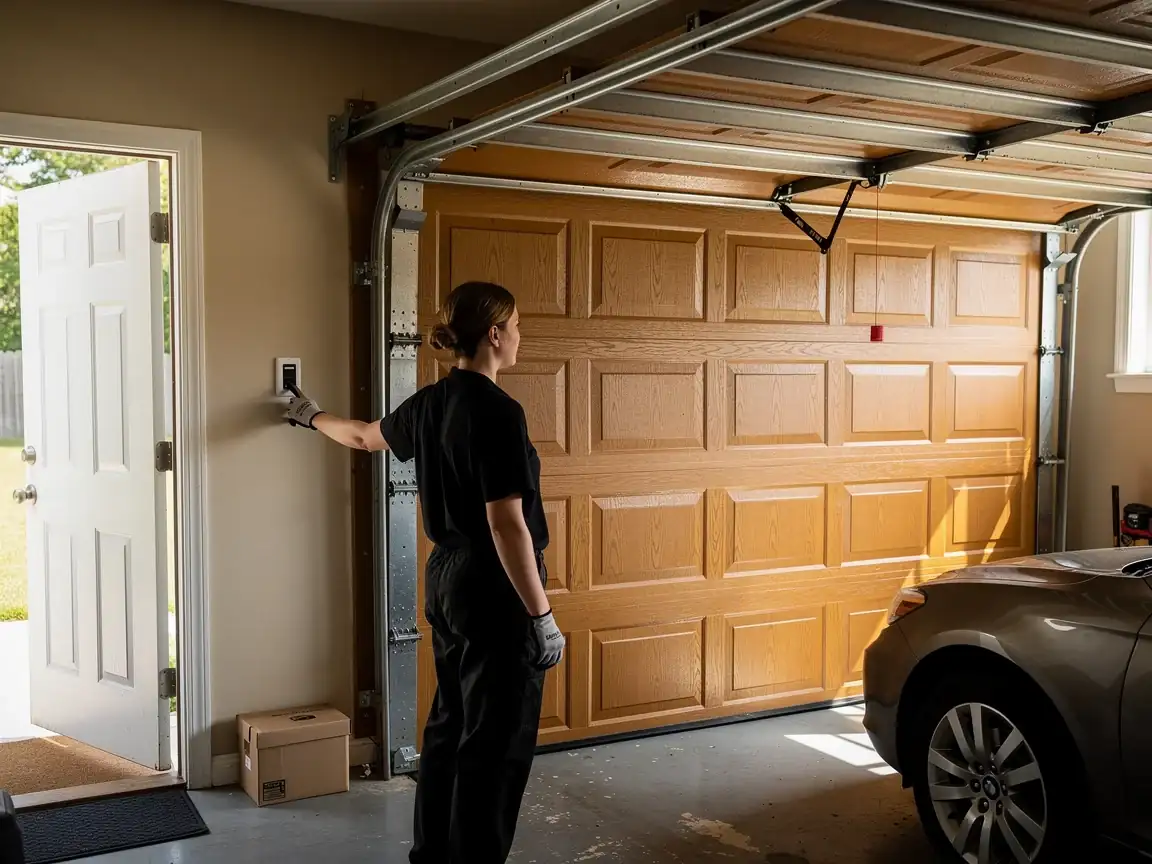
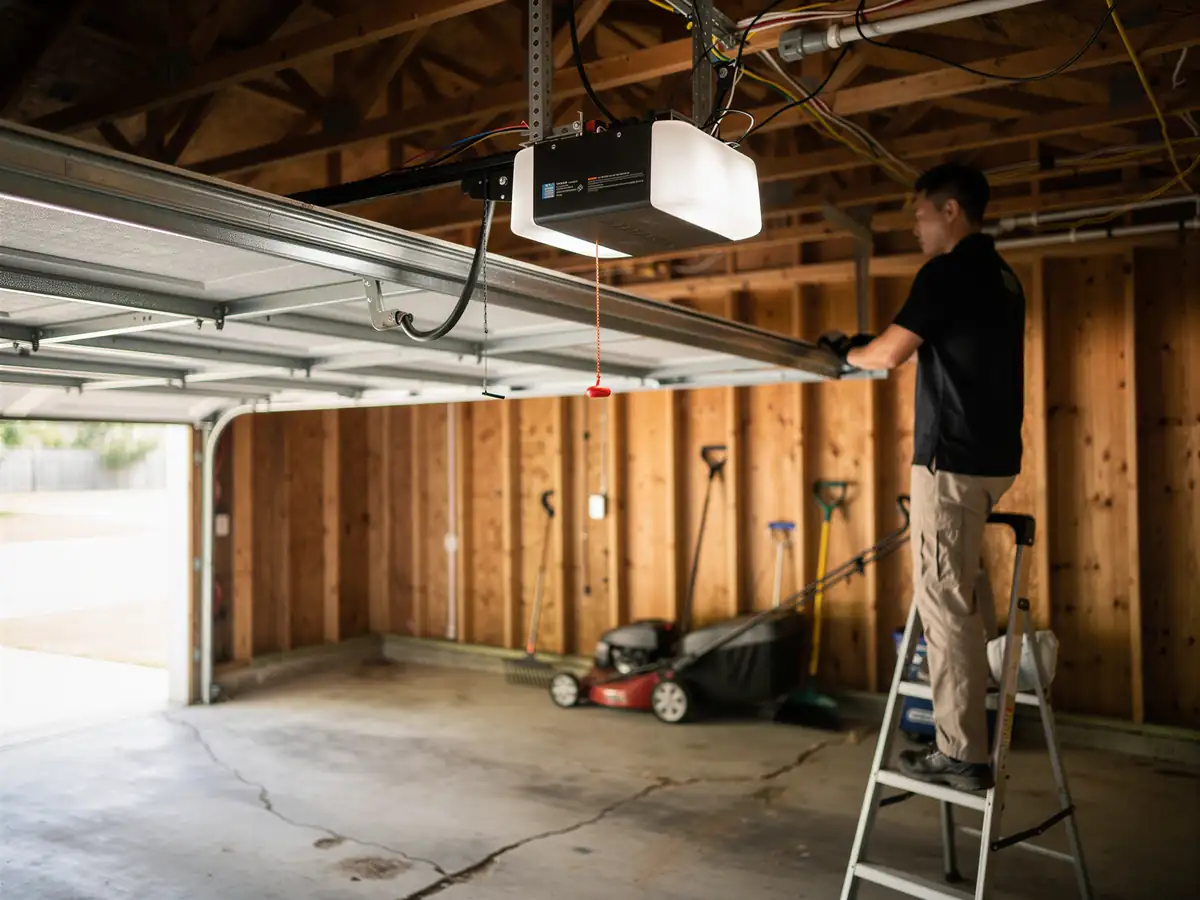
Bellflower is a town of roughly 23,669 households, which is a lot of garages but not a lot of variety in what goes wrong with the opener in them. Most calls sound the same: the wall button lights up but the motor doesn't turn, or the door reverses halfway and won't finish closing, or the remote works from the driveway but not from the street. Sometimes it's just dead - no hum, no light, nothing. A town this size means we see every stage of opener failure, from a unit that's a season away from quitting to one that's already stripped its drive gear and is just grinding noise at this point. The fix depends on which of those you've actually got, not on guessing from the symptom alone.
We don't try to diagnose an opener over the phone beyond ruling out the obvious - a tripped breaker, a disconnected cord, a safety sensor knocked out of alignment. Past that, it needs eyes on the unit.
How Long It Takes
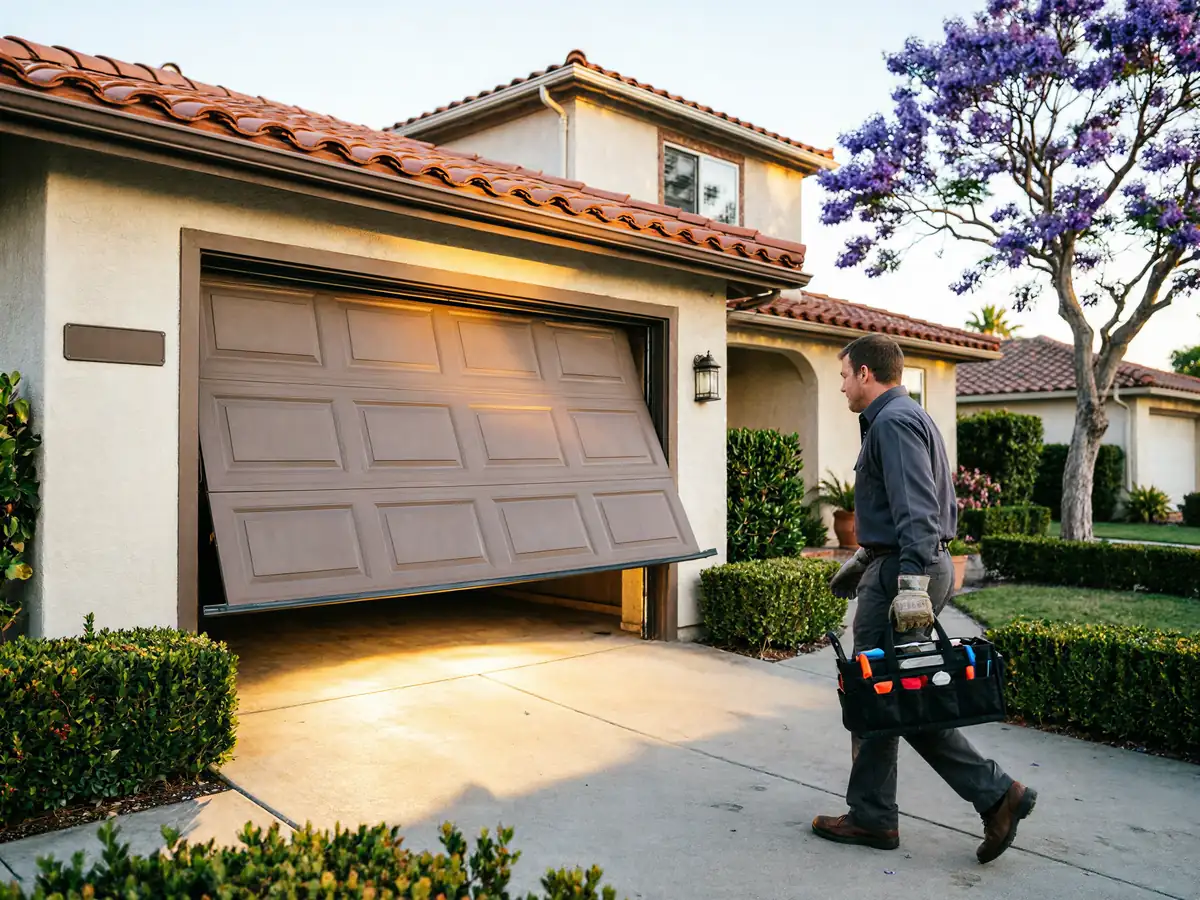
A straightforward fix - a burnt-out circuit board, a misaligned safety sensor, a worn drive gear on a chain or belt unit - is usually a single visit. The truck comes from Downey, about 4 miles out, so travel isn't the bottleneck; parts availability is. Most common opener parts (gears, sensors, logic boards for the major brands) we carry on the truck. A full opener replacement is also typically same-visit if the unit is in stock, since most residential openers are a standard fit regardless of door size.
Where it stretches past one visit: openers old enough that the manufacturer has discontinued the control board, or a unit paired with aftermarket safety sensors that don't match current wiring standards. Those need an order, and we'll tell you that on-site rather than make you wait to find out.
Where This Job Goes Sideways
The opener is rarely the whole story
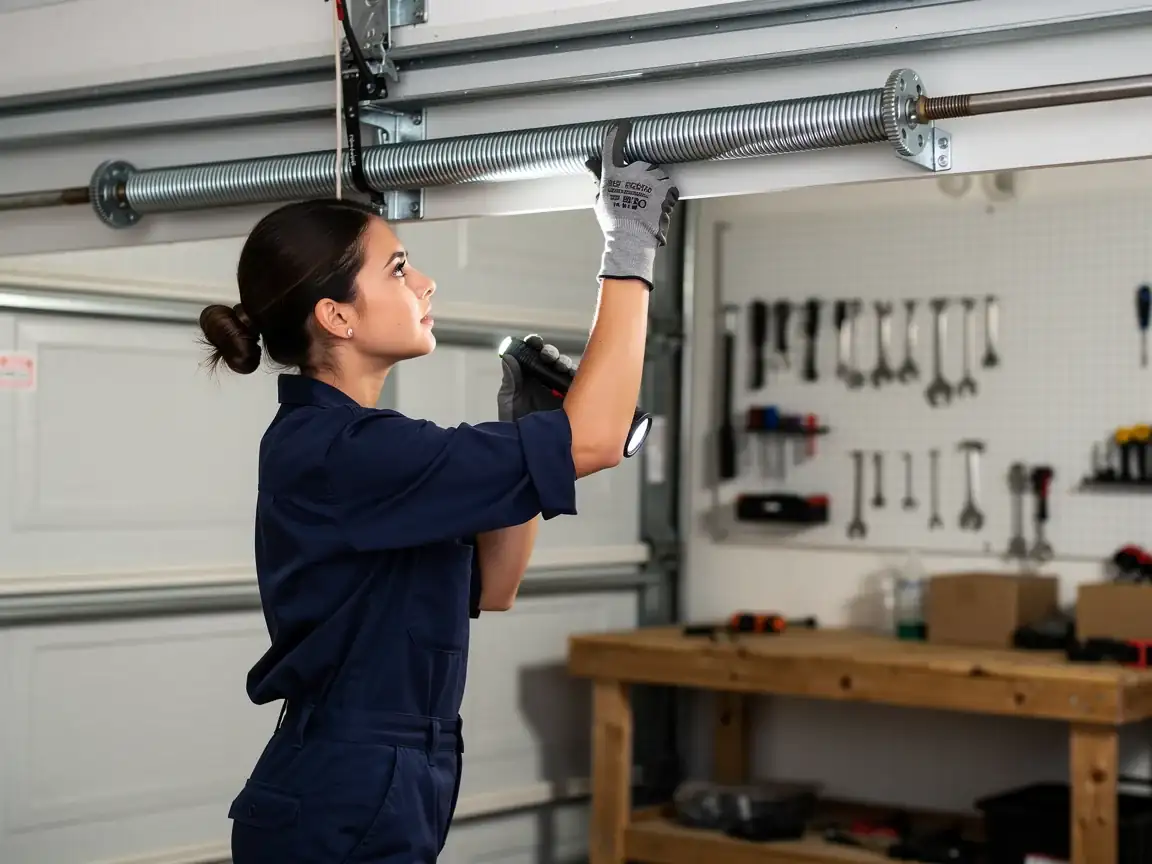
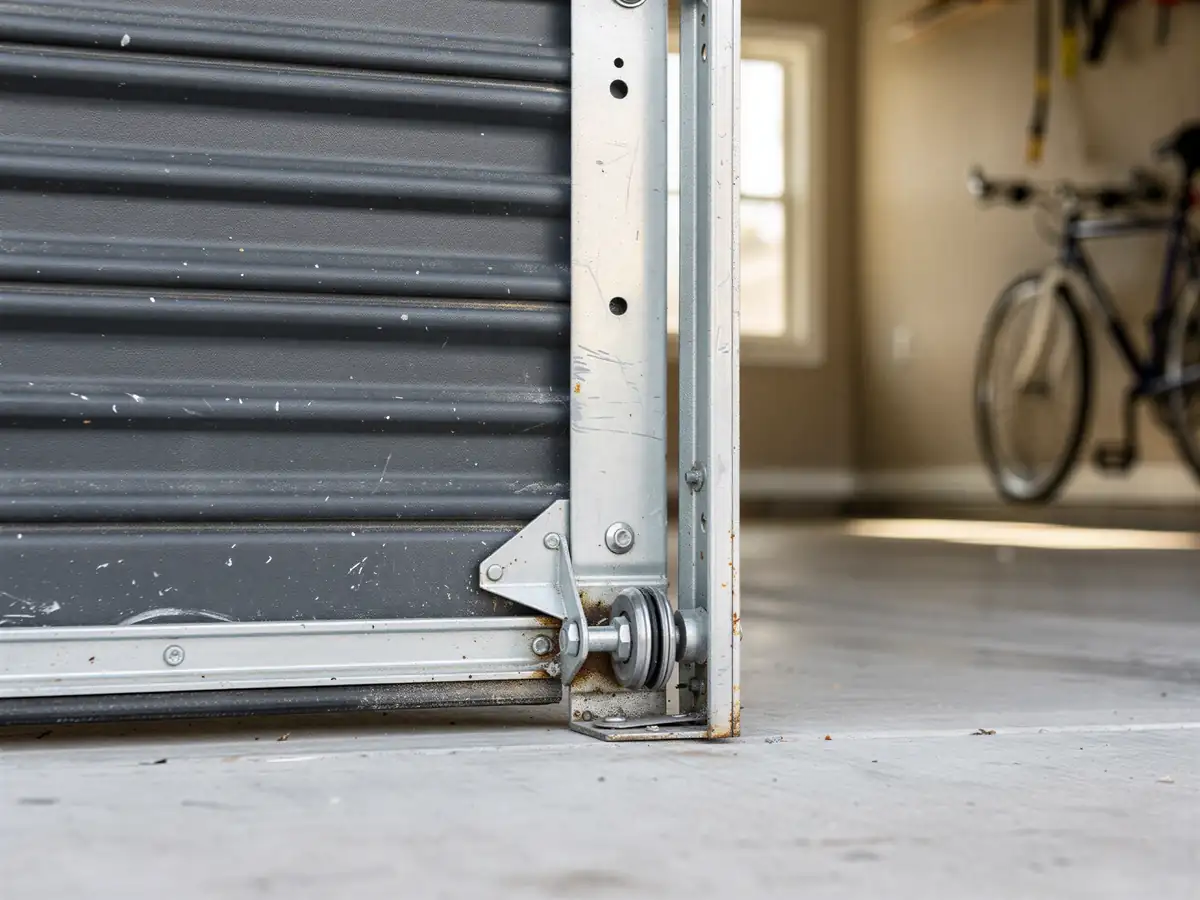
A motor that strains and clicks but won't lift the door is often doing exactly what it's built to do - refusing to fight a spring that's lost tension or a track that's bent. Replace the opener in that case and you've spent money on a part that was never broken; the door comes down again inside a year because the real load-bearing problem, the spring, never got touched.
The other place this goes sideways is safety sensor wiring
Bellflower's housing stock runs mostly 1960s construction with later electrical updates layered in over the decades, and we've opened junction boxes where the opener's low-voltage sensor wire was spliced into household wiring by someone who wasn't a low-voltage electrician. That's not a part swap, that's a wiring job, and it changes the estimate. We'll show you what we find before we touch it.
What Causes It Around Here
Bellflower's housing stock centers on 1966, squarely in the broader 1960s-70s wave that defines most of this service area. That generation of house was usually built with a garage and door already in place, but the opener itself has almost always been swapped at least once since - openers don't last as long as the house does. What we see a lot of here is the second or third opener on the same garage, installed by whoever was cheapest at the time, wired into whatever bracket and track setup the house originally had.
The mild temperate climate here doesn't put much stress on an opener motor the way heat-cycling or hard freezes would elsewhere - we're not chasing weather-cracked housings or ice-jammed tracks. What we are chasing is age and mismatch: a modern opener bolted to an old J-arm bracket, or a safety sensor pair from one era wired to a logic board from another. That mismatch is the single biggest cause of intermittent faults we find on these calls.
The Cost of This Job
We don't publish a flat number for opener repair because the range is wide - a sensor realignment costs nothing like a full motor and logic board replacement. What we can tell you is that Bellflower's median household income sits at $77,602, somewhat below the wider service area's $97,397, and that's relevant only in that we'll always offer the repair option first when the opener itself is fixable, rather than pushing a full replacement when it isn't necessary. If the unit is old enough that parts are back-ordered for weeks, replacement usually ends up cheaper than waiting, and we'll say so plainly instead of quoting a repair we don't think will hold.