The Symptom
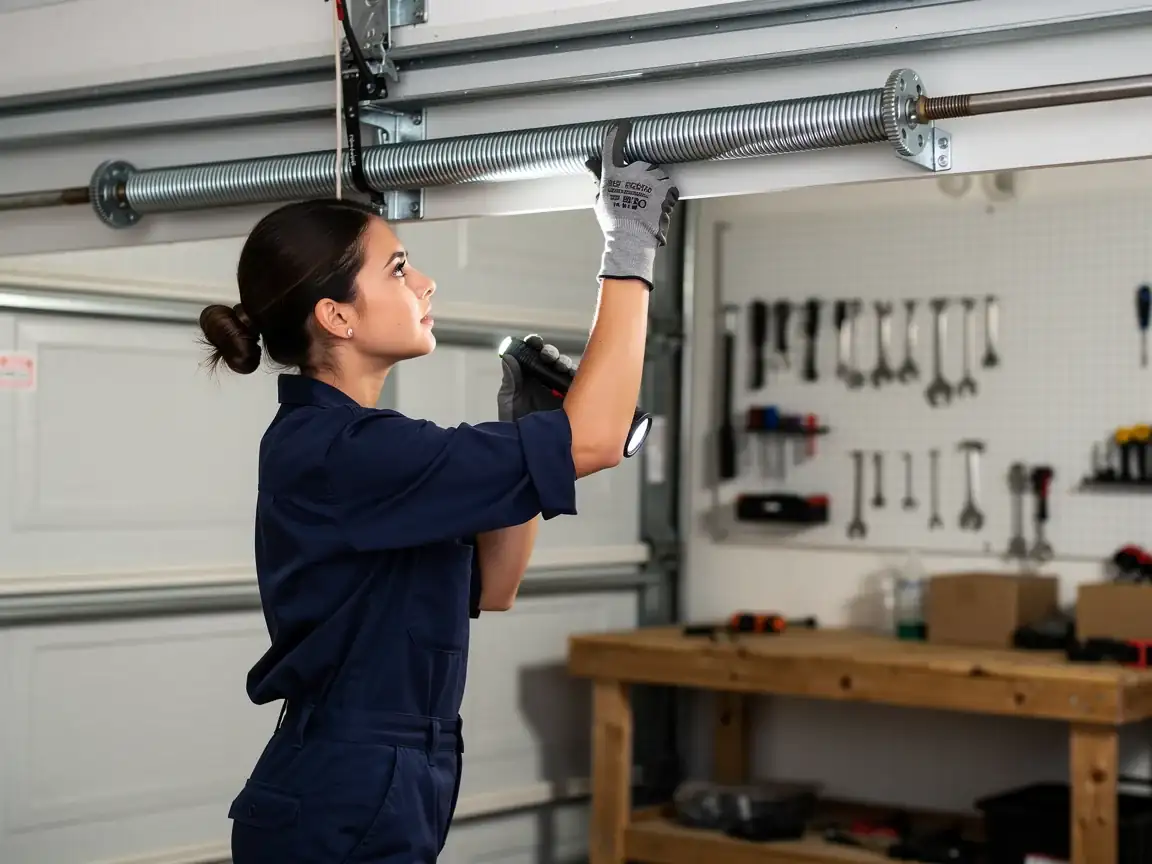
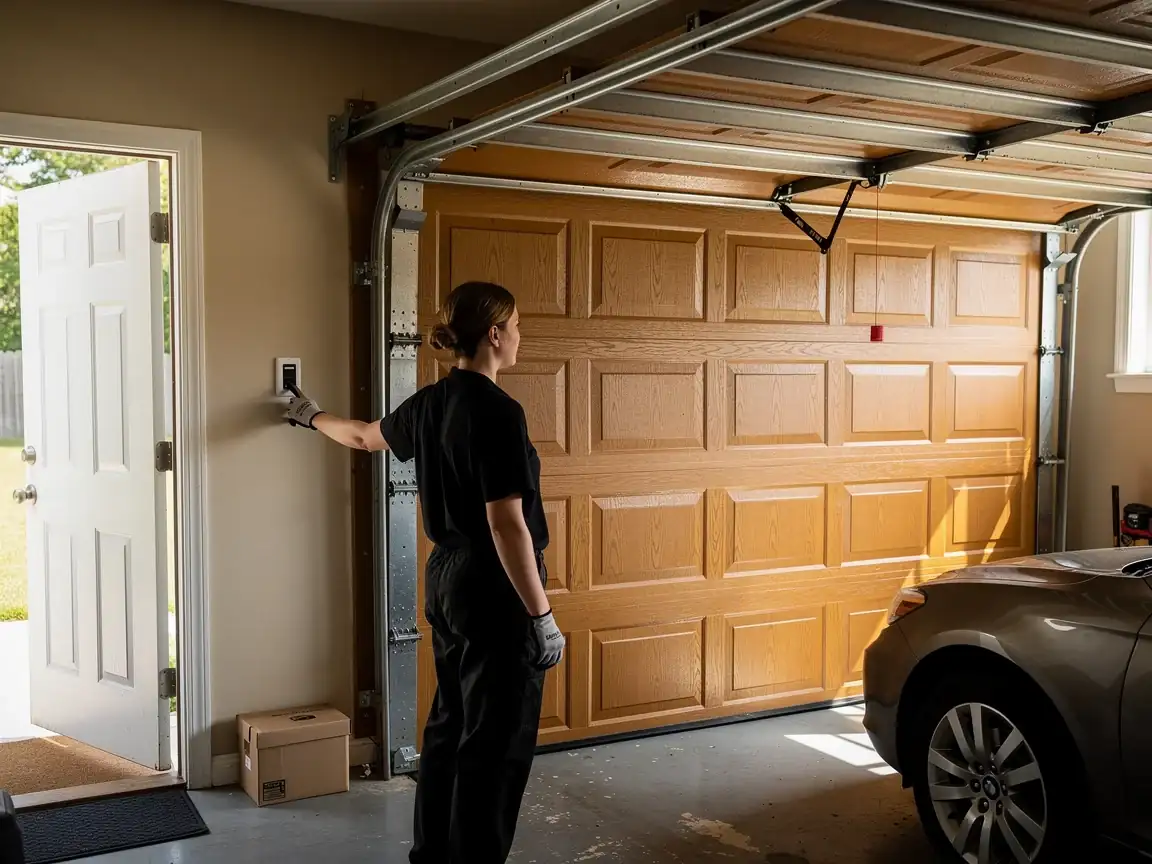
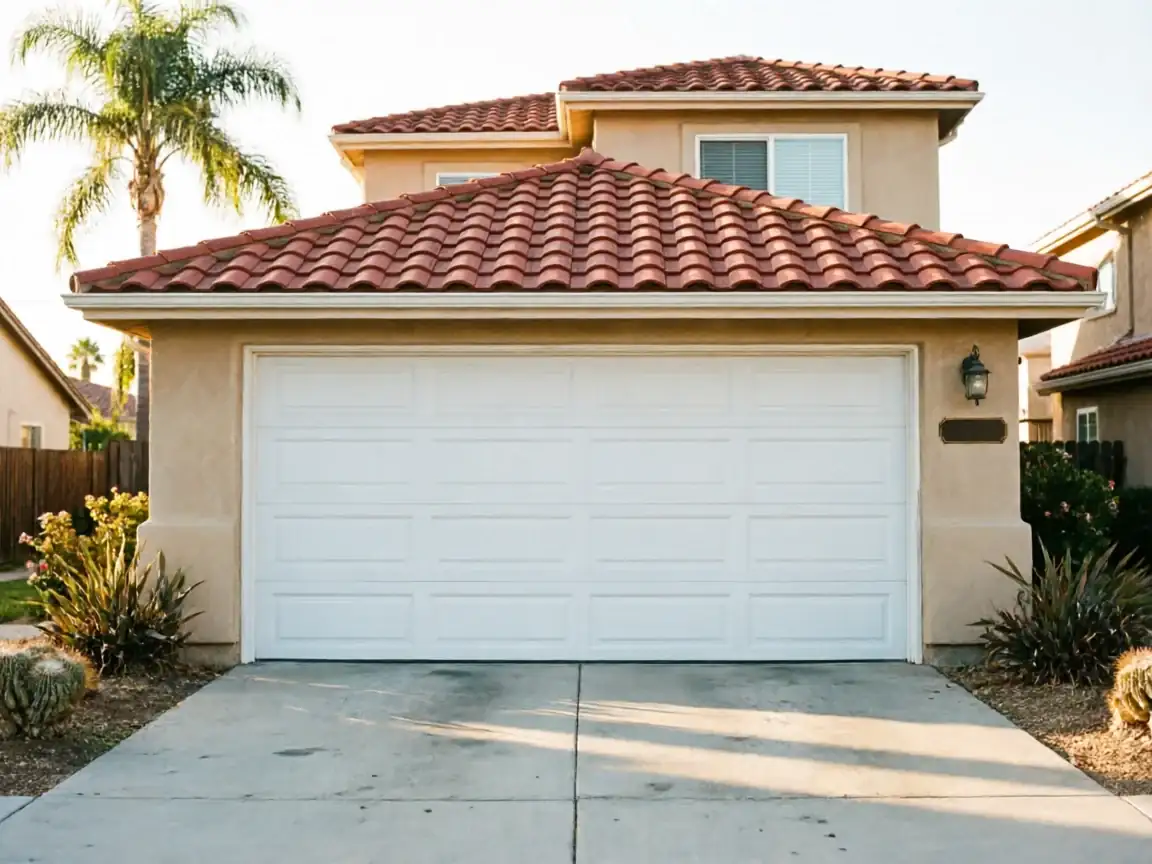
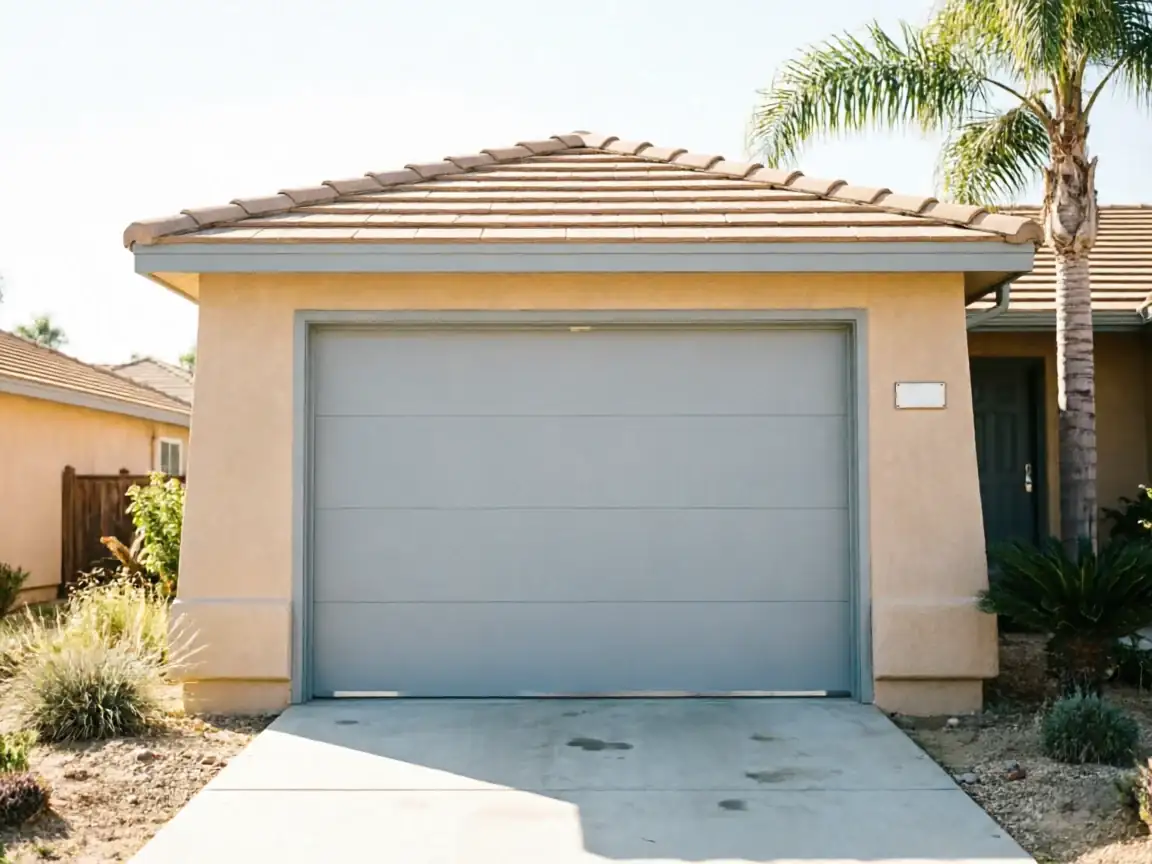
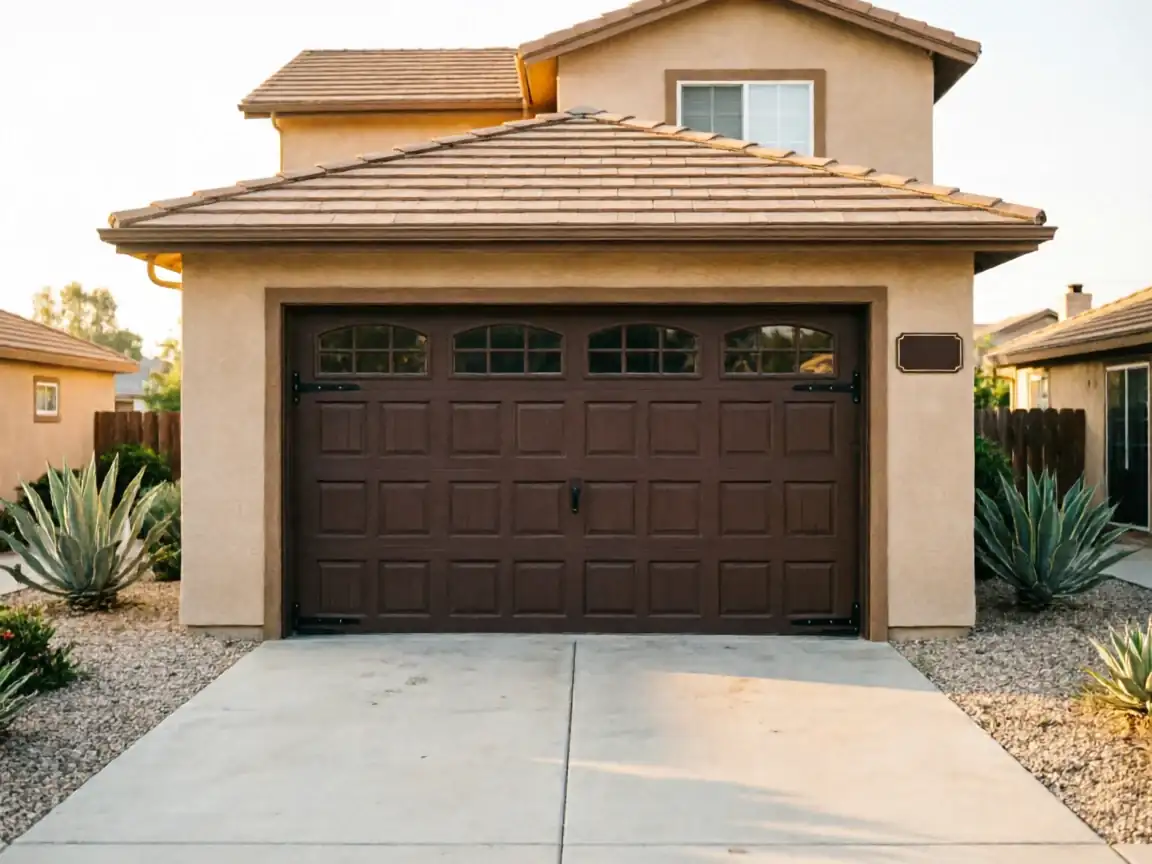
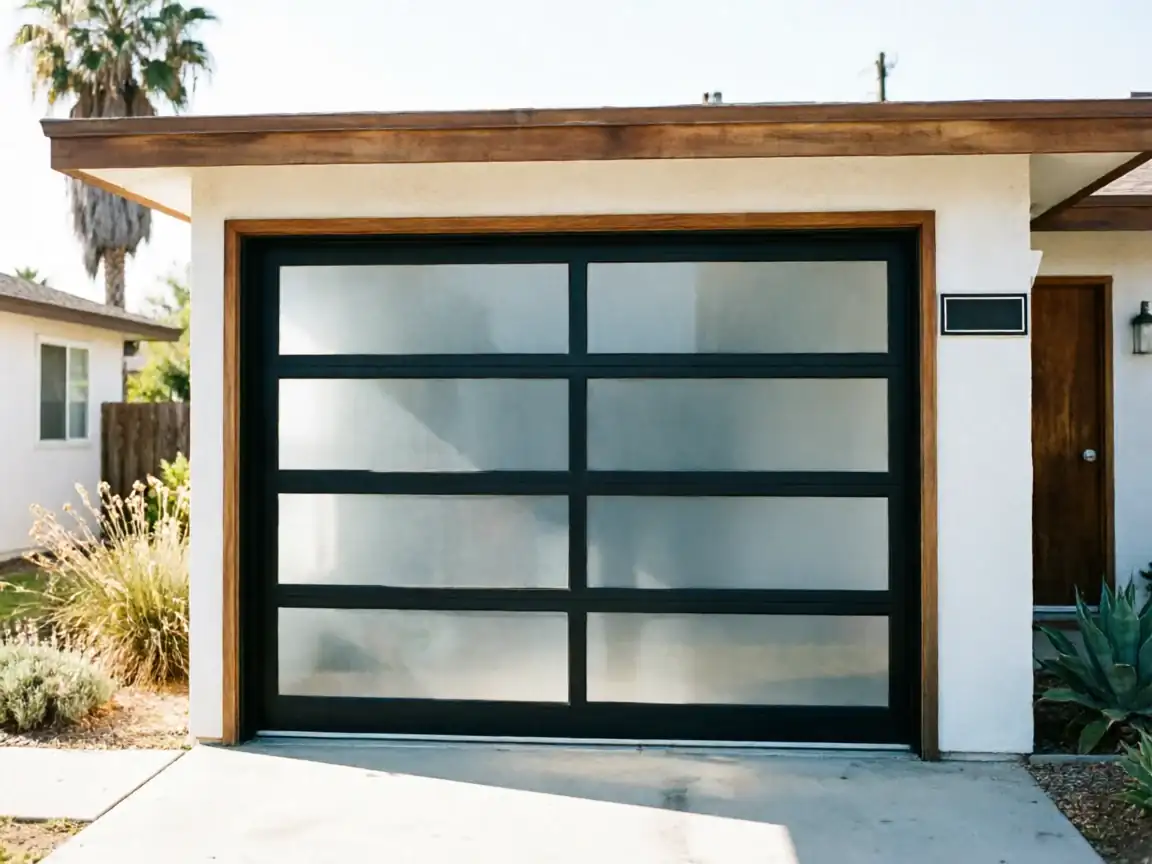
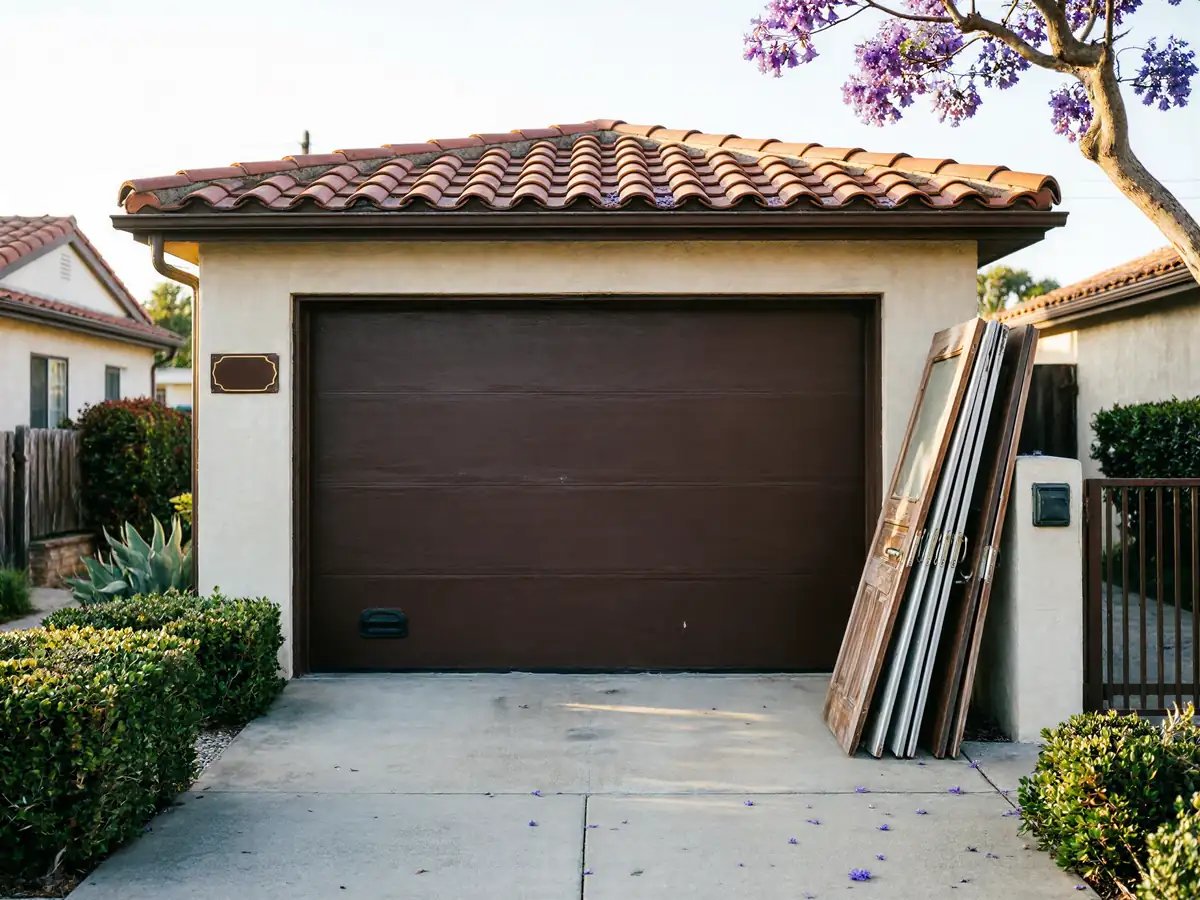
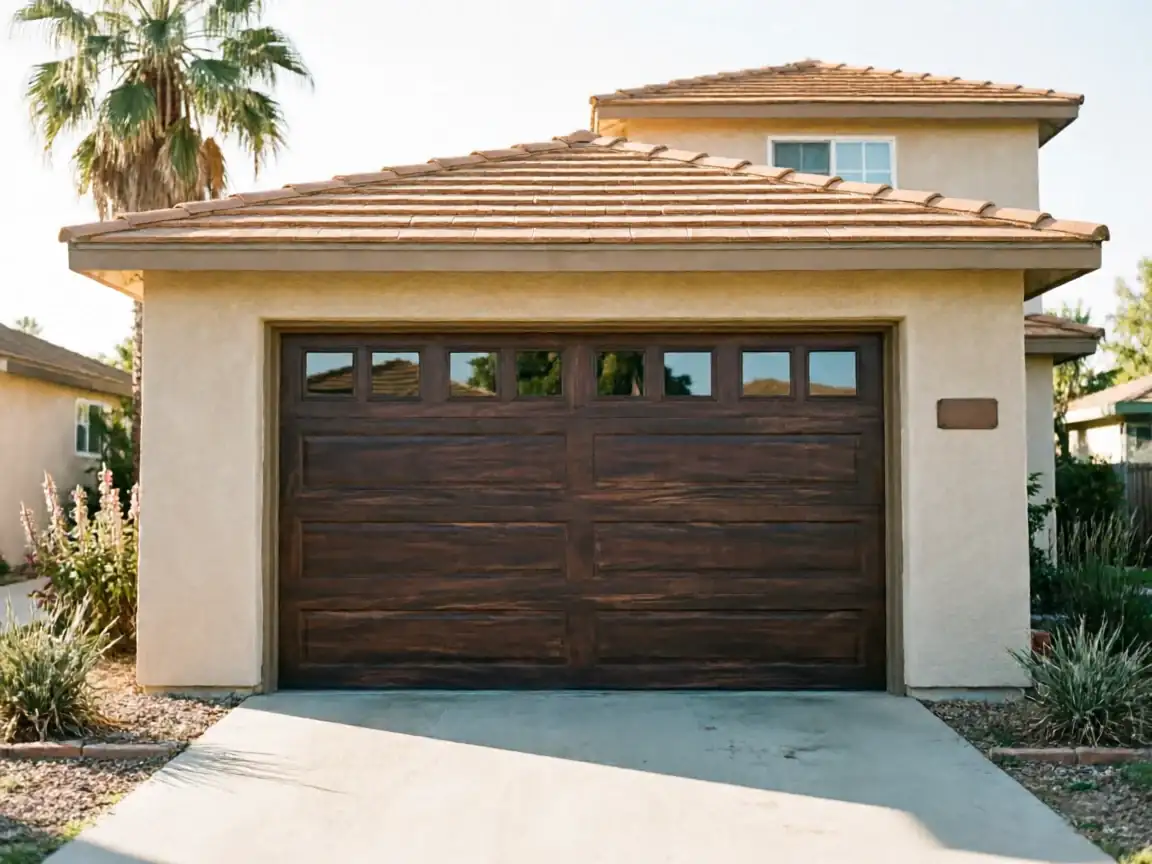
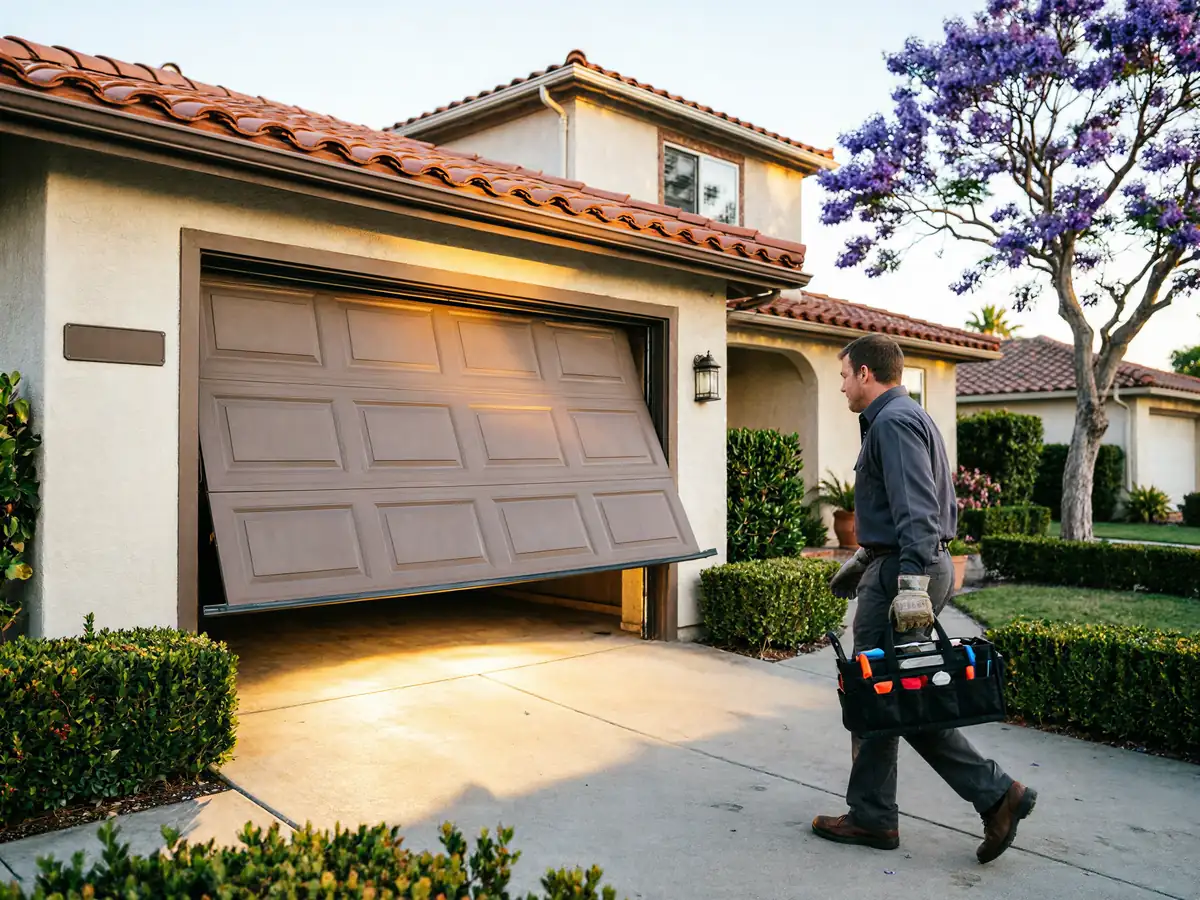
Most garage doors in Bellflower went up around 1966, which puts them square in the middle of the single-layer steel door era - wide, flat panel sections on torsion springs mounted on a header bracket, usually sized for a single-car or two-car opening built to the standards of that decade. A lot of these original doors have been swapped out over the years, but the openings and track widths haven't changed, so replacement hardware still has to match a 1960s frame. When one of these doors won't move, it's rarely subtle: the door jerks partway up and stops, it slams down on its own, or it comes off one roller and sits crooked in the track. Sometimes it's a cable that's jumped the drum, sometimes a spring that's let go with a bang loud enough that neighbors ask about it. If the door won't budge at all and the opener motor is straining, stop pulling the cord or hitting the wall button - that's usually the fastest way to turn a spring job into a track-and-panel job.
We're not guessing at your hardware sight unseen, but a door from this era is almost always torsion-spring, not extension-spring, and that matters for how the job gets priced and how long it takes.
How Long It Takes
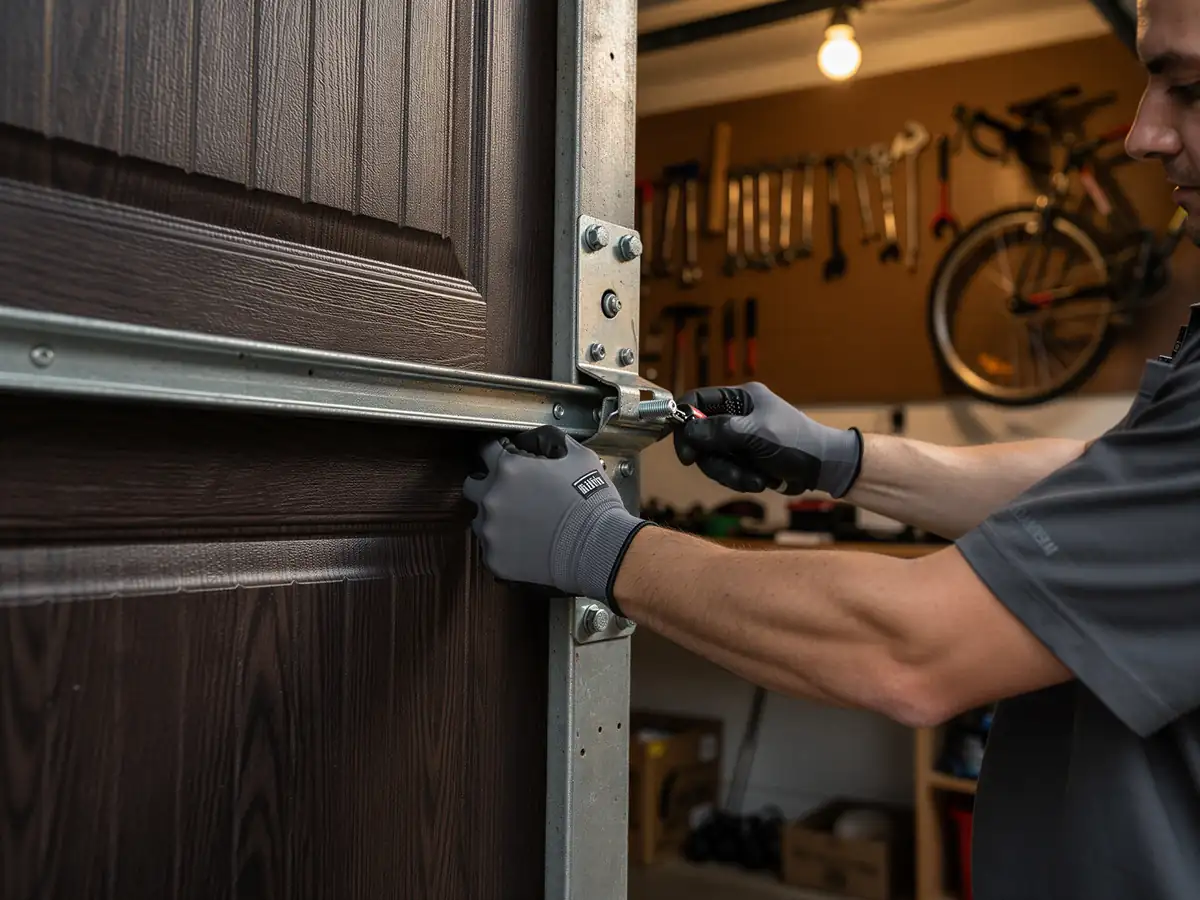
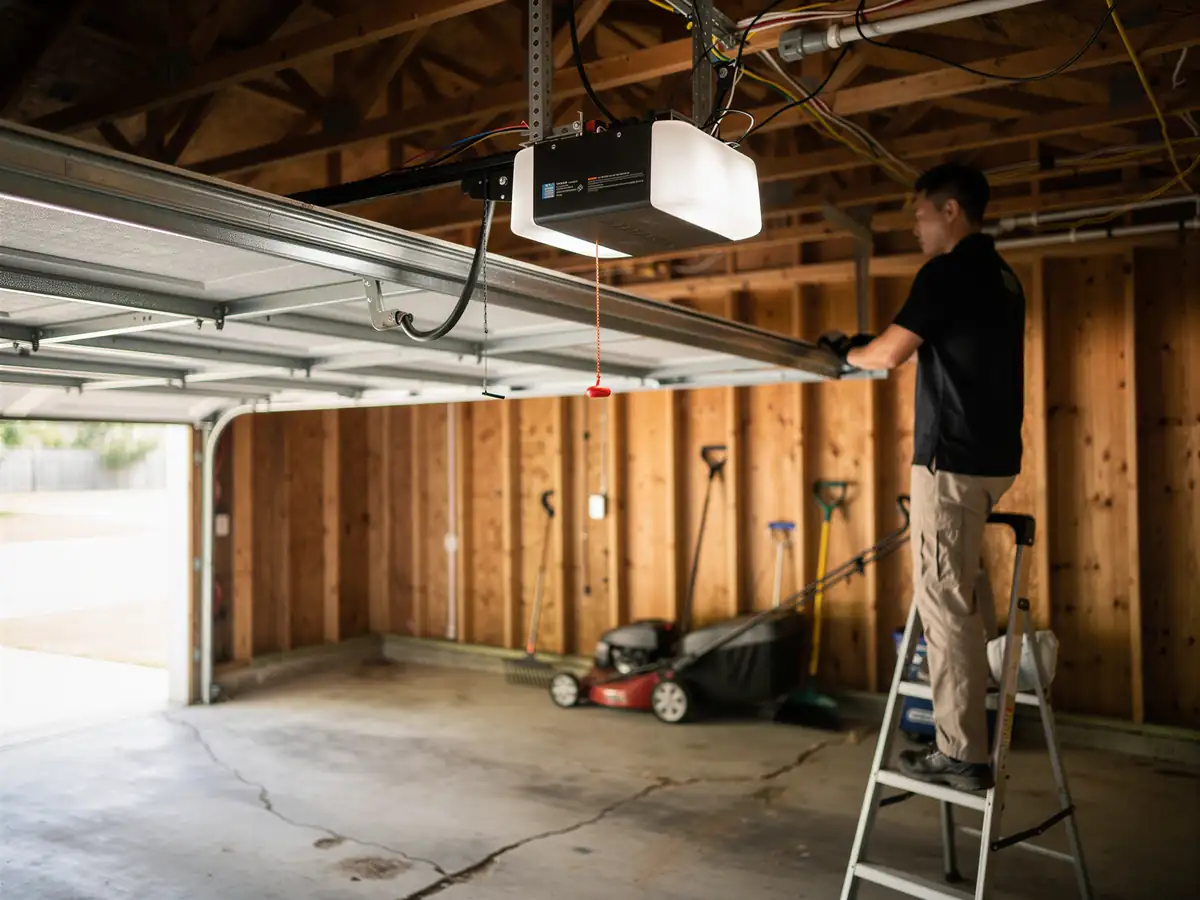
A straightforward torsion spring replacement on a door this age is usually a same-visit fix once a tech is on site - the spring, bearing plate, and cables get swapped as a set because that hardware wears together. Jobs get longer when the track is bent from a door that's been run off its rollers, or when the opener itself is original and the gears inside have stripped, which is common on units this old. We drive in from Downey, about 4 miles out, so factor that into how soon someone can be at the door rather than expecting a stated response window - we don't quote a fixed arrival time because traffic on that stretch varies by hour.
What we can tell you is what doesn't change: a spring and cable job is a parts-on-the-truck repair most days. A full door replacement, especially if you want something other than the standard size opening this house likely has, can mean a wait on the specific panel width.
Where This Job Goes Sideways
The thing that turns a quick spring swap into a bigger bill is a homeowner
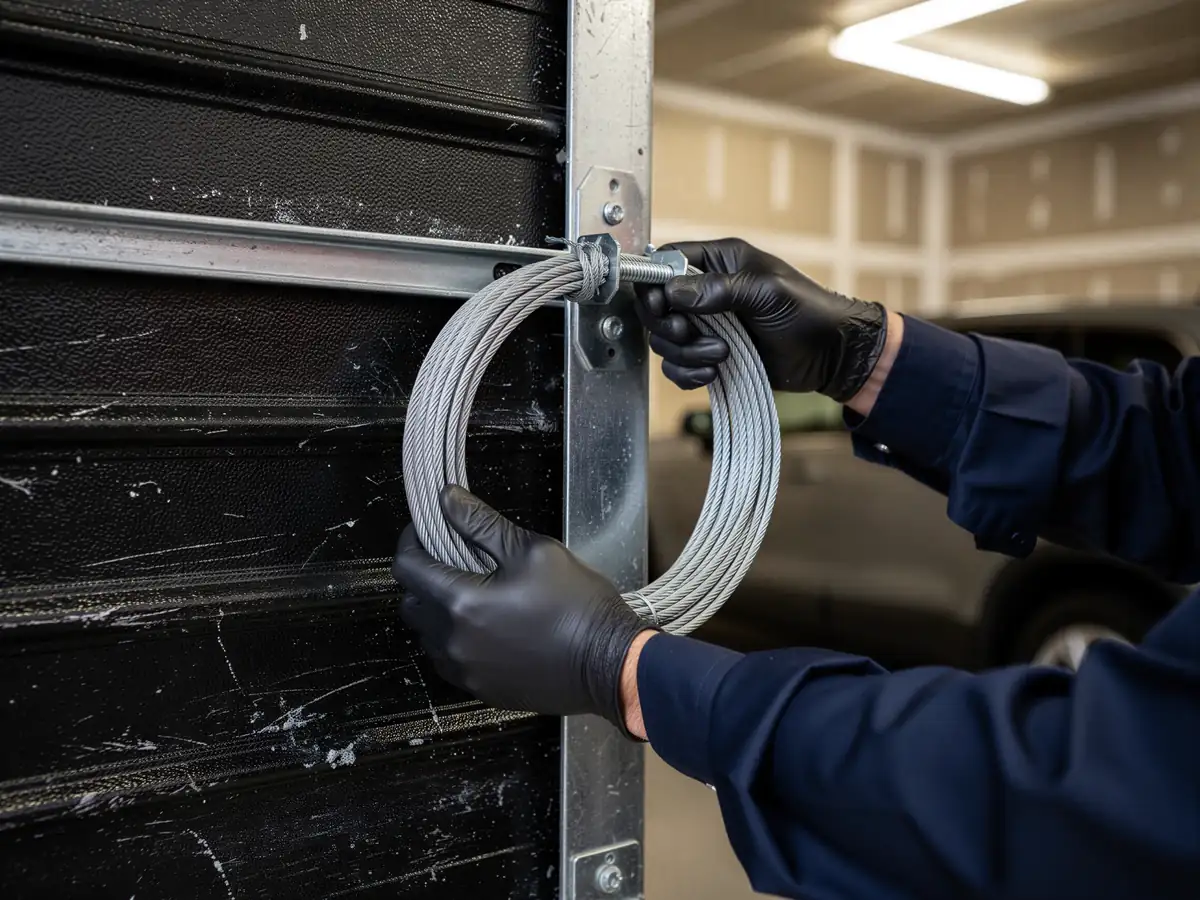
Or a well-meaning neighbor - trying to force the door up while a cable is off the drum. The drum keeps spinning, the cable frays or jumps the track, and now you're paying for a track alignment and possibly a new roller set on top of the spring. Another spot where it goes wrong: opener-only fixes. If the spring is the real problem and someone just replaces the opener logic board or the motor, the new opener burns out fast trying to lift a door with no spring tension behind it.
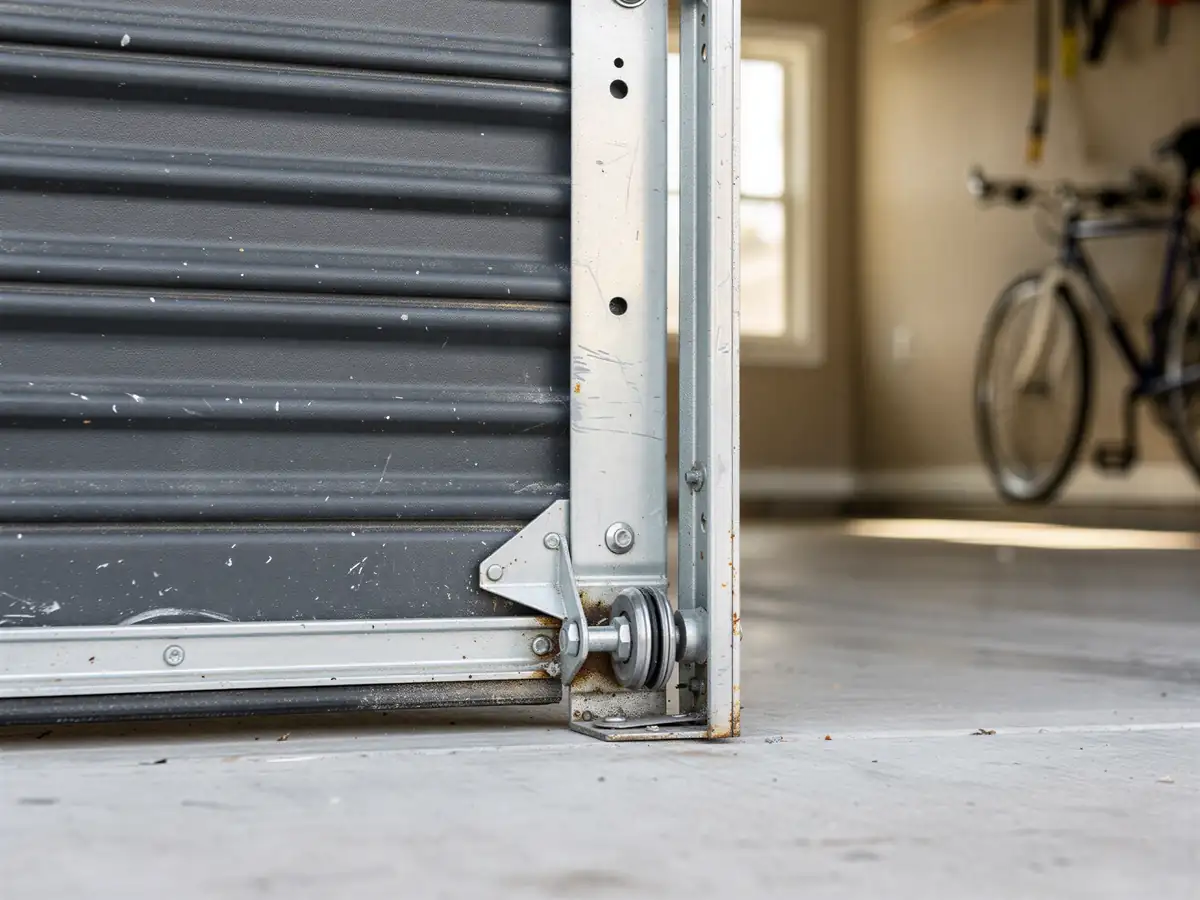
On a door of this age, we also check the bottom bracket and end bearing plates before calling a job done
Because on a 1960s-built door those parts have usually been carrying the same tension for decades and a cracked plate under a new spring is how you end up back out here in a month.
What Causes It Around Here
Bellflower's housing stock dates mostly to the 1960s and 70s, so the failure pattern we see tends to be wear, not weather. The climate here is mild - no deep freeze, no hurricane-grade wind load - so it's not weather cracking panels the way it would somewhere with hard freeze-thaw cycles. What we do see is fatigue: torsion springs rated for a certain number of open-close cycles finally giving out after years of daily use, galvanized cables stretching and fraying at the drum, and rollers original to a 1960s build simply wearing down to bare metal. Houses in this area, with median household income around $77,602, also tend to hold onto an older opener longer before replacing it, which means more jobs where the opener's internal gear has worn out right alongside the spring.
The Cost of This Job
We don't publish flat prices here because spring size, door weight, and whether the opener needs work too all move the number - a single spring swap costs less than a spring-plus-cable-plus-roller job, and both cost less than a full door. What we will say plainly: if the door is original from the 1960s build and the track or panels are bent beyond a clean repair, replacing the door is often the better call over patching a frame that age has already weakened. We'll tell you on site which side of that line your door falls on, and we won't talk you into a full replacement if a spring and cable job will hold.