How Long It Takes
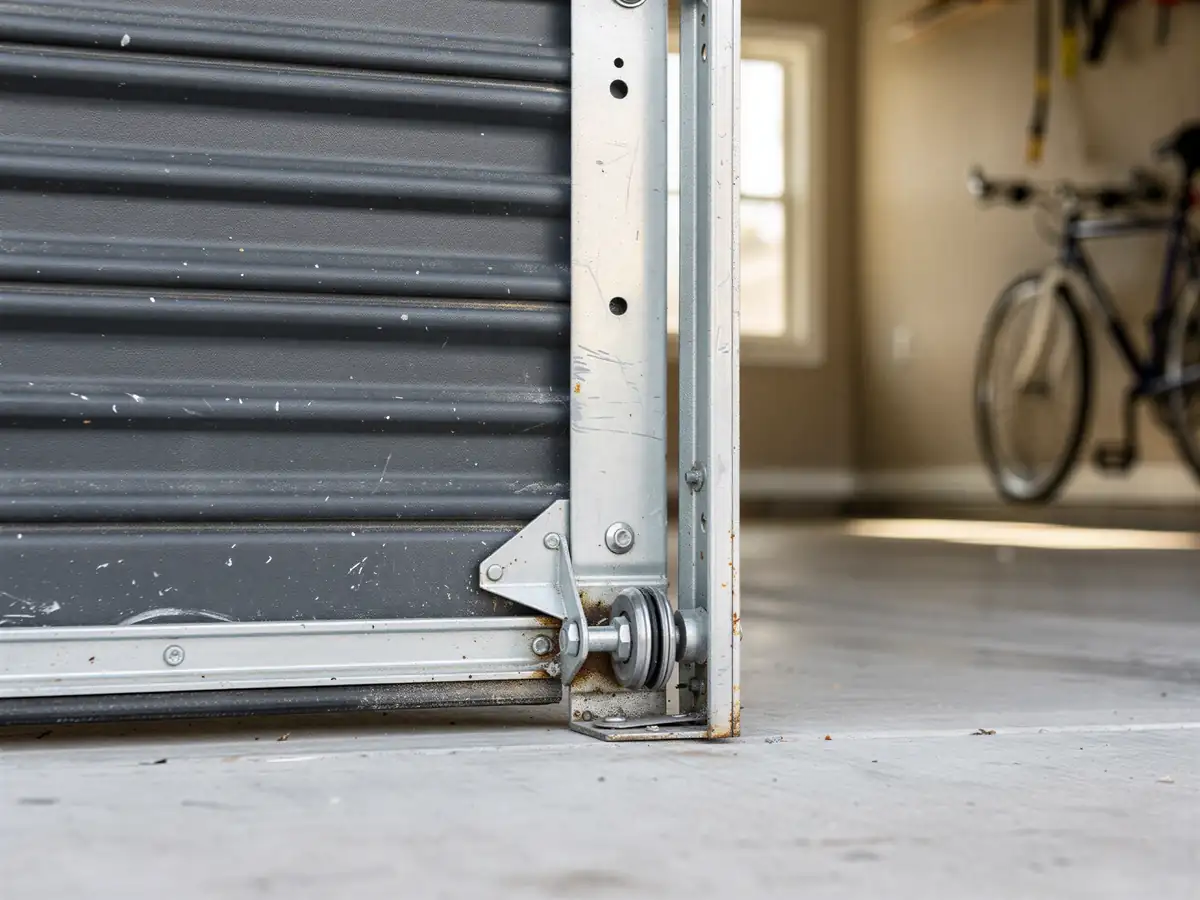
Most of the off-track calls we get from Pico Rivera trace back to the same thing: a roller that's worn thin enough to jump the track, or a track bracket that's worked loose after decades of the same door running on it. Pico Rivera's housing stock centers on 1957, squarely inside the broader service area's 1943-2012 range but sitting toward the older end of it. A door built or replaced during that stretch is usually riding on galvanized track that's thinner than what's installed today, and the brackets holding it to the jamb were often nailed, not lag-bolted - easier for the whole rail to rack out of square over the years.
Once a technician is on site, getting the door back on track and running square is usually a same-visit job: an hour or so to free the rollers, true up the track, and check that the opener's travel limits still match. If the track itself is bent rather than just knocked loose - which happens more on a 1950s-era single track than a newer double-track setup - straightening or swapping that section adds time. We won't know which one it is until we're looking at it, so we don't quote a fix sight unseen.
The Cost of This Job
What a job costs here depends mostly on whether the track survived or needs replacing, not on anything to do with the trip from Downey - the 4 miles out doesn't change the bill. A straightforward re-track, where the rollers and rail are fine and just need realigning, is the cheaper end. Bent track, a cracked roller bracket, or a cable that jumped its drum alongside the off-track fault pushes it up.
Pico Rivera's median household income runs about $86,956, noticeably under the $97,397 median across the wider service area we cover from Downey. We mention that because it's part of why we'll tell you plainly when a repair isn't worth doing - if the door itself is original to a 1957 build and the track issue is the third thing to go this year, replacing the door sometimes costs less over time than another patch. We don't push replacement as a default; we say it when the math says it.
How We Fix It
The fix starts with finding out why the door left the track, not just putting it back
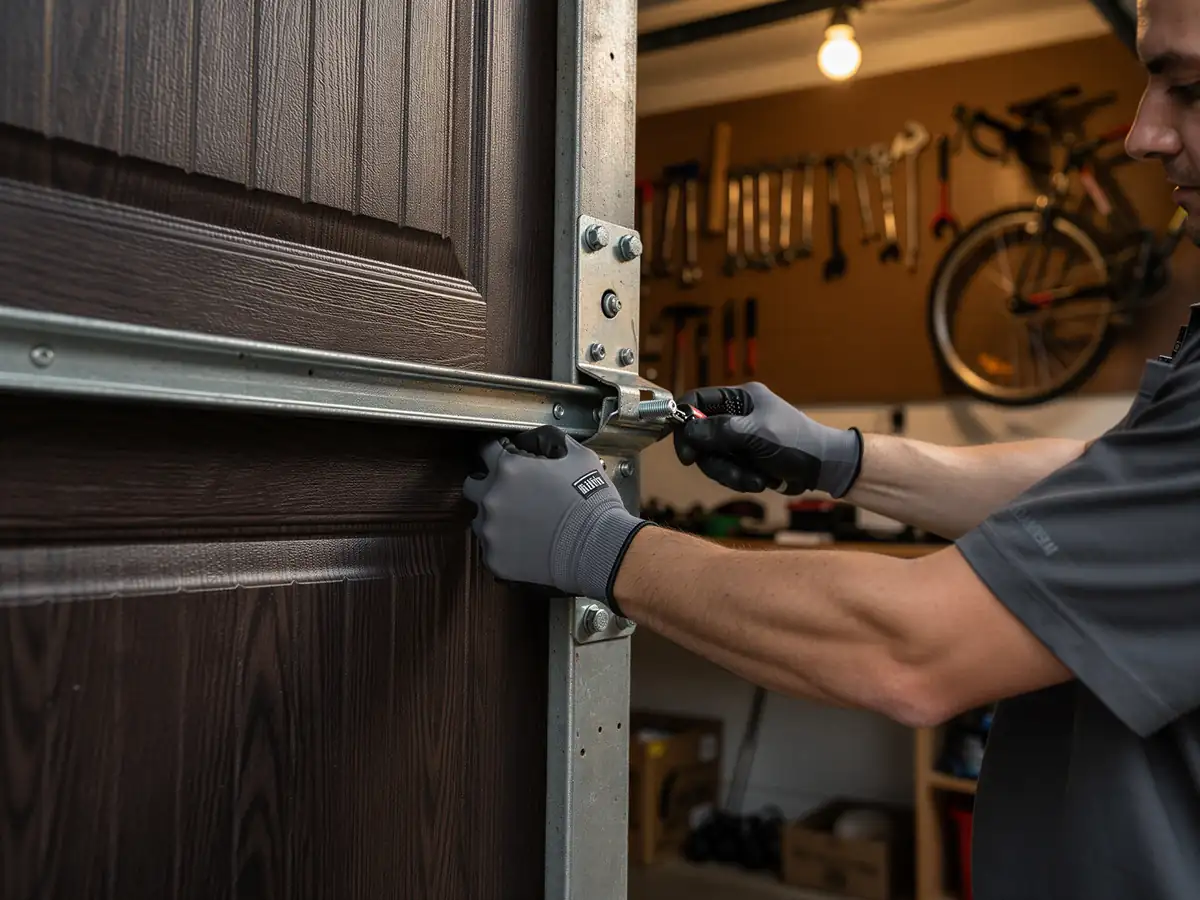
On the older single-car garages common in Pico Rivera's 1950s tract blocks, we're usually dealing with narrower rail spacing and rollers sized for a lighter door than what's sometimes been hung on that hardware since. We pull the door, check the rollers for flat spots or a bent stem, check the track for pinch points where it's racked, and square the whole assembly back to the jamb before we let the door run again.
If the opener drove the door while it was off-track
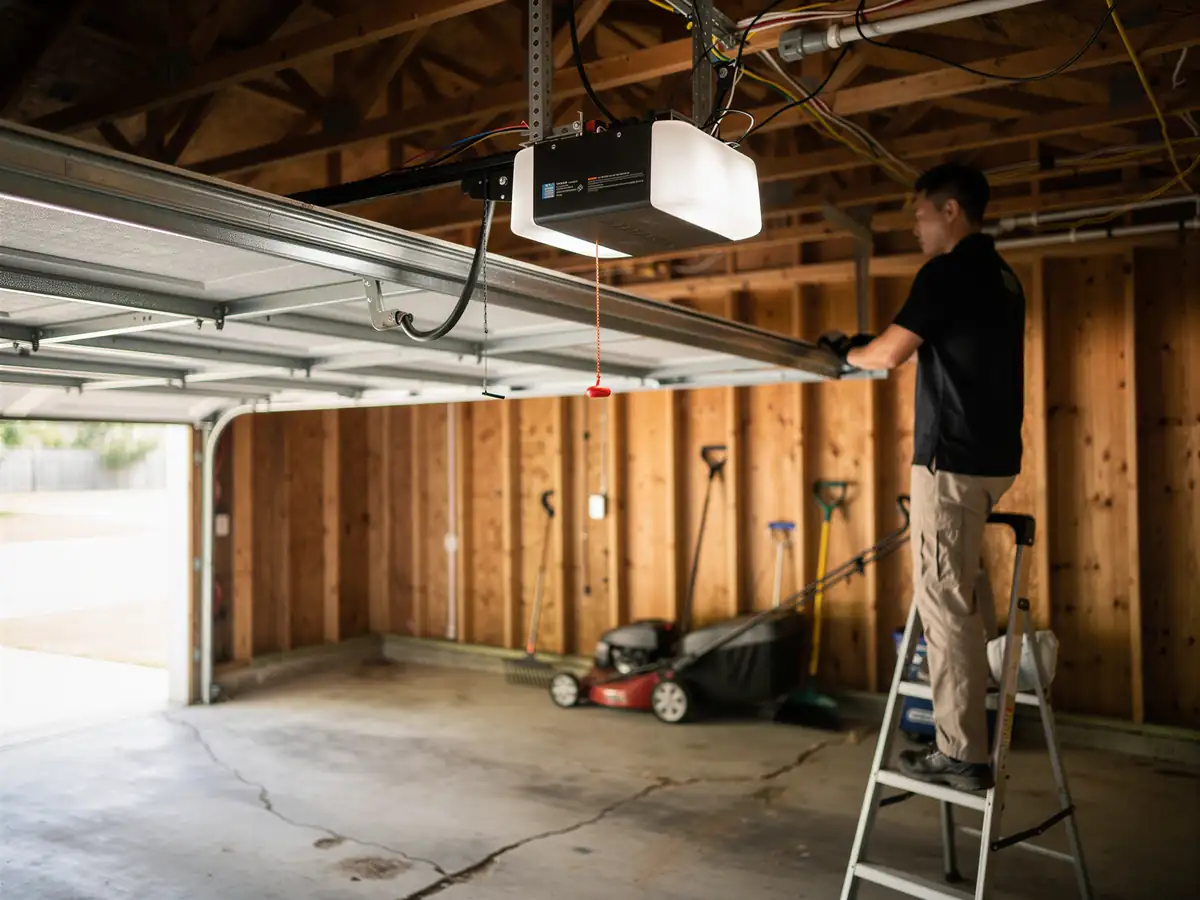
Which happens when nobody notices right away - we also check the gears inside the opener housing for stripped teeth. That's a separate repair from the track itself, and we'll tell you if we find it rather than folding it into one number. One limitation worth saying plainly: if the track is original 1957-era steel and badly corroded, we don't try to patch sections of it. Mixing old and new track gauge is asking for the same failure again within a year, so at that point we're talking full track replacement, not a splice.
Getting It Booked In
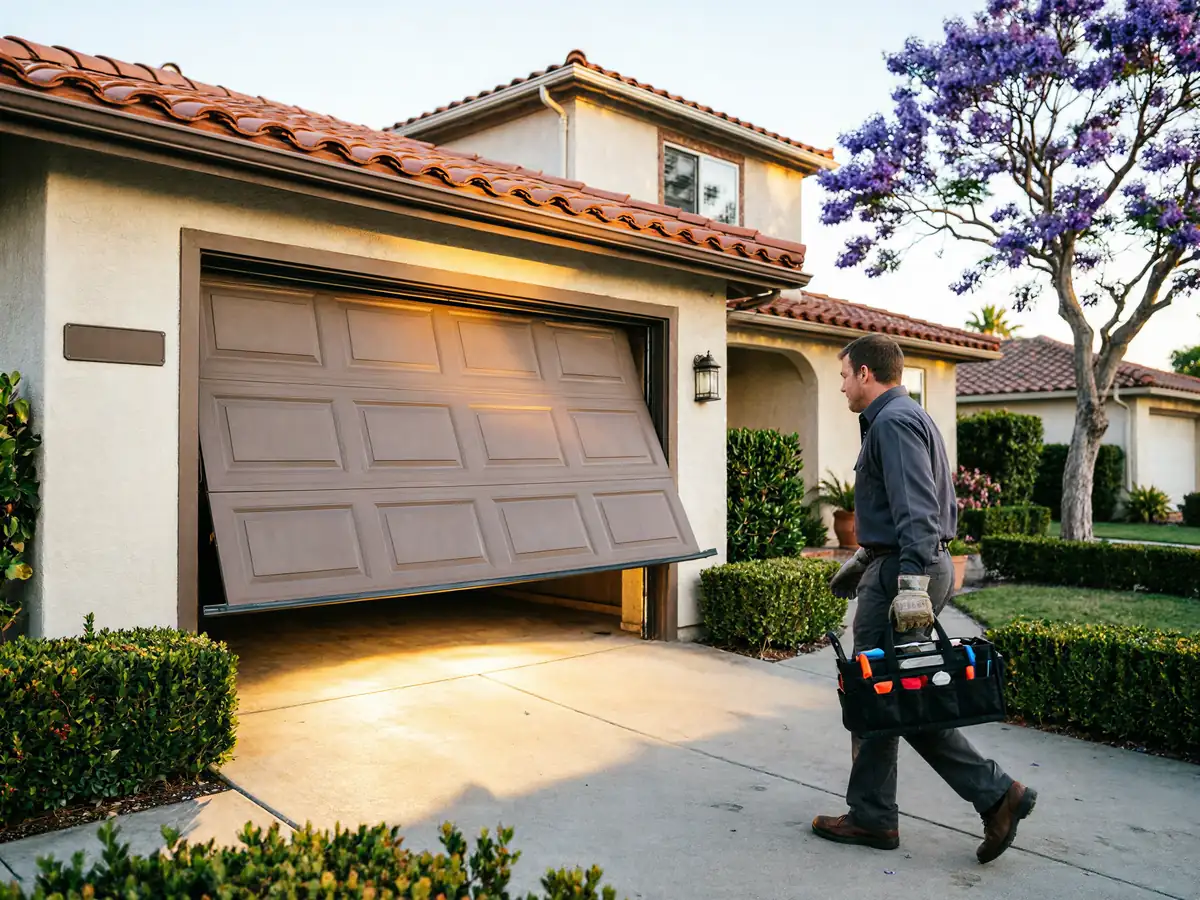
A door that's off its track isn't always stuck - sometimes it's hanging crooked but still partway operable, and other times it's jammed solid in the opening. Either way, leave it alone rather than forcing it by hand or running the opener again; that's how a bent track turns into a bent track plus a cracked panel. Describe what you're seeing when you call: whether the door came off on one side or both, whether you heard a bang, and whether the opener is still trying to drive it.
We run this call out of Downey, about 4 miles from Pico Rivera, and that distance doesn't add a surcharge to the visit. See our main page on off-track repair for the general rundown of how we handle this service, or check our Pico Rivera area page for what else we cover out this way.